
50 Free Spins No Deposit in Australia: What the Spin Button Actually Costs
A “50 free spins no deposit” banner promises something simple: fifty shots at a real-money pokie without paying a cent first. For an Australian player, the promise and the receipt are two different documents. The banner is straightforward. The terms page it links to is where the offer’s real price lives, in a wagering multiple, a cashout cap and an expiry window that most players never read until the win is already trapped inside it. This page is about that gap: the difference between claiming a free-spin round and actually keeping any of it.

Current as of 18 October 2026, verified against the Australian Communications and Media Authority register and operator terms pages.
Table of Contents
- What “50 Free Spins No Deposit” Actually Means
- Why the Bonus Is Harder to Cash Out Than It Looks
- Casinos Offering Free Spins to Australian Players: The Full Comparison
- New Casinos and 50 Free Spins: What to Check Before You Sign Up
- Claiming 50 Free Spins on Mobile: What Changes on a Smaller Screen
- The Legal Reality: Every 50 Free Spins Offer Sits Offshore
- Responsible Gambling: Staying in Control When Spins Cost Nothing Upfront
- How We Evaluate 50 Free Spins No Deposit Offers
- Your Decision: What Matters and What to Skip
- Frequently Asked Questions
What “50 Free Spins No Deposit” Actually Means
The offer is a marketing staple of the offshore casino market. A player signs up, the casino credits fifty free rounds on a named pokie, the player spins, and any winnings land in a bonus balance that is subject to withdrawal conditions. No payment instrument is taken at sign-up, which is the entire point of the no-deposit qualifier. The spin count is small enough to feel generous, large enough to produce a visible win now and then, and the no-deposit framing positions the casino as the one taking the risk.
Three features define the offer across the offshore brands that run it. The spin count usually sits between 20 and 50 per player, with 50 at the upper end of the typical band. The cashout is capped, almost universally, between A$50 and A$100 regardless of what the reels actually produce. And every brand attaches wagering requirements to whatever the spins win, which means the player must continue playing through the winnings at a stated multiple before any of it can leave the account. The headline says fifty free shots at a real-money pokie. The fine print says fifty shots, then play another thousand dollars’ worth of your winnings before you see a cent.
In Australia, every casino offering this product operates offshore, usually under a Curacao licence, and none holds an Australian licence because no such licence exists. The Interactive Gambling Act 2001 makes it an offence to provide online casino games, online pokies and in-play betting to a person in Australia. The prohibition targets the provider, not the player, and the player is not prosecuted for signing up, depositing or playing. But no Australian consumer protection, no local dispute resolution and no BetStop coverage reaches an offshore site, which means a free-spin win is only as secure as the operator’s willingness to pay it.
No-Deposit Spins vs Deposit-Based Spins
The distinction matters more than the marketing copy lets on. A no-deposit spin offer asks nothing of the player upfront. A deposit-based spin offer is a buy-in: the player funds an account, the casino credits spins as a welcome or reload perk, and the spins come with a higher ceiling because the player has already paid to enter. The trade-off runs in both directions.
No-deposit spins carry tighter cashout caps, typically A$50 to A$100, and harsher wagering multiples, often 30x to 50x on whatever the spins win, with a short validity window of seven to fourteen days and some as tight as twenty-four hours. Deposit-based spins are looser on every one of those numbers. A A$30 deposit at Rocket Play unlocks 100 free spins across five days at 40x wagering, with a welcome match of 100% up to A$1,000 underneath it, and the cashout ceiling tracks the matched bonus rather than the spin winnings alone. The deposit package pays more in absolute terms, but the player has already committed money they stand to lose.
For a player with a small bankroll, the no-deposit offer is genuinely free to try, and the cap on the upside is the price of that. For a player already willing to deposit, the deposit-based package is almost always the better value per spin, because the wagering applies to a larger base and the cashout is unlocked from a more generous ceiling.
Who Runs These Offers for Australian Players
Every operator in the Australian-facing no-deposit market is offshore. There is no federally licensed online casino in Australia, and no state or territory issues one either. The Northern Territory Racing and Wagering Commission licenses sports and race wagering, not casino products, and the licensed wagering products sit firmly outside the free-spin market. The default licence for the operators that do target Australians is Curacao, with occasional Anjouan and Kahnawake holders, and none of those licences grants access to the Australian consumer law framework.
What that means for the player is concrete. A Curacao licence is a regulatory floor, not a guarantee. It certifies that the operator is registered somewhere and answers to a regulator in that jurisdiction, which is more than an entirely unlicensed operation offers, but it does not give the player a path to the Australian Financial Complaints Authority, the Australian Competition and Consumer Commission, or the local courts. Disputes go to the Curacao Gaming Control Board, which the player cannot easily reach. The site can also be blocked by Australian ISPs at any time under ACMA direction, which leaves any balance on the account in limbo.
Why the Bonus Is Harder to Cash Out Than It Looks
A free-spin win is rarely what the reels show. A 50-spin round on a high-volatility pokie might produce a single A$3 line hit, or it might produce nothing at all, or it might produce a feature round that pays 200x. The variance is enormous and the average outcome is much closer to A$0 than to anything the marketing banner implies. The interesting question is what happens to a win when it lands.
The mechanism that turns a free-spin win into actual money is a sequence of three gates, and any one of them can close the door. First, the wagering requirement multiplies the winnings by a stated number and demands that the player bet the resulting total before withdrawing. Second, the maximum cashout cap sets a hard ceiling on what can ever leave the account, regardless of what was actually won. Third, the expiry window kills whatever is still in the bonus balance if the player has not cleared the requirements in time. The three gates interact: a low cashout cap renders a high wagering requirement mostly academic, and a short expiry window can void a balance the player was about to clear.
Industry commentary on the market is blunt about the result. As one tracker put it in 2026, true fifty-free-spins no-deposit offers for Australian players are few and far between, and when they do appear they often come with high wagering requirements or tight game restrictions. The phrase “true” is doing work there. Most banners advertise a generous offer, and the terms that follow narrow it to something much smaller.
Wagering Requirements: The Multiplier That Decides Whether You Withdraw
The wagering requirement is the most consequential number in any free-spin offer. It is stated as a multiple, and it applies to the winnings from the free spins, not to the nominal value of the spins themselves. A 40x requirement on A$20 of spin winnings means the player must place A$800 in qualifying bets before any of the bonus balance becomes withdrawable. At a typical minimum stake of A$0.10 to A$0.20 per spin on a pokie, that is between 4,000 and 8,000 additional spins, on top of the original fifty the player started with, and every spin carries the house edge.

The range across the Australian-facing market is wide. The most common band sits at 30x to 50x on no-deposit winnings, with some operators pushing to 40x to 60x. A 30x to 35x multiplier is the upper edge of what a player with patience can realistically clear on a high-RTP pokie, and anything above 50x on no-deposit winnings is, in the words of one industry source, “practically unclearable for most players.” The reason is arithmetic. A 50x requirement on A$50 of winnings is A$2,500 of qualifying bets, and the expected loss during that playthrough at a 96% RTP pokie is A$100, which is twice the size of the original win. The player is paying to clear a balance that, on average, will not survive the playthrough.
Game contribution rates sharpen the picture. Pokies typically contribute 100% of every bet toward the wagering requirement, which is why free-spin offers are almost always locked to a pokie. Table games, live casino titles and crash games contribute anywhere from 0% to 20%, which means a player who tries to clear a free-spin wagering requirement at the blackjack table is making almost no progress per dollar bet. The pokie lock is not a marketing preference; it is a structural necessity for the operator, and it is also where the player gets the best chance of clearing.
Maximum Cashout Caps: Why a Win Might Only Pay a Fraction
The maximum cashout cap is the second gate, and it is the one that often produces the most visible frustration. A player wins A$200 on a 50-spin no-deposit round, clears the wagering requirement, and goes to withdraw — only to discover the most they can take out is A$75. The cap is set by the operator and stated in the bonus terms, and it is enforced without exception. The cap is the ceiling on the entire relationship, not just the free-spin round, and it applies even when the wagering has been cleared in full.
The Australian-facing market sits in a narrow band. Most no-deposit offers cap withdrawals from the bonus at A$50 to A$100, with the broader 2026 market topping out at A$200 across all no-deposit bonus types. A handful of offers go lower, with A$50 at the bottom of the band, and the rarer higher caps at A$150 or A$200 still leave a player staring at a fraction of what the reels displayed during the spin round. The interaction with wagering is straightforward. A A$50 cashout cap makes a 60x wagering requirement almost irrelevant, because the player will not reach the cashout ceiling in the first place. A A$200 cashout cap with a 30x wagering requirement, on the other hand, is genuinely worth chasing.
The Bizzo Casino no-deposit offer illustrates the cap clearly: ten free spins for installing the PWA app, with a 40x wagering requirement and a maximum win of A$75. The cap is low, but the wagering applies to a small base, and a player who hits even one feature round on a high-volatility pokie has a reasonable shot at clearing it. The cap turns the offer into a small, defined upside rather than a lottery ticket.
Which Pokies You Can Actually Play With 50 Free Spins
The pokie a free-spin offer is locked to is not a marketing detail. It is the single biggest determinant of whether the offer is clearable, because the return-to-player percentage and the volatility class both shape the expected outcome of the wagering playthrough. A 96.71% RTP pokie and a 94.5% configuration of the same game can change the wagering maths by a factor of two, and the difference between low and high volatility can change whether a player ever sees a balance large enough to clear the requirement at all.

Three titles dominate the Australian-facing free-spin market. Big Bass Bonanza, from Pragmatic Play, is the most commonly tied game, with a 96.71% RTP, high volatility and a maximum win of 2,100x the bet. Starburst, from NetEnt, sits at the other end of the volatility spectrum with a 96.09% RTP, low volatility and a maximum win of around 500x. Book of Dead, from Play’n GO, is the third pillar: 96.21% RTP, high volatility, maximum win of approximately 5,000x. The configuration question matters because the same Big Bass Bonanza title can be run at lower RTP settings by individual operators, with figures as low as 94.5% to 95.67% recorded in 2026. The game’s payout does not change. The operator’s slice of it does.
| Slot Title | Provider | RTP | Volatility | Max Win |
|---|---|---|---|---|
| Big Bass Bonanza | Pragmatic Play | 96.71% | High | 2,100x |
| Starburst | NetEnt | 96.09% | Low | ~500x |
| Book of Dead | Play’n GO | 96.21% | High | ~5,000x |
The volatility choice is a meaningful one for a free-spin player. A high-volatility pokie is more likely to produce a feature round that pays hundreds of times the stake, which is what a 50x wagering requirement needs to clear. A low-volatility pokie is more likely to produce a stream of small wins that slowly add up, which is more forgiving for a player with a small bonus balance and a long playthrough ahead of them. The player’s choice of pokie, where the offer allows it, is one of the few active decisions in the free-spin journey.
A Worked Example: What 50 Spins on Big Bass Bonanza Actually Cost
Take a fifty-free-spin round on Big Bass Bonanza at the operator’s standard 96.71% RTP, with the minimum stake of A$0.10 per spin that the game allows for free-spin rounds. The total nominal value of the spin package is A$5, and the expected loss across the fifty spins at 96.71% RTP is roughly A$0.16, which is what the operator is pricing the free-spin round at. The player does not pay that A$0.16; the operator does, in exchange for the chance to attach a wagering requirement to whatever the reels produce.
If the fifty spins produce A$20 in winnings — a plausible mid-range outcome on a high-volatility pokie — and the wagering requirement is 40x, the player must place A$800 in qualifying bets before any of that A$20 becomes withdrawable. At A$0.10 per spin, that is 8,000 additional spins, and the expected loss across those 8,000 spins at 96.71% RTP is approximately A$26. The expected loss during the wagering playthrough exceeds the original win. The player has, on average, paid A$26 in expected value to clear a A$20 bonus.
If the cashout cap is A$75 and the player never sees a win above A$75 during the original spin round, the cap is irrelevant and the wagering requirement is the only constraint. If the player hits a feature round that produces A$200, the A$75 cap clips the win before it can be withdrawn, and the A$125 difference is forfeited. The math is the same in both cases: the offer is priced for the operator’s break-even, and the player’s edge exists only inside a narrow band of outcomes that the cashout cap is designed to clip.
This is the calculation the wagering requirement and the cashout cap are built to perform. The free spin is a marketing expense the operator writes off. The wagering requirement recovers most of the winnings the spin produces. The cashout cap clips anything the wagering did not recover. The player’s experience of the offer is shaped, at every stage, by a mechanism that returns the value to the operator.
Promo Codes and How Offers Get Unlocked
The mechanics of claiming a free-spin offer are simple, and they vary in one detail: whether the offer is automatic, code-gated or app-gated. The most common structure is automatic credit on sign-up, where the casino credits the spins to the player’s account the moment registration is complete and the email is verified. The player does nothing except create the account and confirm it.
A smaller number of offers require a bonus code, entered at sign-up or in the cashier section, and the code is what triggers the credit. Codes appear on affiliate sites, in email marketing, and on the operator’s own promo page. A third, more unusual structure is app-gated: Bizzo Casino’s no-deposit offer is ten free spins for installing the operator’s progressive web app, with the spins credited once the PWA is installed on the player’s device. The wagering requirement and the win cap apply identically across all three structures, and the only thing that changes is the unlock step.
No working bonus or promo code appears on this page. The codes that unlock specific offers are issued by the operators themselves, and they are tied to particular affiliate channels, time windows and player segments. Printing a code here would be guessing, and the value of the page to a reader is the structure of the offer rather than a specific entry token.
Crypto and Bitcoin Free Spins: A Separate Path
The crypto-friendly offshore casino sits outside the Australian payment rules in a way the fiat-facing operator does not. Since 11 June 2024, credit cards, credit-related products including digital wallets, and digital currencies have been banned as payment for online wagering by Australian-licensed operators. The ban does not reach an offshore casino, because the offshore casino is not subject to Australian law in the first place, and a player who funds an account in Bitcoin or Ethereum is using a payment method that no licensed Australian operator can accept.
BitStarz is the most prominent crypto-first operator in the Australian-facing comparison, and its free-spin offer is the closest the featured set comes to a 50-spin no-deposit package. The current offer is thirty free spins on sign-up at 40x wagering, with a choice of welcome package underneath it: up to A$10,000 plus 180 free spins in fiat, or up to 5 BTC plus 180 free spins in Bitcoin, across four deposits. The library runs to 7,600+ games from 88 providers, which is one of the largest in the offshore market. The trade-off for the crypto path is the same one the fiat path runs, and the offshore status is unchanged: a crypto deposit does not bring the player under Australian consumer protection, and the bonus terms are no softer because the deposit cleared through a blockchain.
Casinos Offering Free Spins to Australian Players: The Full Comparison
The ten operators in this comparison are the offshore brands Australian players actually reach. Every one of them is not licensed in Australia, and no licence for online casino exists in Australia to license one under. The table shows what each operator actually offers, with the cells research did not cover left blank, because a cell an operator does not publish is a cell the reader cannot use.
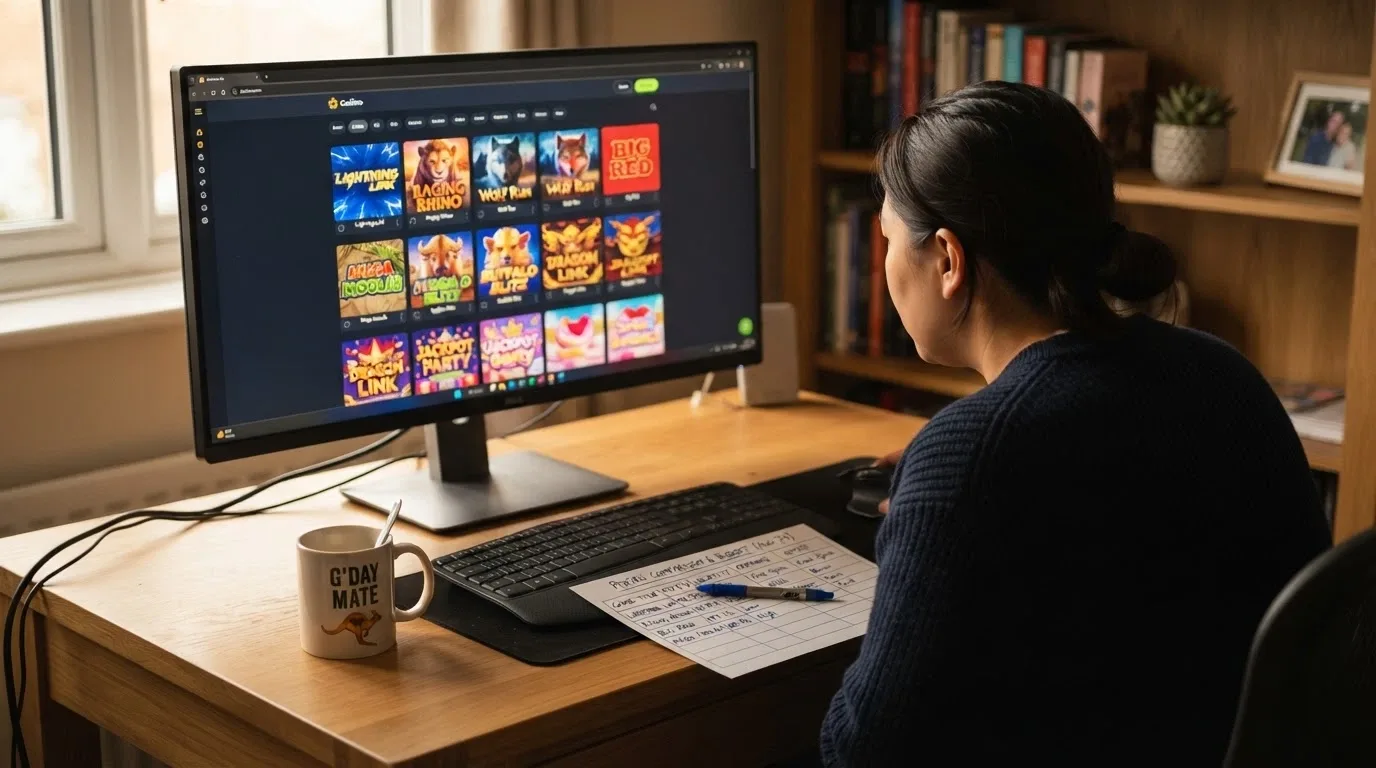
| Operator | Licence | Welcome Offer | Free Spins | Wagering | Game Library |
|---|---|---|---|---|---|
| Rocket Play | Curacao | 100% up to A$1,000 + 100 FS | 100 (20/day × 5) | 40x | Multiple providers |
| Skycrown | Curacao | Up to $4,000 + 350 FS | 350 | 40x | 70+ studios |
| Royal Reels | Curacao | 100% up to A$500 + A$10 ND | A$10 ND | 30–40x | 2,000+ games |
| WinSpirit | Offshore | 200% + 25 FS | 25 | 40x | Multiple providers |
| Stake | Curacao | — | — | — | Broad library |
| Fair Go | Curacao | 200% up to A$1,000 + 100 FS | 100 | 60x / 35x | RTG / SpinLogic |
| Bizzo Casino | Curacao | Up to A$7,250 + 175 FS | 175 + 10 ND | 40x | 8,000+ games |
| Rainbet | Curacao | — | — | — | — |
| Scream Casino | Offshore | — | — | — | — |
| BitStarz | Offshore | Up to A$10,000 + 180 FS or 5 BTC + 180 FS | 180 + 30 ND | 40x | 7,600+ games |
What the table cannot show is the gulf between the headline offer and the no-deposit spin offer. Rocket Play’s 100 free spins arrive over five days at one deposit. Skycrown’s 350 free spins arrive over five deposits. BitStarz’s 30 no-deposit spins are the closest the featured set comes to the fifty-spin promise itself, and even those require a 40x wagering playthrough.
Rocket Play
Rocket Play is a Curacao-licensed operator with a broad provider library and a deposit-first welcome that asks for A$30 minimum. The headline number is the 100% match up to A$1,000 plus 100 free spins, and the spins arrive in tranches of 20 per day for five days, with a 40x wagering requirement on the bonus amount. The Friday reload is a smaller and more interesting offer: 20 to 100 free spins for deposits of A$30 to A$150, with 40x wagering and a maximum win cap of A$3,000. The reload is one of the better recurring spin offers in the Australian-facing market.
For a player looking for a no-deposit spin round at Rocket Play, it simply isn’t there in the standard terms. What they will find instead, if they deposit, is a well-priced welcome and a recurring Friday offer that pays out a meaningful number of spins on a small deposit. For a player willing to commit A$30, the welcome is competitive. Players determined to claim without funding an account, however, will need to look elsewhere.
Skycrown
Skycrown is the Hollycorn N.V. brand with the largest headline number in the comparison. The full welcome package runs to $4,000 plus 350 free spins across five deposits, with 40x wagering across the bonus and spin winnings, plus a 10% crypto cashback and 1% rakeback for players funding in digital currency. The first-deposit tier is 100% up to €100 plus 100 free spins, which is a more conventional welcome at a more conventional size.
The no-deposit offer is not part of Skycrown’s published terms in the current source set, and a player hunting for a sign-up free round will not find one attached to the welcome. The library runs to 70+ studios, including Evolution Gaming and Pragmatic Play, which is broad enough to support a long wagering playthrough. The package is built for a player willing to commit across five deposits, and the value compounds with the crypto cashback for a player using a digital wallet. For a no-deposit seeker, Skycrown is not the right fit.
Royal Reels
Royal Reels is the only operator in the comparison that ships a no-deposit offer of any kind. The A$10 no-deposit credit is not a free-spin offer; it is a cash credit on sign-up, with 30 to 40x wagering and a minimum deposit of A$30 to unlock the rest of the welcome. The 100% match up to A$500 is the headline underneath, and the library runs to 2,000+ games from 30+ providers, including Pragmatic Play, Evolution Gaming, Yggdrasil and Hacksaw Gaming. The Curacao licence is the regulatory floor, and the SSL encryption is the technical floor.
The A$10 credit is the closest the featured set comes to a no-deposit sign-up, and the type is cash, not spins. A player who would rather have fifty spins than A$10 will not find the right offer at Royal Reels. A player who would rather have A$10 in real cash to bet across a small library of high-RTP pokies, with a 30x to 40x playthrough and a generous welcome match underneath, will find one of the more honest no-deposit offers in the offshore market. The trade-off is the type, not the value.
WinSpirit
WinSpirit is an offshore operator with a 200% welcome match plus 25 free spins, with 40x wagering on the bonus and regular tournaments and cashback layered on top. The Wednesday reload is 50 free spins on a A$150 deposit, which is a thicker recurring offer than most of the comparison. The no-deposit specifics are thin in the current source set, and a player looking for a no-deposit sign-up will not find one documented for WinSpirit.
The 200% match is the most generous headline in the comparison, and the 25 free spins on a single deposit are a reasonable add. The trade-off is the deposit commitment: a 200% match only pays out if the player actually deposits, and the A$150 Wednesday reload is a higher bar than Rocket Play’s A$30. For a player willing to deposit at scale, WinSpirit offers a strong match rate. For a no-deposit seeker, it is not in the running.
Stake
Stake is a high-profile Curacao-licensed crypto-first platform with a broad game library and a brand presence that runs well beyond the offshore casino market. The welcome offer, free-spin count, wagering structure and minimum deposit are not in the current source set, and the page does not invent them. The market position is clear: Stake is the operator a player has heard of even if they have never played, and its crypto-first design aligns with the payment ban on licensed Australian operators, which means the deposit route is digital currency rather than the credit card and fiat options the ban prohibits.
A player who knows Stake by reputation and wants a no-deposit offer should check the operator’s own promo page rather than assume one exists. The free-spin specifics in this comparison are documented where the sources document them, and Stake is not one of those operators. For a player who is happy to deposit in crypto and values the brand recognition, Stake is on the table. For a player determined to claim fifty free spins without funding an account, the absence of documented no-deposit specifics makes Stake a research gap rather than a confirmed offer.
Fair Go
Fair Go is the RTG and SpinLogic house that holds a singular place in the Australian enforcement record: it was the first illegal offshore gambling site the ACMA ever ordered blocked, on 19 November 2019, and it was named in a 5 August 2022 formal warning to its RTG master-licence holder. The licence is Curacao-rooted, with no public licence number, and the operator is not licensed in Australia. None of that has stopped Fair Go from cycling no-deposit offers to Australian players for years, and the current cycle includes A$5 to A$10 free chips and 30 to 150 free spins on rotating titles.
The Fair Go deposit welcome is 200% up to A$1,000 plus 100 free spins, with a 60x wagering requirement on the deposit bonus and 35x on no-deposit winnings. The no-deposit offers carry a maximum cashout of A$180, a seven-day validity window, and a A$20 minimum deposit to unlock the withdrawal path. The RTG catalogue is the narrowest in the comparison, but the no-deposit cycle is the most active. For a player comfortable with the offshore risk, Fair Go is the most reliable source of recurring no-deposit free spins in the Australian-facing market. The first-blocked-by-ACMA distinction is a permanent mark on the brand, and it is one a careful player weighs against the recurring offer.
Bizzo Casino
Bizzo is the TechSolutions Group N.V. brand that launched in 2021 and built one of the largest libraries in the offshore market: 8,000+ games from 70+ studios, with PayID available for both deposits and withdrawals. The deposit welcome runs to A$7,250 plus 175 free spins across four deposits at 40x wagering, with an A$8 maximum bet during the playthrough. The no-deposit offer is the unusual one. It is ten free spins for installing the operator’s progressive web app, credited once the PWA is installed, with a 40x wagering requirement and an A$75 win cap. The PWA-install gate is a customer-acquisition mechanism as much as a free-spin offer, and it ties the no-deposit perk to a specific action the player takes on their own device.
The ten no-deposit spins are a smaller count than the advertised fifty, and the A$75 cap is at the lower end of the Australian-facing band. The deposit welcome, by contrast, is the most generous headline in the comparison. For a player with a large bankroll, the deposit package is the strongest in the set. The PWA-install offer provides a small, defined upside with a real cashout path, and the A$75 cap keeps the math transparent and easy to track.
Rainbet
Rainbet is a Curacao eGaming licence holder with no published bonus or free-spin data in the current source set. The licence is the regulatory floor, and the absence of documented welcome or no-deposit specifics means the page does not invent any. A player who reaches Rainbet through an affiliate link or a search result will see whatever the operator is currently offering, and the offer may include free spins or may not.
For the purposes of this comparison, Rainbet is an operator with a verified offshore licence and an unverified bonus structure. The player who values the Curacao eGaming mark over a specific welcome offer can check the operator’s own terms page for current promotions. The player who wants a documented fifty-free-spins no-deposit offer will not find one in the Rainbet data this page is built on.
Scream Casino
Scream Casino is an offshore operator with no game-provider or bonus data in the current source set. The offshore status is confirmed; the specifics are not. A player reaching Scream Casino through a search result is taking the brand on its own terms, because this page cannot supply terms the research did not cover.
Scream Casino sits in the comparison as a placeholder for the long tail of offshore brands Australian players reach through affiliate sites. The page does not invent a welcome offer, a free-spin count or a wagering structure, because the alternative is a fabricated cell in a comparison the player is using to make a real decision. The honest answer is that Scream Casino is offshore and that the published terms were not in the sources this page is built on.
BitStarz
BitStarz is the closest the featured set comes to the fifty-spin promise, and the gap is still visible. The no-deposit offer is 30 free spins, not 50, and the 40x wagering requirement is the market standard. The deposit welcome is a choice: up to A$10,000 plus 180 free spins in fiat, or up to 5 BTC plus 180 free spins in Bitcoin, across four deposits, with 40x wagering on all bonuses. The library runs to 7,600+ games from 88 providers, which is the largest in the comparison.
The 30 no-deposit spins are a smaller headline than the fifty spins suggest, and the wagering is no softer than any other offer in the set. The deposit package, on either currency, is the most generous in the comparison for a player willing to commit. For a crypto-funded player with a large bankroll, BitStarz is the strongest fit. For a player determined to claim exactly 50 no-deposit spins, BitStarz delivers 30, and the remaining 20 are a gap the operator does not close.
New Casinos and 50 Free Spins: What to Check Before You Sign Up
A newly launched offshore casino uses free spins as its sign-up engine because free spins are the cheapest customer-acquisition channel in the market. A deposit match requires the player to commit money first, and most players will not. A free-spin offer requires only an email address, and the conversion rate from spin-claimer to depositing player is high enough to pay for the bonus. The economics of the offer are well understood, and the operators launching in any given month are all running the same playbook.
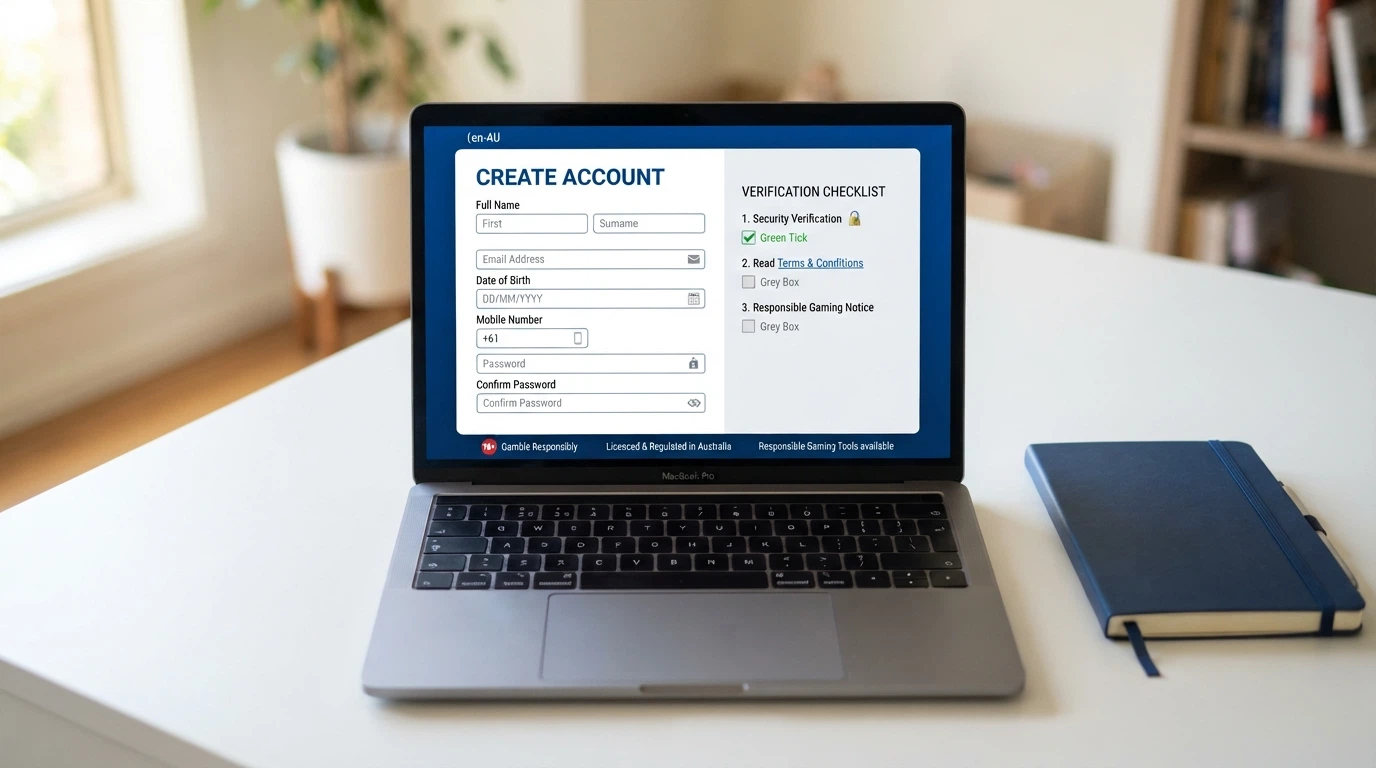
What that means for the player is that the new-casino spin offer is rarely as good as the headline suggests, and the vetting of a new brand takes more than a glance at the spin count. The 1,788 illegal gambling and affiliate sites the ACMA has blocked since November 2019 are a population that includes new launches that did not survive their first year, and the 230+ services that withdrew from the Australian market since 2017 are a population that includes operators who decided the enforcement risk was no longer worth the customer base. The new casino a player sees in a search result this month may be on the blocked list next month, and the balance on the account goes with the brand.
Why New Casinos Push Free Spins Harder
The reason is the conversion funnel. A new offshore casino has no brand recognition, no player loyalty, and no repeat-customer base. It has to acquire its first ten thousand players from scratch, and the only acquisition channel that does not require a paid media budget is the free-spin offer. The operator gives away a small amount of slot play, the player signs up, the player deposits, and the player becomes the recurring customer the operator needed. The free-spin cost is the customer-acquisition price, and the wagering requirement and cashout cap are the conversion rate.
The offer is real, but the value flows in a particular direction. A player who claims the free spins, clears the wagering, takes the cashout cap, and never deposits has cost the operator the bonus amount and produced no revenue. A player who claims the spins, finds the wagering too steep to clear, and deposits to chase a larger welcome package is the profitable outcome. The offer is built to convert, and the conversion is the product.
Quick Vetting Checklist for a Brand-New Casino
Two minutes of checking before signing up catches most of what goes wrong with a new offshore casino. The five checks below are the ones a player can run without an account and without depositing.
- Verify the licence number, not just a badge. A Curacao licence number is searchable on the Curacao Gaming Control Board’s register, and a licence that does not resolve to a registered operator is a licence that does not exist.
- Check the ACMA blocking list. The register of blocked sites is searchable, and a brand that has already been ordered blocked is a brand that has been found in breach of the IGA.
- Search player forums for withdrawal complaints. A brand with a recent pattern of refused withdrawals, voided wins or delayed payouts is a brand the player avoids. The forums are where these complaints land before any regulator sees them.
- Confirm the offer terms match the promo page. A bonus banner that advertises fifty free spins with no mention of the wagering requirement, the cashout cap or the eligible pokie is a banner that is not telling the whole story.
- Test that responsible-gambling tools exist. A new casino with no deposit limit, no session timer, no self-exclusion option and no link to a helpline is a casino that has not built the player protections a serious operator builds.
The five checks are not exhaustive. They are the ones a player can run in two minutes, and they catch most of what goes wrong before a deposit lands.
Claiming 50 Free Spins on Mobile: What Changes on a Smaller Screen
The mobile redemption flow is the desktop redemption flow, with the same terms, the same wagering requirement and the same cashout cap. The only variable is the unlock mechanism. A browser-based claim works identically on a phone and a laptop, the wagering counter carries across the device switch, and the balance updates in real time whether the player is at the desk or on the train.

The unusual case is the PWA-gated offer. Bizzo Casino’s ten-free-spins no-deposit perk is credited when the player installs the operator’s progressive web app on their device, and the install is a mobile-native action that does not exist on the desktop path. The spins, once credited, behave like any other no-deposit offer: 40x wagering, A$75 win cap, expiry window applied identically across platforms. The PWA install is an acquisition tool that ties the bonus to a specific behaviour, and the behaviour is one the operator can verify.
What does not change is the underlying offer. The terms are the same on a five-inch screen as on a twenty-seven-inch one, and the only thing the screen size affects is the player’s ability to read the fine print. A player who skips the terms page on mobile has less excuse than a player who skips it on desktop, because the mobile terms page is rendered in a column the thumb can scroll through in under a minute. The offer is the same. The player’s attention to the offer is the variable.
The Legal Reality: Every 50 Free Spins Offer Sits Offshore
Australian law prohibits online casino outright. The Interactive Gambling Act 2001 makes it an offence to provide online casino games, online pokies and in-play betting to a person in Australia, and the prohibition has no licence path. There is no Australian-licensed online casino, no state-issued online casino licence, and no application process a foreign operator can complete to become one. Every operator that runs a fifty-free-spins offer to Australian players is offshore, and the offer is by definition a prohibited interactive gambling service under Australian law.
The ACMA’s enforcement record is the most visible measure of what that means in practice. Since the regulator’s first blocking request in November 2019, 1,788 illegal gambling and affiliate websites have been blocked by Australian ISPs. Over 230 illegal services have withdrawn from the Australian market since the ACMA began enforcing the new rules in 2017. The Tabcorp enforcement action in January 2026 — eight infringement notices at A$19,800 each, for a total of A$158,400 — is the largest civil penalty against a major Australian-licensed operator for providing a prohibited in-play betting service, and it confirmed the ACMA’s willingness to penalise the regulated sector as well as the offshore one.
The ACMA’s own framing of the risk is direct. The regulator reminds consumers that even if a service looks legitimate, it is unlikely to have important customer protections, which means Australians who use illegal gambling services risk losing their money. The risk is not legal for the player. The player is not prosecuted under the IGA, and the Act targets the provider. The risk is practical: no Australian consumer protection, no local dispute resolution, no recourse if the operator refuses a withdrawal, and the site can be blocked at any time with a balance still on the account.
The Interactive Gambling Act 2001: What It Prohibits and What It Leaves Open
The Interactive Gambling Act 2001 prohibits the provision of online casino games, online pokies and in-play sports betting to a person in Australia. The 2017 amendment to the Act closed the loopholes offshore operators had been using and gave the ACMA the enforcement and blocking powers the regulator now exercises. What the Act does not prohibit is the player. The individual is not prosecuted for signing up, depositing, claiming a bonus or playing, and the Act’s enforcement attention is on the operator.
What is licensable in Australia is the wagering side: sports betting before the event, race wagering, lotteries and keno, through operators licensed by a state or territory. The Northern Territory Racing and Wagering Commission, administered through Licensing NT, is the largest concentration of online wagering licences, and the licensed operators under it are the bookmakers Australian players reach when they bet on a horse race or a football match. None of those licences covers an online casino, and the licensed bookmakers do not run fifty-free-spins offers. The product and the licence are in different markets.
ACMA Enforcement: 1,788 Blocked Sites and Counting
The ACMA’s enforcement record is the most concrete measure of how the prohibition plays out. The 1,788 blocked sites include both offshore casinos and affiliate marketing sites that promoted them, and the blocking has been continuous since the first order in November 2019. The 230+ services that have withdrawn from the Australian market since 2017 are a separate population: operators that decided the enforcement risk outweighed the customer base and pulled out before the ACMA could block them.
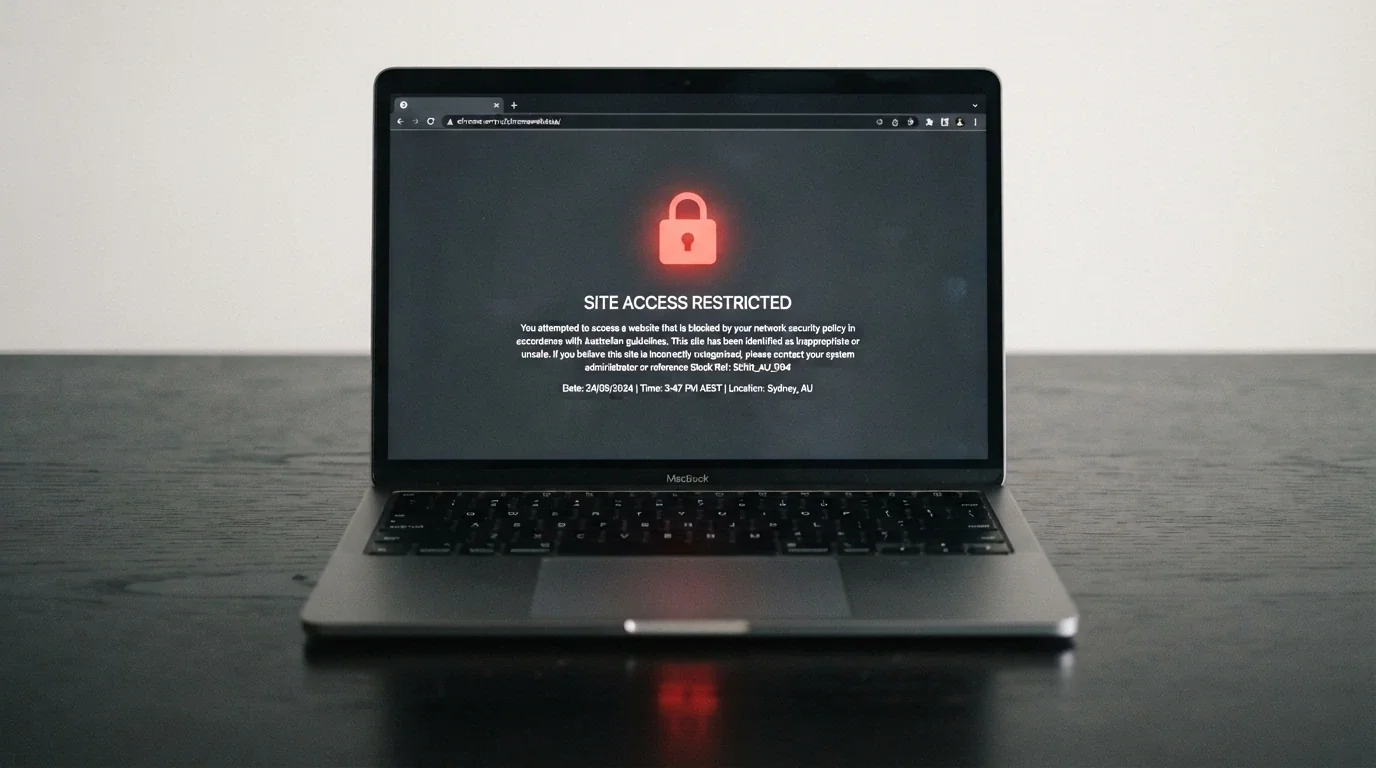
The Tabcorp enforcement action is the largest civil penalty against a major Australian-licensed operator for an IGA breach. On 16 January 2026 the ACMA issued eight infringement notices to Tabcorp Holdings Limited, each for A$19,800, for a total of A$158,400, after Tabcorp was found to have provided a prohibited in-play betting service. The fine is a signal that the ACMA will pursue the regulated sector as well as the offshore one, and it is the most recent precedent for what a prohibited interactive gambling service costs the operator that runs one.
Fair Go’s history with the regulator is the longest in the offshore market. Fair Go was the first illegal offshore gambling site the ACMA ever ordered blocked, on 19 November 2019, and the brand was named in a 5 August 2022 formal warning to its RTG master-licence holder. The brand continues to operate offshore and continues to cycle no-deposit offers to Australian players, which is itself a measure of how the offshore market absorbs enforcement action and moves on. A site a player spins on today can be on the blocked list tomorrow, and the balance on the account goes with the brand.
The 2026 Reform: What Changes on 1 January 2027
The Interactive Gambling Amendment (Gambling Reform) Bill 2026 passed Parliament on 19 August 2026 and its measures commence on 1 January 2027. The reform does not legalise online casino — the prohibition stays in place — but it adds a layer of advertising, inducement and payment restrictions that change the surrounding market.
The advertising changes are the most visible. Wagering advertising during live coverage of sporting events is banned, with the blackout running from fifteen minutes before to five minutes after a live event between 5:00 am and 8:30 pm. The hourly cap of three wagering ads per hour applies across the same window. Athletes, celebrities and influencers are banned from promoting wagering services, and the broadcasting of sporting odds is restricted. The Wagering Advertising Opt-out Register gives consumers a way to suppress wagering advertising entirely, and the inducement marketing prohibitions ban direct marketing of inducements for fourteen days after a customer signs up with a wagering company and for three months after a person deregisters from BetStop.
The payment changes are the most consequential for the offshore market. Banks and payment providers gain express authority to block transactions to illegal gambling operators from 1 January 2027, which means a deposit to an offshore casino can be declined at the payment-rail level rather than at the site level. The credit card and crypto ban has been in force since 11 June 2024 for licensed operators, and the 2027 reform extends the payment-blocking authority to the illegal-operator segment. The online keno “pocket pokies” product is banned, and foreign-matched lotteries are prohibited.
The 2026 reform is law but not yet binding. The measures commence on 1 January 2027, and the rules in force through the rest of 2026 are the rules the 2017 amendment established. A player reading this in late 2026 is reading about a reform that has been passed and is six months from commencement, and the practical impact on the offshore free-spin market will not arrive until the payment-blocking authority is in place and exercised.
Responsible Gambling: Staying in Control When Spins Cost Nothing Upfront
A free-spin offer removes the cost barrier, and the removal is the marketing point. The same removal is the responsible-gambling point, because a player who has not deposited has not yet committed money they can lose, and the offer is a low-friction entry into a product whose mathematics are designed to take more than they give. The infrastructure that keeps a free offer from becoming an expensive habit is a combination of regulatory tools, operator-level tools and personal disciplines, and the offshore market sits outside the regulatory layer entirely.
The National Gambling Helpline is 1800 858 858, free, confidential and staffed around the clock, with online chat and counselling through Gambling Help Online. The helpline is the single most reliable contact a player in any Australian state or territory can make, and it is the right call for a player who is unsure whether the free-spin offers are becoming a habit they want to break. Gambling harm prevalence sits at approximately 2.1% of Australian adults, or roughly 430,000 people, and the Australian Institute of Health and Welfare put high-risk gambling at 1.8% in 2022. The numbers are not large as a percentage, and they are large as a population.
BetStop Self-Exclusion: What It Covers and What It Cannot Reach
BetStop — the National Self-Exclusion Register — is the strongest responsible-gambling tool Australia has built. A player who registers with BetStop is excluded from every Australian-licensed wagering service in a single step, with a minimum exclusion period and an option to extend the exclusion to a lifetime ban. As of 31 July 2026, BetStop has recorded 67,480 registrations since the register went live in August 2023, with 41,290 exclusions still active — more than 60% of all registrants. The age profile skews young: 78% of registrants are under 40, and 38% have chosen a lifetime exclusion.
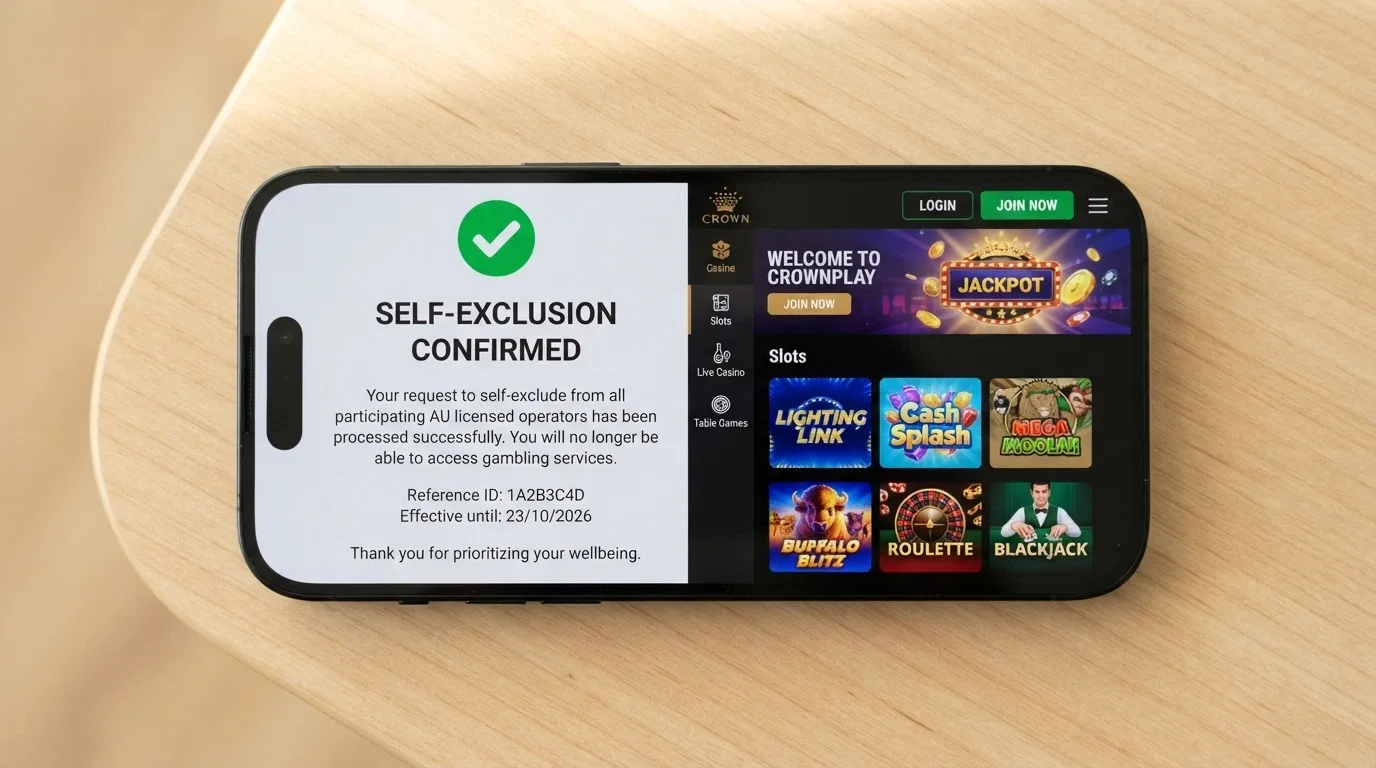
What BetStop does not cover is every operator in the comparison table on this page. BetStop binds Australian-licensed wagering services, and an offshore casino is not connected to the register. A player who has registered with BetStop and then signs up at one of the offshore brands in this comparison can still play, deposit, claim a bonus and withdraw, and the self-exclusion does not follow them. The offshore blind spot is a structural feature of the prohibition: the licensed market the register covers is the market that does not run free-spin offers, and the offshore market that runs the offers is the market the register does not reach.
Practical Tools: Deposit Caps, Time Limits and Where to Get Help
The responsible-gambling tools a player can actually use depend on where the player is playing. On Australian-licensed wagering services, deposit limits are customer-set under state and territory conditions, and the operator is required to honour them. Session timers, activity statements and self-exclusion through BetStop are all available. The tools are mandated, the operator is required to offer them, and the regulator audits the offering.
On an offshore casino, the same tools may or may not exist, and the operator is not required by Australian law to provide them. A player who wants a deposit limit on an offshore site has to ask the operator for one, and the operator’s response is a matter of house policy rather than regulatory requirement. The session timer, the activity statement and the self-exclusion request are all on the same footing: available at the operator’s discretion, with no Australian regulator auditing whether they are honoured.
The practical disciplines that work on both markets are the ones the player controls. A pre-set budget for the session, a timer on the device that ends the session regardless of the result, and a commitment to walk away from the bonus balance once the cashout cap is reached are the tools no operator can disable. The helpline is the right call for a player who is unsure whether the budget is being respected. The helpline number is the same regardless of which market the player is on, and the counsellors are trained for the offshore context as well as the licensed one.
How We Evaluate 50 Free Spins No Deposit Offers
The evaluation behind this page draws on three source categories: the ACMA register and enforcement record, the operators’ own published terms pages, and industry trackers that document the offshore market. The ACMA data supplies the legal framework, the enforcement record and the responsible-gambling infrastructure. The operator terms pages supply the welcome offer, the wagering requirement, the cashout cap, the expiry window and the eligible pokie list. The industry trackers supply the market context and the patterns across operators.
The AU-licence whitelist check is a one-line test. Every operator in the comparison is checked against the ACMA register, and the result is the same for all ten: no Australian online casino licence exists, and none of the operators holds one. The comparison is built on offshore brands, and the offshore status is not a footnote. It is the headline.
The ranking criteria are qualitative, not numerical. No-deposit availability, wagering fairness, game library breadth, transparency of terms, and the presence of responsible-gambling tools are the five axes, and they are applied in that order of weight. An operator with a confirmed no-deposit offer ranks above one without. An operator with a wagering requirement at the low end of the band ranks above one at the high end. A broader game library is preferred to a narrower one. Transparent terms are preferred to a bonus page that links to a terms page that does not load. Responsible-gambling tools are the final check, and the offshore market is thinner on this axis than the licensed one.
The page does not invent numerical weightings. The five criteria are not given a percentage each, and the ranking is not a calculated score. The order is the editorial order, and the editor’s reasoning is on the page in the prose beside each operator.
Your Decision: What Matters and What to Skip
Three numbers decide whether a fifty-free-spins no-deposit offer is worth claiming. The wagering multiple, the cashout cap and the eligible pokie’s RTP. A wagering requirement below 40x on the spin winnings is the threshold at which the playthrough is clearable for a player who is patient and disciplined. A cashout cap above A$100 is the threshold at which the offer has meaningful upside, because below A$100 the cap clips almost every visible feature-round win. A pokie with a published RTP above 96% in the operator’s configuration is the threshold at which the house edge does not eat the bonus balance before the wagering is done.
The three thresholds interact. A 30x wagering requirement with a A$50 cashout cap and a 96.71% pokie is a small, defined offer that a player with a small bankroll can clear and walk away from with a real win. A 60x wagering requirement with a A$100 cashout cap and a 94.5% pokie is an offer where the math does not work in the player’s favour, and the spin round is a marketing expense the operator has already written off. The page’s reading of any individual offer comes down to whether the three numbers sit on the right side of those thresholds, and the comparison table is the place to check them.
What to skip is the rest. The spin count is the marketing number, and fifty is not a meaningfully better offer than thirty in terms of expected value; both produce, on average, a win the wagering requirement will eat. The bonus banner art is the least informative part of the offer. The affiliate site’s editorial rating of the casino is the operator’s marketing budget at work, not an independent assessment. The terms page is the offer, and the terms page is where the player should spend the two minutes the rest of the banner does not deserve.
The legal picture in 2026 means every offer is a calculated trade-off. The offer is offshore, the operator is not licensed in Australia, the player has no local consumer protection, and the site can be blocked at any time with a balance on the account. The player who understands the trade-off and still claims the offer has made an informed choice. The player who claims the offer because the banner was persuasive has not.
The one action that costs nothing and protects everything is the helpline. 1800 858 858, free, confidential, around the clock. The call is the right move for a player who is unsure whether the free-spin offers are becoming something they are not, and the counsellors are the people who can help the player decide. BetStop is the right move for a player who has decided the wagering is no longer a choice they want to make on the licensed market, and it does not reach the offshore market — but the decision to step back is the player’s, and the register is one of several tools that decision can lean on.
The free-spin offer is what it is. The terms behind it are the real price, the offshore status is the real jurisdiction, and the player who reads the terms, understands the jurisdiction and acts accordingly is the player the offer was built for.
Frequently Asked Questions
Can I keep every dollar I win from a 50-spin no-deposit round?
No. The maximum cashout cap on a no-deposit free-spin offer in the Australian-facing market is almost always A$50 to A$100, and the cap is enforced regardless of what the reels actually produce. A win above the cap is forfeited at withdrawal, and the cap is stated in the bonus terms before you claim. The offer is a small, defined upside, not an open-ended payout.
Why would a casino give away spins without asking for a deposit first?
Because the free spin is the cheapest customer-acquisition channel in the offshore market. A new player signs up, the casino credits the spins, the player spins, and the wagering requirement and cashout cap recover most of the value. The offer is built to convert a spin-claimer into a depositing player, and the bonus cost is the acquisition price the operator is willing to pay for that conversion.
What stops someone signing up, claiming the spins and walking away?
The wagering requirement, the cashout cap and the expiry window. The wagering requirement multiplies the spin winnings by a stated number and demands that the player bet the resulting total before withdrawing. The cashout cap clips the maximum withdrawal regardless of what was won. The expiry window kills the bonus balance if the player has not cleared the requirements in time. The three gates operate together, and any one of them can close the door on a withdrawal.
Are casino free-spin offers governed by Australian consumer law?
Not when the casino is offshore. The Interactive Gambling Act 2001 prohibits the provision of online casino games to a person in Australia, and no Australian consumer protection framework reaches an offshore operator. The player is not prosecuted for signing up, but the player also has no recourse under Australian consumer law if the operator refuses a withdrawal, voids a win or disappears. The Curacao licence is the only regulatory floor, and the Curacao Gaming Control Board is the only regulator with jurisdiction.
Do the same 50-spin deals appear on desktop and phone?
Yes. The wagering requirement, the cashout cap, the expiry window and the eligible pokie are the same on every device. The only variable is the unlock mechanism: some offers credit on browser sign-up, some require a bonus code, and a small number, like Bizzo Casino’s ten-free-spins PWA-install offer, are gated to a specific mobile action. The terms carry across the device switch regardless of how the spins were claimed.
What happens to unused free spins after the expiry window closes?
The unused spins and any winnings left in the bonus balance are forfeited. The expiry window is typically seven to fourteen days from credit, and some offers run as short as twenty-four hours. The bonus terms state the window at credit, and the player is responsible for using the spins and clearing the wagering inside it. A balance that has not been cleared by the expiry is removed from the account, and the original free-spin offer is treated as fully consumed.
No-Wagering Free Spins: Do They Exist for Australian Players?
The free-spin offer that free-spin offers aspire to be is the no-wagering version: spins that pay real, withdrawable cash, with no playthrough requirement and no cap on what the player keeps. In theory, a no-wagering spin offer is what a player actually wants, and in practice it is almost never what a no-deposit offer delivers.
Among the operators Australian players actually reach, none in the featured set offers a confirmed no-wagering fifty-free-spins no-deposit bonus. The closest offers, such as the BitStarz thirty-free-spins no-deposit, still carry 40x wagering, which is the standard multiple across the offshore market. The mechanism is the same reason no-deposit offers carry caps: the operator is taking the risk on the spins, and the only way to price that risk is to recover most of the winnings through the wagering requirement. A no-wagering offer with no cap gives the player the full expected value of the spins, which is a number the operator cannot profitably pay.
Where no-wagering free spins do exist, the structure changes. A no-wagering offer almost always carries a tighter cap, sometimes as low as A$10 or A$20, and a smaller spin count, often ten or twenty rather than fifty. The player trades the playthrough for a smaller, more defined upside. The free-spin winnings are real cash, but the cash is small enough that the operator can afford to pay it. The trade-off is the only honest version of a no-wagering free-spin offer, and it is the closest the Australian market comes to a “free” spin.