
The Newest Online Casinos Accepting Australian Players — and the 2026 No-Deposit Bonus Reality
Data current as of 18 October 2026; licence and operator claims verified against Australian Communications and Media Authority records.

No online casino in Australia holds an Australian licence. The product is prohibited under the Interactive Gambling Act 2001, and every operator an Australian player can reach is offshore — registered somewhere between Curaçao and Malta, with an Australian customer base the local regulator cannot reach. “Newest” therefore says nothing about a freshly minted Australian licence round, because none exists. It points to recently launched offshore brands, often rebrands of older skins, that have opened their doors to Australian sign-ups in the last year or two and are now running the same kind of no-deposit promotion the Australian-facing offshore market has been running since well before the IGA was tightened.
That framing matters because the rest of this page only makes sense once the legal status of the product is fixed in the reader’s head. The bonus numbers that follow are real, the wagering multiples are real, the cashout caps are real — and none of them are offered under Australian consumer law. The operator can block the site, freeze a balance, or refuse a withdrawal without recourse in an Australian court. The bonus is a marketing spend, not a contract enforceable by the regulator. Read it that way and the figures that look generous in the marketing start to look exactly as modest as they should.
Table of Contents
- What It Actually Means to Play at Australia’s Newest Online Casinos in 2026
- Why Your 2026 No-Deposit Bonus Is Smaller Than It Looks
- The Newest Online Casinos Australian Players Can Join — What Each One Actually Offers
- The Pokies and Games That Actually Accept Your No-Deposit Spins
- Why the Newest Free Slots Are a Smarter Way to Test a Casino
- Getting Money In and Out of a New Casino From Australia — What Works
- No Australian Licence Exists for Online Casino — Here’s What That Means for Your Bonus
- The Safety Net That Does Not Reach Offshore: Responsible Gambling Tools for Australian Players
- How We Selected and Ranked the Newest Online Casinos for Australian Players
- What to Actually Do With a No-Deposit Bonus at Australia’s Newest Casinos
- Frequently Asked Questions
What It Actually Means to Play at Australia’s Newest Online Casinos in 2026
The newest online casino available to an Australian player is, by definition, not an Australian casino. The Interactive Gambling Act 2001 prohibits the supply of online casino games, online pokies and in-play sports betting to anyone in Australia; the 2017 amendment closed the loopholes that earlier offshore operators had ridden. There is no licence class for it anywhere in the country — not federally, not in any state or territory. Crown and The Star run land-based casinos under state licences; those licences do not extend to an online product. A punter searching for a “new Australian online casino” is, in practice, searching for the most recently launched offshore casino willing to accept Australian sign-ups.
What “newest” refers to in that market is a moving target. Offshore operators launch and rebrand constantly. The brands that surface under the “newest” label on Australian-facing affiliate sites are usually recent launches or rebrands of older operations under the same parent. A few are genuinely new companies; many are skin changes from older operations under the same parent. Researching the corporate behind the brand matters more than the launch date the marketing claims.
Australian players access these sites through the same channels they use for any other overseas service: a browser, an email address, an AUD or crypto deposit. There is no app to install from the Australian App Store or Google Play storefront — the major app stores do not carry real-money gambling apps that accept Australian customers, and the offshore operators know better than to try. What they offer instead is a mobile-optimised site that loads in Safari or Chrome and behaves like an app once added to the home screen. The newest offshore casinos are built for that browser-first experience from day one, because mobile is where the Australian audience actually plays.
The Australian dollar is widely supported. AUD is the default currency on most of the operators in the ranking below, and PayID deposits in AUD are common. That is one reason these casinos feel familiar — the cashier looks like an Australian fintech surface, even though the licence on the back end is Curaçao. The familiarity ends at the cashier; the small print is foreign.
What “Newest” Means When No Australian Casino Is Licensed
The Australian prohibition has been in force since 2001 and was tightened in 2017. The product is the prohibited service, not the player. Subsection 15(2A) of the Interactive Gambling Act makes it an offence to provide a prohibited interactive gambling service to a person physically in Australia; the IGA targets the provider, and ACMA enforces against the operator, not the customer. A punter is not prosecuted for opening an account at an offshore casino. That is the law’s shape, and it is the reason the offshore market keeps supplying offers to Australian email addresses.
Since enforcement was strengthened in 2017, more than 225 illegal services have withdrawn from the Australian market entirely, and ACMA has directed Australian ISPs to block 1,774 illegal gambling and affiliate websites as of mid-2026. The “newest” label on a casino is therefore not a guarantee of longevity. Many of the sites that surface in a current search were not in last year’s search results. Some will not be in next year’s. The churn is real.
“Newest” as a search term is best read as “currently active and currently accepting Australian sign-ups”, not “launched this quarter and likely to last”. A punter looking for a casino with a fresh interface and a recent no-deposit promotion will find plenty of options. A punter looking for an Australian-regulated casino will find none.
The Australian Player’s Reality: Real-Money Play at Offshore Sites
The practical reality is that hundreds of thousands of Australians deposit and play for real money at offshore casinos. Real-money registration requires an email, a username and a password; the rest of the verification (date of birth, address, source of funds) is usually deferred until the first withdrawal request. That is how the offshore market works in practice, and it is the reason ACMA’s enforcement focuses on the provider rather than the player — the friction at withdrawal is where disputes happen, and ACMA cannot reach a Curaçao-licensed operator to settle them.
AUD is widely accepted. Most of the operators in the ranking below let an Australian player deposit in dollars without conversion fees. The deposit methods include PayID, debit cards issued by Australian banks (the operators that still accept them), a handful of e-wallets, and — at the offshore end of the spectrum — crypto. The credit card ban that took effect on 11 June 2024 is a useful filter: a casino that asks for a credit card or cryptocurrency deposit is, by definition, not an Australian-licensed operator, because licensed Australian wagering operators cannot legally accept either payment type for online wagering. If the cashier offers credit card or crypto, the operator is offshore.
The “real money” qualifier matters because the offshore market also runs demo and free-play modes. Demo play is a separate product, available without registration, and it is the closest thing to a safe way to evaluate an offshore casino before committing a dollar. The no-deposit bonus sits between demo and real-money play: it is real money, but with a small fixed ceiling on what you can win and withdraw, and a wagering requirement that decides whether any of it reaches a bank account.
Mobile-First: How the Newest Casinos Reach Australian Screens
The newest offshore casinos are built for the phone. They do not need an app store presence — the major app stores do not carry real-money gambling apps that target Australian customers, and the offshore operators do not bother trying to submit. What they offer instead is a single-page web app that runs in the mobile browser, caches locally on first load, and behaves much like a native app once added to the home screen.
The result is fast, often slick, and feels native to an Australian user. The cashier, the game lobby, the live chat — all are designed for a thumb and a portrait screen. Compared to the licensed Australian wagering apps, the offshore casino UI is generally more game-forward and less betslip-forward, because casino play is the product and the product is the page. The trade-off is that no app store means no automatic updates and no easy parental controls; the operator can change its bonus terms or its withdrawal policy without warning, and the only notice is the email used at sign-up.
For a punter testing a new operator, the mobile browser approach has one practical advantage: there is nothing to install and nothing to uninstall. If the casino disappoints, closing the browser tab is the entire exit cost.
Why Your 2026 No-Deposit Bonus Is Smaller Than It Looks
A no-deposit bonus looks like the operator handing you something for nothing. The mechanic, in practice, is the operator handing you something small, then charging you for the privilege of turning it into cash. The arithmetic is built into the offer: a free chip or a set of free spins is credited on sign-up, the winnings are locked behind a wagering requirement, and a cashout cap limits what you can actually withdraw. The combination reduces most no-deposit bonuses to a trial tool and a few to outright nothing.

Across Australian-facing offshore operators, the wagering requirement on no-deposit free spin winnings runs from 40x to 60x, with 50x the industry standard. The maximum cashout sits between $50 and $150 in most cases. The two numbers are connected: a 60x wagering requirement with a $180 cashout cap looks like a generous offer compared to a 30x wagering with a $20 cap, and the headline numbers are designed to make that comparison favour the higher wagering. A punter who reads the wagering first and ignores the cap will conclude the wrong offer is the better one.
The exception is the rare low-wagering offer. A handful of newer casinos run 25x or 30x wagering on no-deposit bonuses; the trade-off is a max cashout of $20 or $30, which closes the gap between the two offers almost entirely. The lower wagering makes clearing the bonus more achievable; the lower cap makes the cleared bonus worth less. Whether that is a better deal depends on whether the punter values their time or their chance of a payout. Most do not stop to think about the trade-off; most should.
A no-deposit bonus is, statistically, a wager the player pays to attempt a payout the operator has capped. The Fair Go Casino offer illustrates this cleanly. The $15 free chip with 60x wagering and a $180 maximum cashout — the best part of the offer for the punter — looks, on the marketing, like a $15 gift. It is not. Sixty-times wagering on a $15 bonus means $900 of notional turnover has to run through eligible games. At a representative 95% RTP — the midpoint of RTG’s configurable 91% to 97% range — the expected loss on that turnover is roughly $45. So the “free” $15 has a real cost of about $45 in house edge; the operator has, in effect, sold the right to attempt a payout for $45 plus the time spent spinning. The expected payout, if the wagering is cleared and the $180 cap is hit, is $180. The expected net, before time, is positive. It is positive because the operator set the cap high enough, not because the bonus is generous.
How a No-Deposit Bonus Works at an Offshore Casino
The mechanic is straightforward. On sign-up, an offshore casino credits either a free chip (a small fixed dollar amount, usually $10 to $25) or a set of free spins (anywhere from 10 to 125 spins at a fixed stake per spin). No deposit is required. The credit sits in a separate “bonus balance” or directly in the regular balance, depending on the operator.
The difference between the two is how the wagering applies. A free chip’s wagering typically applies to the bonus amount itself plus any winnings generated from it. A free spin’s wagering applies only to what the spins win — the spin stake is notional and never comes out of the punter’s pocket. In both cases, the wagering multiple is applied to a notional turnover figure, and the punter has to run that turnover through eligible games before any of the winnings convert to withdrawable cash.
The cashout cap is the ceiling on what you can actually take out. Even if you run a $15 free chip through a 60x wagering requirement at 95% RTP and end up with $300 in the bonus balance, the cashout cap — typically $50 to $180 — stops the withdrawal at that figure and the rest is forfeit. The “free money” framing collapses at this point: you did not get $15 for nothing, you paid for the privilege of attempting to convert it to $180 at best.
The reason an operator offers a free-chip NDB at all is the marketing value. A $15 chip costs the operator nothing on the average customer who never clears the wagering; on the rare customer who hits the cap, the operator pays out $180 from a $900-turnover game that took a chunk of house edge on the way through. The offer is engineered to look like generosity in the marketing and to function as a paid-acquisition tool in the accounting. A punter who understands that has the right frame to claim it.
The No-Deposit Offers Available to Australian Players Right Now
The variety of no-deposit offers on Australian-facing sites in 2026 is narrower than the marketing suggests. Most offers fall into three buckets: free chips credited on sign-up (Fair Go’s $15 chip is the canonical example), free spins credited on sign-up (Bizzo’s 10–25 free spins, Rocket Casino’s up to 125 free spins), and free spins credited in exchange for an action — typically a verified review or a phone/email verification (RocketPlay’s 20 spins for a verified review).
The free-chip style is the most expensive form of NDB for the operator, which is why it is increasingly rare. The review-based or verification-based offers are cheaper to run and easier to scale, and they dominate the search results. A punter who actually wants a free-chip no-deposit bonus has, in practice, a shorter list than a punter searching for “free spins no deposit”. The two offers are often treated as interchangeable in marketing; they are not, and the wagering and cap attached to each is different.
The featured operators in the ranking further down this page split roughly down the middle on whether they actually carry a no-deposit offer an Australian player can claim. Fair Go, SkyCrown, RocketPlay, Bizzo and Rocket Casino carry one; WinSpirit, Rainbet, Stake, Royal Reels and Scream either do not offer one or did not surface terms this run. The split is worth noting up front: half the ranking carries no NDB, and the page is honest about which is which. A punter searching specifically for a no-deposit bonus should focus on the half of the ranking that carries one. The deposit-match welcome offers are a different product and a different decision.
Deposit Bonuses and Promotions at the Newest Casinos
Beyond the no-deposit offer, every featured operator runs a deposit-match welcome package. The range is wide: Rainbet’s 100% match plus 20 free spins on the first deposit, WinSpirit’s 200% match plus 25 free spins, RocketPlay’s 100% up to AUD$500 plus 100 free spins, SkyCrown’s four-deposit package of 450% up to A$8,000 plus 400 free spins, and Fair Go’s 100% up to $200 redeemable five times for a total of $1,000.
The headline numbers are not the comparison to make. SkyCrown’s 450% looks like the standout until the A$30 to A$100 minimum deposit, the 14-day bonus validity and the 40x wagering are added; the welcome package is large in headline terms but the per-spin cost of clearing it is comparable to the smaller matches at friendlier operators. The wagering is the constant: every deposit welcome package in the featured set sits in the 30x to 40x range, with the exception of Fair Go’s 30x deposit match against its own 60x no-deposit. The bonus validity window varies from five days (RocketPlay’s free-spin expiry) to 14 days (SkyCrown’s bonus window) and is one of the easiest ways for an offer to become worthless if a punter does not read it.
Ongoing promotions — reload bonuses, weekly free spins, cashback — exist at the offshore end but are not part of this page’s ranked comparison. They vary month to month, and the only honest comparison is the casino’s own promotions page at the moment of deposit.
The Newest Online Casinos Australian Players Can Join — What Each One Actually Offers
The table below ranks the ten offshore casinos Australian players most commonly reach in 2026. The columns are the ones that matter for the decision: licence jurisdiction, the no-deposit offer, the wagering that sits on it, and the deposit welcome package.

| Operator | Licence jurisdiction | No-deposit offer | Wagering on NDB | Deposit welcome |
|---|---|---|---|---|
| Fair Go Casino | Offshore (no AU licence; RTG single-provider) | $15 free chip | 60x | 100% up to $200 × 5 (30x) |
| SkyCrown Casino | Offshore (Curaçao; no AU licence) | 20 FS on Aztec Clusters | 25x (third-party source) | 450% up to A$8,000 + 400 FS (40x, 14-day validity) |
| RocketPlay Casino | Offshore (Curaçao; no AU licence) | 20 FS for verified review; 120 FS on Doragon’s Gems | 40x | 100% up to AUD$500 + 100 FS (40x, 5-day FS expiry) |
| WinSpirit Casino | Offshore (Curaçao; no AU licence) | None confirmed | — | 200% + 25 FS (40x bonus; 35x on risk-free spins) |
| Stake Casino | Offshore (Curaçao; no AU licence) | None confirmed | — | Not confirmed this run |
| Rainbet | Offshore (no AU licence) | None | — | 100% + 20 FS on Sweet Bonanza (40x) |
| Royal Reels | Offshore (no AU licence) | None confirmed | — | Not confirmed this run |
| Bizzo Casino | Offshore (Curaçao; no AU licence) | 10–25 FS | 40x | Not confirmed this run |
| Scream Casino | Offshore (no AU licence) | None confirmed | — | Not confirmed this run |
| Rocket Casino | Offshore (no AU licence) | Up to 125 FS | 45x | Not confirmed this run |
The split is worth saying plainly. Five of the ten operators carry a no-deposit offer an Australian player can claim; five do not, and three of those five (Stake, Royal Reels, Scream) did not surface any bonus terms at all this round. The “newest” label is not a guarantee of an NDB. The first five rows of the ranking contain the candidate set for players prioritising a no-deposit bonus, while the remaining operators serve as a point of comparison for the broader market.
Fair Go Casino
Fair Go is an RTG-only casino — every pokie in the lobby is supplied by RealTime Gaming, and the operator has not bolted on a second provider. For an Australian-facing site, that is closer to the historical norm than the exception: RTG has been the dominant supplier to the Australian offshore market for years, partly because its configurable RTP range lets an operator tune returns on a per-title basis, partly because RTG’s catalogue is exactly the kind of five-reel video slot the Australian punter expects when they hear “pokies”.
The $15 free chip no-deposit offer is the standout. It is one of the few genuine free-chip offers still in the Australian-facing market in 2026, and the $180 max cashout is at the upper end of the typical $50–$150 range. The 60x wagering requirement is what makes it expensive to clear: at the representative 95% RTP, the expected loss on the $900 turnover the wagering requires is roughly $45. The expected return, if the wagering is cleared and the $180 cashout cap is hit, is $180. The offer is positive in expectation, but the gap between stake and outcome is wide, and most players will not clear the wagering at all.
The deposit welcome is a different product. Five separate 100% matches up to $200 — a total ceiling of $1,000 — at 30x wagering, with no max cashout on the deposit bonus winnings. That is friendlier than the NDB by a factor of two on the wagering and uncapped on the payout. Fair Go is, in practice, a deposit casino with a free-chip trial at the front door; the deposit welcome is where the operator wants the punter’s money and the terms reflect that.
The verdict on Fair Go: the free chip is the best free-chip offer currently surfaced for Australian players, and the 60x wagering is the price of admission. It serves as a brief test of the platform rather than a genuine profit opportunity. Managing expectations around that 60x requirement is the most honest way to evaluate the offer.
SkyCrown Casino
SkyCrown runs a Curaçao licence and a game lobby that draws on multiple providers, which gives it a wider variety of pokies than Fair Go’s RTG-only setup. The welcome package is the headline: a four-deposit structure totalling 450% match up to A$8,000 plus 400 free spins, with 40x wagering on both the bonus funds and the free-spin winnings, and a 14-day validity window. The minimum deposit ranges from A$30 on the first deposit to A$100 on the fourth, so the headline figure requires real commitment to clear.
The no-deposit offer is small. Twenty free spins on Aztec Clusters at 25x wagering, per a third-party source, with an A$150 max cashout. Twenty-five-times is below the 40–60x range that dominates the Australian-facing market and is closer to the rare low-wagering offers that usually come with very low caps — but SkyCrown’s cap is at A$150, not $20 or $30, which makes the lower wagering genuinely useful. Treat the third-party source as a starting point and verify the current terms on SkyCrown’s own promotions page before claiming.
The 14-day validity on the welcome package is the part most punters miss. A bonus that expires in a fortnight is fine for a regular player who plays every evening; it is a trap for a casual punter who deposits once and comes back the following weekend to find the bonus forfeited. The minimum deposit progression (A$30, A$30, A$50, A$100) means the A$8,000 headline requires four separate deposits, each within the validity window of the bonus it credits.
SkyCrown suits a regular punter with four deposits in the pipeline. A casual one-deposit visitor gets the better of the no-deposit offer and the wrong end of the welcome package.
RocketPlay Casino
RocketPlay carries two distinct no-deposit paths, which is unusual. The first is twenty free spins on Book of Pyramids for writing a verified third-party review, with 40x wagering and a maximum win of roughly A$85. The second is a 120 free spins no-deposit offer on Doragon’s Gems (RTG) at 40x wagering with a $100 cap. The first is a niche offer for the kind of punter who actually writes reviews; the second is the larger and more accessible of the two.
The deposit welcome is straightforward: 100% up to AUD$500 plus 100 free spins on the first deposit, 40x wagering, a $5,000 maximum win on the bonus, a 5-day expiry on the free spins, and a AUD$30 minimum deposit. The 5-day free-spin expiry is the tightest in the featured set and is the kind of detail a punter will not notice until the spins have already expired. A AUD$7.50 maximum bet while the bonus is active is the second detail to check.
RocketPlay is the widest NDB offering in the ranking by a comfortable margin. The trade-off is two terms to remember: the 5-day clock on the deposit welcome’s free spins and the $7.50 bet cap. Neither is unusual for the market; both bite punters who do not read them.
WinSpirit Casino
WinSpirit does not carry a no-deposit bonus in the standard form. The welcome package is a 200% match plus 25 free spins at 40x wagering on the bonus funds; the “bonus spins” attached to the welcome require an AU$20 minimum deposit and carry 35x wagering with a 7-day validity window. These spins are functionally a deposit-gated offer: they are only available once a deposit has been made, and the deposit itself is the qualifying action.
The 7-day validity on the risk-free spins is short. A punter who deposits and comes back a week later to find the spins expired is the kind of punter this offer is not designed for. The 35x wagering on the risk-free spins is lower than the 40x on the deposit bonus, which is the standard trade-off at this end of the market: a tighter window with a friendlier wagering, in exchange for the deposit that gates the offer.
WinSpirit is best read as a deposit-welcome operator with an NDB-shaped promotion that is not actually an NDB. A player targeting a no-deposit bonus specifically should skip this operator, as those looking to deposit anyway will find its standard terms typical for this market.
Stake Casino
Stake carries a global reputation as a crypto-first sportsbook and casino, but the bonus data an Australian player needs did not surface this run. The operator’s own Australian-facing promotions page is the only source worth checking for current terms — Stake’s offer set moves faster than a static page can track.
Stake is included in the ranking because Australian players reach it, not because current bonus data is available. Players with a specific interest in this brand should verify active promotions directly, as the ranking here is limited to operators where bonus data was publicly confirmable.
Rainbet
Rainbet’s first deposit bonus is a 100% match plus 20 free spins on Sweet Bonanza (Pragmatic Play) at 40x wagering on both the bonus and the free-spin winnings, with a minimum deposit of $30 USD. There is no no-deposit offer. The free spins are tied to Sweet Bonanza, which is one of the higher-profile Pragmatic Play titles and the outlier in a ranking dominated by RTG pokies — Sweet Bonanza’s 96.48% RTP is a published figure, not an operator-configurable range.
Rainbet earns its place as a non-RTG comparison point. The deposit welcome is cleaner than most, and the slot is one a punter is more likely to recognise than the RTG catalogue. It sits off the NDB shortlist, but it widens the picture of what an Australian-facing offshore casino looks like beyond RealTime Gaming.
Royal Reels
Royal Reels has limited English-language coverage outside the affiliate sites that list it; the absence of confirmed bonus terms is consistent with that gap. The brand appears here only because Australian players reach it, with no offer data surfaced in this research. Interested players should check the operator’s own site, as third-party pages currently lack verified data.
Bizzo Casino
Bizzo runs a small no-deposit offer of 10 to 25 free spins at 40x wagering on the spin winnings. The variation in the spin count (10 versus 25) depends on the specific promotion window; the wagering and the eligible games are fixed. The 40x is in the middle of the Australian-facing market’s typical 40–60x range, which puts Bizzo at the friendlier end of the standard bracket but not in the low-wagering exception.
The deposit welcome was not confirmed this run. The punter who wants to evaluate the deposit side of Bizzo should check the operator’s own site directly; the no-deposit side is ordinary for the market and useful as a low-friction way to test a Curaçao-licensed multi-provider casino.
Scream Casino
Scream Casino sits in the same gap as Royal Reels — a brand Australian players reach, with offer data that this round of research did not surface. Treat the operator’s own site as the source of truth on current terms, and the absence of bonus data on this page as a reason to verify the offer on-site before signing up. The inclusion is for context rather than offer comparison.
Rocket Casino
Rocket Casino runs the largest no-deposit free-spin count in the featured set — up to 125 free spins at 45x wagering, per a third-party source. The 45x wagering is on the higher end of the typical 40–60x range, which makes the larger spin count partly an answer to the higher playthrough. The maximum cashout was not confirmed in research and should be checked on the operator’s own terms page before claiming.
The deposit welcome was not confirmed this run. Rocket Casino trades higher wagering for a higher spin count; a punter who values spin count over playthrough will find the offer attractive, and a punter who values lower wagering will prefer Bizzo. The absent cashout cap figure is the part to verify on the operator’s own site.
The Pokies and Games That Actually Accept Your No-Deposit Spins
The word “pokies” is Australian; the games are the same five-reel video slots the rest of the world calls slots. RealTime Gaming supplies the majority of the pokies at the Australian-facing offshore casinos in this ranking, and the RTG catalogue is the closest thing to a shared game library across the offshore market. Fair Go is RTG-only; RocketPlay’s NDB spins land on RTG titles (Doragon’s Gems); Bizzo’s NDB spins are most often on RTG games; SkyCrown’s deposit welcome uses RTG pokies alongside other providers.

The game eligible for a bonus is rarely the whole lobby. A no-deposit free-spin offer is almost always restricted to a handful of named titles — sometimes one, sometimes a short list of three or four. The eligible-game list is part of the bonus terms and should be checked before claiming, because spinning on the wrong game burns the wagering without counting toward it. The same restriction applies to deposit welcome packages: not every pokie in the lobby contributes 100% to wagering, and a few contribute nothing at all.
Table games and live dealer games are excluded from NDB free-spin play as a default. A punter who wants to clear a no-deposit bonus on blackjack or roulette will not find a path; the eligible list is almost always slots and pokies only. Live dealer is a separate product at most offshore casinos and is rarely included in any bonus.
Slots and Pokies: What the Newest Casinos Carry
The table below lists the RTG titles with confirmed RTP and volatility data from research, sorted alphabetically. Most bonus-eligible games at the featured operators sit in this catalogue; a few operators run their NDB spins on BGaming or Mascot Gaming titles (Book of Pyramids, Zeus the Thunderer), which sit outside the RTG list and outside this table.
| Slot title | Provider | RTP | Volatility |
|---|---|---|---|
| Caesar’s Empire | RTG | 97% | — |
| Cash Bandits 2 | RTG | up to 97.5% | High |
| Cash Bandits 3 | RTG | 95.8% | Medium-High |
| Fruit Frenzy | RTG | 97.5% | — |
| I Zombie | RTG | 96% | Medium-High |
| Lucky 8 | RTG | 95% | Medium |
| Penguin Power | RTG | 97.5% | High |
| Plentiful Treasure | RTG | 95% | Medium |
The figures in the RTP column are the values research confirmed. RTG’s RTP range runs from 91% to 97%, configurable per operator, and the figure on this table is the setting the source used — the actual RTP at a specific casino may sit at a different point in that range. The volatility column is empty where research did not carry a value; that is the honest position, and a punter should treat the table as showing what research confirmed rather than what the slot is universally.
A figure that recurs in the RTG catalogue is the high end of the configurable range. Cash Bandits 2 and Penguin Power both have an RTP that reaches 97.5%; Fruit Frenzy and Caesar’s Empire sit at 97% and 97% respectively. The high-RTP end of the catalogue is what an operator leans on when promoting bonus-eligible games; the lower end (91% to 94%) is what the same operator quietly defaults to in the wider lobby. The operator sets the dial; the punter does not always know which setting is active.
RTG: The Provider Behind Most AU-Facing Casino Pokies
RealTime Gaming has been the dominant supplier to the Australian-facing offshore market for the better part of two decades. The reason is partly historical — RTG was an early mover into the Curaçao-licensed offshore market that Australians reached in the 2000s — and partly technical. RTG’s games are built around a configurable RTP architecture that lets an operator tune returns on a per-title basis within a 91% to 97% range. Offshore operators often default to the lower end of that range in the wider lobby, and use the higher-end titles as bonus-eligible games where they want the bonus to clear at a friendlier pace.
The implication for a punter is that the RTP printed on a slot review page is not the RTP the punter actually plays at. The same Cash Bandits 3 can sit at 95.8% at one casino and 96% at another, and the same title at the lower end of its configurable range (closer to 91%) at a third. The punter cannot usually tell which setting is live at the casino they have signed up at. The operator can, and does, change it.
For bonus clearing specifically, the configurable RTP matters because it changes the cost of the wagering requirement. A $900 turnover at 97% RTP has an expected loss of $27; the same $900 at 91% RTP has an expected loss of $81. The difference between the two settings is larger than the difference between a 40x and a 60x wagering requirement at the same RTP. A punter who is comparing two no-deposit bonuses on wagering alone is missing the bigger variable.
The RTG catalogue itself is conservative: five-reel video slots, 25 paylines (sometimes fewer), bonus features built around free spins and pick’em rounds. Cash Bandits 3 is the canonical bonus-eligible title in the catalogue, with medium-to-high volatility, a max win of 2,500x stake and an RTP the operator can configure from 95.8% upward. Plentiful Treasure is the 243-ways, medium-volatility counterpoint. The titles are not the most innovative in the wider market; they are the most reliable for bonus clearing, and that is exactly why operators default to them.
Casino Games Beyond the Reels at Newest Sites
No-deposit free spins at every featured operator are restricted to selected slots and pokies. Table games — blackjack, roulette, baccarat — are excluded unless a specific bonus terms page says otherwise, and the default exclusion is the one a punter should plan for. Live dealer, where the casino offers it at all, is a separate product and is almost never included in bonus wagering.
What this means in practice is that a punter who wants to use a no-deposit bonus to clear it on a table game will not find a path. The eligible list is almost always a handful of named pokies, sometimes one pokie only. A punter who wants to play blackjack or roulette with bonus money will need a different product — a deposit match, a cashback offer, a live-dealer-specific promotion — and a different decision.
The wider game lobby is, of course, available without the bonus. Demo mode lets a punter test any game in the catalogue without registering; real-money play on the same games is available as soon as a deposit clears. The bonus is a separate path with its own eligibility rules, and treating it as anything other than a pokies-only trial is how punters end up with bonus balances they cannot withdraw.
Why the Newest Free Slots Are a Smarter Way to Test a Casino
Demo mode — sometimes called practice play, sometimes free play, sometimes “play for fun” — is the closest thing to a free trial an offshore casino offers. It runs without registration, with a play-money balance, on the same game library the real-money lobby uses. A punter can test the casino’s interface, the game performance on their phone, the cashier flow (up to the deposit prompt), and the speed of the lobby navigation without committing a cent or an email address.

The distinction between demo mode and a no-deposit bonus matters. Demo mode is unlimited, has no wagering, has no cashout cap, and pays nothing in real money. The no-deposit bonus is a one-shot, has a cashout cap, has a wagering requirement, and pays real money up to the cap. A punter who wants to evaluate whether to deposit should start with demo mode and use the no-deposit bonus only when they are ready to test the withdrawal process.
A second-order use is more interesting. A no-deposit bonus with a low cashout cap is functionally a paid trial: the punter deposits nothing, runs a small turnover through one game, and sees whether the casino pays out the capped amount in real money. The bonus is small, the cap is small, but the test of the withdrawal process is real. The operator that delays the payout or invents a term to void the bonus is the operator to avoid; the one that pays the cap inside the stated window is the one worth a deposit.
The third use is the most honest. Demo mode is free; the no-deposit bonus is mostly an arbitrage for the operator between the marketing value of “free” and the cost of a small cashout. A punter who treats the NDB as a way to learn whether the casino pays out, rather than as a profit opportunity, will get a clearer read on the operator than a punter who optimises for the cashout cap. The free-play slots are the cheaper, lower-risk way to make the same assessment; the no-deposit bonus is the test that costs the operator money if they pass it.
Getting Money In and Out of a New Casino From Australia — What Works
The payment picture at an Australian-facing offshore casino has three parts. The first is PayID, which works for deposits and not for withdrawals. The second is the credit card and crypto ban, which acts as a useful filter: a casino that asks for a credit card or cryptocurrency deposit is, by definition, offshore. The third is the withdrawal routes, which are slower and less familiar than the deposit routes.
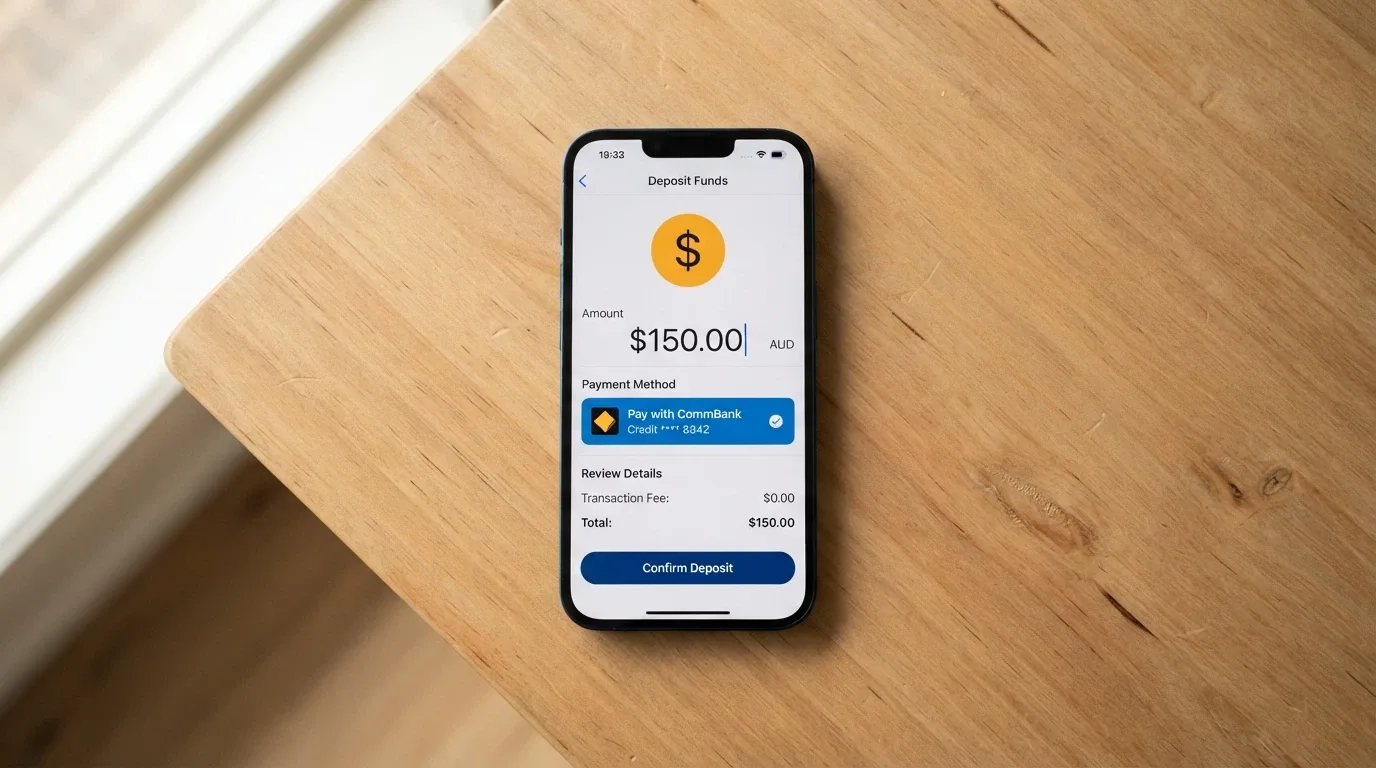
PayID is the deposit method most Australian players reach for first. It is instant, it is in AUD, and it does not require a credit card. The cashier at most of the featured operators surfaces PayID as the default deposit option for Australian players. The catch is the “deposit” half of the phrase: PayID is one-way at offshore casinos. Withdrawals route through crypto, e-wallets (Neteller, Skrill, ecoPayz where supported), or international bank transfer. None of those routes are instant, and the international bank transfer is the slowest of the three.
The credit card and crypto ban that took effect on 11 June 2024 is the part of the picture that often confuses Australian players. The ban applies to licensed Australian wagering operators: licensed bookmakers and the like cannot accept a credit card or crypto deposit for an online wager. Offshore casinos are not bound by the ban, and most of them still accept both. So a casino that offers credit card or crypto deposits is, by definition, not licensed in Australia — which is true of every operator on this page, but the credit card and crypto tell is still useful as a quick sanity check on any unfamiliar operator an Australian player might find through search.
The licensed Australian wagering operators — the ones that take pre-event bets on racing and sport — accept debit cards, bank transfer, PayID/Osko and BPAY. An Australian player who is offered one of those four methods only, with no credit card or crypto in sight, is dealing with a licensed operator and outside the scope of this page. An Australian player who is offered anything beyond those four is dealing with someone offshore.
PayID Deposits at the Newest Casinos
PayID is the deposit method that makes offshore casinos feel like Australian fintech. The cashier resolves the PayID to the player’s mobile number or email, the deposit clears in seconds, and the AUD balance shows up in the casino account immediately. There is no card entry, no 3-D Secure challenge, no currency conversion fee.
The withdrawal side of PayID does not exist at offshore casinos. The PayID system is an Australian real-time payments rail built on the New Payments Platform; it is designed for one-way credit transfers and does not have a withdrawal API the offshore operators can hook into. So the deposit clears in seconds and the withdrawal — when it comes — clears through a different channel, on a different timeline, often in a different currency than the AUD the deposit was made in.
That asymmetry is the part of the payment picture Australian players most often underestimate. The deposit is fast, familiar, and feels convenient. The withdrawal is slower and less familiar, as it is here that the offshore casino demonstrates its operational reliability. Players relying on PayID deposits should verify the available withdrawal methods before committing funds, as the deposit speed does not indicate the eventual withdrawal process.
Low-Deposit and Pay & Play Options
The $10 minimum deposit casino and the Pay & Play (Pay N Play) instant-registration model are both heavily advertised in the Australian-facing market. The $10 deposit is a real offer at several offshore casinos; Pay & Play, which lets a player deposit and play without the standard sign-up form, is rarer in the Australian offshore market than the marketing suggests.
The Pay & Play model relies on bank identification (Trustly in Europe, similar systems elsewhere) that is not widely available to Australian players at offshore casinos. A punter searching for “Pay N Play casino Australia” will find mostly European operators with bank-ID rails that do not extend to Australian banks. The marketing language travels; the technology does not.
The $10 deposit is more achievable. Several offshore casinos list a $10 minimum on at least one payment method, and the deposit bonus terms usually kick in at $20 or $30. The lower minimum lets a punter test the deposit and withdrawal flow at a small stake before committing a larger amount. It is the cheapest legitimate way to test the operator’s cashier.
The caveat, as with every other decision on this page, is that the operator is offshore. The $10 deposit and the Pay & Play convenience do not change the legal status of the product or the absence of Australian consumer protection.
No Australian Licence Exists for Online Casino — Here’s What That Means for Your Bonus
The Interactive Gambling Act 2001 makes it an offence to provide online casino games, online pokies or in-play sports betting to a person in Australia. The 2017 amendment closed the loopholes and gave ACMA enforcement teeth. The Interactive Gambling Amendment (Gambling Reform) Bill 2026, passed on 19 August 2026 and commencing on 1 January 2027, layers new restrictions on top: advertising caps, athlete and celebrity promotion bans, bank payment-blocking authority, and a direct marketing blackout for new and self-excluded customers.

The product is prohibited. There is no Australian licence for online casino anywhere — not federally, not in any state or territory. The land-based casinos hold state licences for their physical premises; those licences do not extend to online casino play. An Australian player who searches for a licensed Australian online casino will not find one, because none exists.
What the prohibition means for a no-deposit bonus is straightforward but worth saying plainly. The bonus is offered by an operator the Australian regulator can block at any time, using powers ACMA has used 1,774 times against illegal gambling and affiliate websites since November 2019. The bonus is not enforceable in an Australian court if the operator refuses to pay it. The bonus is not protected by Australian consumer law. The bonus is, in short, a marketing offer from an entity the Australian government has classified as illegal.
The Interactive Gambling Act and ACMA: How the Ban Works
The Interactive Gambling Act 2001 was passed to prohibit the supply of interactive gambling services to Australians; the Interactive Gambling Amendment Act 2017 strengthened the prohibition, closed loopholes and gave ACMA explicit enforcement powers. The product prohibited is online casino games, online pokies and in-play sports betting. The product that remains licensable is pre-event wagering on racing and sport, lotteries, and keno (until 1 January 2027, when the 2026 reform bans online keno and foreign matched lotteries).
ACMA’s enforcement powers are pointed at the operator, not the player. ACMA can direct Australian ISPs to block illegal sites, issue formal warnings, commence civil penalty proceedings, and refer operators for further enforcement. Subsection 15(2A) of the IGA makes providing a prohibited service with an Australian customer link an offence. The operator carries the criminal exposure; the individual player is not prosecuted.
The practical effect is that ACMA has had 1,774 illegal gambling and affiliate websites blocked since November 2019, and more than 225 illegal services have withdrawn from the Australian market entirely since enforcement was strengthened in 2017. The blocks are not perfect — operators re-emerge at new domains and rebrand — but the friction is real, and an offshore casino that is on ACMA’s blocking list today may not be reachable tomorrow. A punter with a balance on a blocked site has no Australian recourse to recover it.
The descriptions ACMA uses for the prohibited services are worth quoting directly: casino-style games like blackjack, roulette, poker and slots played for money, with an Australian customer link, contravening subsection 15(2A) of the Interactive Gambling Act 2001. That is the legal characterisation of the product the rest of this page describes.
Offshore vs. Licensed: What Australian Players Actually Lose
A punter at an offshore casino gives up the protections the Australian licensed wagering system offers. The list is concrete. BetStop — the National Self-Exclusion Register, live since August 2023 — binds Australian-licensed wagering operators only; an offshore casino is not connected to the register, and a self-excluded punter can still open an account and deposit at an offshore site. ACMA cannot recover funds from an offshore operator on a punter’s behalf; the regulator can block the site, but a frozen balance stays frozen. Australian consumer law does not apply to a Curaçao-licensed service; the punter cannot take a dispute to the Australian Financial Complaints Authority or the relevant state tribunal. The site’s terms and conditions govern, and the operator’s interpretation of those terms is final.
The operational equivalent is that the punter’s only protection is the operator’s reputation and the punter’s own due diligence. A reputable offshore casino with a long operating history and a published licence jurisdiction is a different proposition from an unknown operator that appeared last quarter; both are offshore, but the failure modes are different. The block risk is the same for both: ACMA can direct ISPs to block either at any time, with the punter’s balance still on the site.
A useful exercise before signing up at an offshore casino is to write down the protection being given up. No BetStop coverage. No ACMA recovery. No Australian consumer law. No guarantee the site will be reachable tomorrow. No minimum-age enforcement beyond what the operator chooses to implement. The list is not a scare list — it is a description of what the licensed Australian system provides and the offshore system does not. A punter who reads that list and decides the bonus is still worth claiming has made an informed choice; a punter who has never seen the list has not.
The 2026 Reform and the Credit Card Ban: New Rules From January 2027
The Interactive Gambling Amendment (Gambling Reform) Bill 2026 passed both Houses of Parliament on 19 August 2026. Its measures commence on 1 January 2027, and they touch advertising, payments, marketing and the product mix.
On advertising: from 1 January 2027, wagering advertising on free-to-air television is limited to three ads per hour between 6:00 am and 8:30 pm, with a complete blackout during live sport broadcasts within those hours. Athletes, celebrities and influencers are barred from promoting wagering products in any medium. Online wagering advertising must be served only to logged-in, over-18 users who have not opted out. Radio advertising is similarly restricted.
On payments: from 1 January 2027, banks and payment providers gain express authority to block transactions to illegal gambling operators. The credit card and crypto ban that took effect on 11 June 2024 is the existing layer; the 2027 reform gives banks an additional lever to refuse or return transactions to offshore gambling operators. A punter who uses an Australian bank account for an offshore casino deposit may see the transaction refused or reversed at the bank’s discretion after 1 January 2027.
On marketing: from 1 January 2027, direct marketing of inducements is banned for 14 days after a customer signs up with a licensed wagering operator, for three months after a person deregisters from BetStop, and indefinitely for customers classified as at-risk. The marketing blackout reshapes the way licensed operators can chase a new sign-up or a returning excluder; offshore operators are not bound by these rules, but they are also the operators to whom the inducement rules in any case did not apply.
On product: from 1 January 2027, online keno and foreign matched lotteries are prohibited under the reform, closing the last legal non-wagering online gambling product aside from pre-event sports and racing bets. The shape of the Australian legal online gambling market after 1 January 2027 is, by design, narrower than the shape before. The reform does not legalise online casino; it tightens the advertising, payment and marketing environment around the licensed market and adds the bank-blocking lever for the offshore one.
The Safety Net That Does Not Reach Offshore: Responsible Gambling Tools for Australian Players
BetStop is the National Self-Exclusion Register, live since August 2023. One registration excludes a punter from every Australian-licensed online and phone wagering service. As at 31 July 2026, the register had 67,480 registrations, of which 41,290 exclusions were still active; 78% of registrants were under 40, and 38% chose lifetime exclusion. The numbers describe a register that is used, and used heavily by younger adults, and that is intended as a hard break between a punter and the licensed wagering system.
The boundary of BetStop is the boundary that matters for this page. BetStop binds Australian-licensed wagering operators only. An offshore casino is not connected to the register; a punter who has self-excluded through BetStop can still open an account and deposit at any offshore casino. Self-exclusion is a powerful tool inside the licensed system and a non-event outside it. A punter considering both the licensed and offshore markets should understand that the exclusion they have set up at a licensed bookmaker does nothing at Fair Go or SkyCrown.
The licensed wagering system offers deposit limits, session limits, activity statements and take-a-break tools as standard. None of these tools reach an offshore casino. The punter who sets a weekly deposit limit at a licensed bookmaker is still able to deposit unlimited amounts at an offshore casino; the limit binds the licensed operator and only the licensed operator.
The harm data behind the tools is real and worth knowing. About 2.1% of Australian adults — roughly 430,000 people — experience problem gambling; the Australian Institute of Health and Welfare put high-risk gambling at 1.8% in 2022. The numbers are not a marginal concern; they describe a population of hundreds of thousands of Australians for whom the safety net, not the bonus, is the relevant piece of the market.
Where to Get Help: Australian Support Resources
The National Gambling Helpline is 1800 858 858. It is free, confidential, and staffed 24 hours a day, seven days a week. The online equivalent is Gambling Help Online, which offers live chat, self-assessment tools and access to counselling. BetStop registration is through the official Australian government service.
These resources are for anyone affected by gambling harm, regardless of where the gambling occurs. A punter who is playing at an offshore casino and wants to talk to someone can call the helpline or open the chat window without identifying the operator. A punter who wants to self-exclude from the licensed Australian market can register with BetStop; the registration will not reach the offshore casino, but it will close off the licensed side and create a clean boundary for any subsequent decision about offshore play.
A family member or friend concerned about someone else’s gambling can use the same channels. The helpline takes calls from third parties and can advise on the practical steps to support someone who is gambling at an offshore site or anywhere else. The services are free, confidential and available right now.
How We Selected and Ranked the Newest Online Casinos for Australian Players
The ranking features ten offshore casinos that Australian players commonly reach in 2026. Operators with a confirmed no-deposit offer are listed at the top, followed by operators without a confirmed no-deposit offer (or where bonus terms were not available). A player seeking a no-deposit bonus will find those operators prioritised, while the remaining entries offer a point of comparison.
The sources used in the ranking are the Australian Communications and Media Authority’s register of blocked and withdrawn services, each operator’s own published terms, and third-party affiliate data where Australian-facing affiliate sites have published current bonus terms. The ACMA blocking list was used to verify the offshore status of every operator on the page — none of them appears on the ACMA whitelist of Australian-licensed services, because no Australian-licensed online casino exists. The licence claims (Curaçao for most operators, an unspecified offshore licence for the rest) were taken from the operators’ own footer disclosures and cross-checked against affiliate data where available.
The criteria that ordered the ranking are the presence of a no-deposit offer, the size and terms of that offer where it exists, the recency of the offer as published by the operator or its affiliates, and the transparency of the bonus terms. Wagering fairness, cashout caps and validity windows were used as tiebreakers between offers of comparable size. Operators with no NDB were ranked by their deposit welcome terms where those terms were available, and placed at the bottom where they were not. No operator was given a recommendation as a place to play; the ranking is a comparison, not an endorsement.
The limitation that applies to the entire ranking is that every operator is offshore. The ranking compares offers within the offshore market; it does not compare the offshore market to a licensed alternative, because no licensed alternative exists for online casino in Australia. A punter who wants a licensed product should understand that this page is not where to find one — and that the absence is a feature of the regulatory framework, not an oversight in the research.
What to Actually Do With a No-Deposit Bonus at Australia’s Newest Casinos
A no-deposit bonus is a trial, not a profit opportunity. The arithmetic is built into the offer: a 40x to 60x wagering requirement with a $50 to $150 cashout cap reduces most players’ expected return on the bonus to something close to zero after the time spent clearing it. The Fair Go worked example — $15 free chip, 60x wagering, $900 turnover, an expected loss of around $45 at 95% RTP, a $180 cashout cap if you clear the wagering — describes the offer honestly. The offer is positive in expectation only for the punter who actually clears the wagering and hits the cap. Most punters will not.
The practical steps before claiming any no-deposit bonus are short. Check the wagering requirement and the cashout cap on the operator’s own terms page, not the affiliate page; affiliate data is months out of date at best. Check which games are eligible; the eligible list is short and the wrong game burns the wagering. Check the maximum bet while the bonus is active; most bonuses cap the bet at A$5 to A$7.50 per spin, and exceeding the cap voids the bonus and the winnings. Check the validity window; some free spins expire in 24 hours, others in 5 days, others in 14.
After claiming, the right mindset is to use the bonus as a test of the operator. The deposit is small or zero, the cashout cap is small, and the time cost is real; the value of the exercise is the read on the casino’s withdrawal behaviour, not the payout. An operator that pays the cap inside the stated window is worth a deposit; an operator that invents a term to void the bonus is not. The bonus is the cheapest legitimate way to gather that information.
The honest framing of the page is the framing that matters: every casino on this ranking is offshore, every bonus is from an operator ACMA can block, and every balance on the site is at risk if the site is blocked. The bonuses are real, the wagering is real, the cashout caps are real. None of it is enforced under Australian consumer law. Read it that way and the marketing stops doing the work it was designed to do, and the decision — whether to claim, whether to deposit, whether to keep playing — becomes the punter’s own.
Frequently Asked Questions
What is the maximum amount I can withdraw from a no-deposit bonus at an Australian online casino?
The cashout cap on a no-deposit free-spins or free-chip offer at Australian-facing offshore casinos typically sits between $50 and $150. Rare low-wagering offers run lower at $20 or $30, and a few large free-chip offers sit higher (Fair Go’s $180 cap on the $15 chip is the worked example). The cap is the ceiling on what you can withdraw, regardless of how much the bonus balance grows during wagering; anything above the cap is forfeit at withdrawal.
Do I have any recourse if an offshore casino refuses to pay out my winnings?
Practically none under Australian law. ACMA can block an offshore site but cannot compel a payout, and Australian consumer law does not apply to a Curaçao-licensed operator. Disputes fall under the operator’s terms and the licensing jurisdiction’s complaint process — typically the Curaçao Gaming Control Board or the Malta Gaming Authority — neither of which has the leverage of an Australian court. The punter’s protection is the operator’s reputation and their own due diligence before depositing.
What is BetStop and does it apply to offshore casino sites?
BetStop is the National Self-Exclusion Register, live since August 2023; one registration excludes a punter from every Australian-licensed online and phone wagering service. It binds licensed Australian wagering operators only. It does not apply to offshore casinos: a self-excluded punter can still open an account and deposit at any offshore site.
Which specific RTG titles can I play with my no-deposit free spins?
The eligible titles are set by the operator’s bonus terms and are usually a short list of one to four named RTG pokies. Cash Bandits 3 (95.8% RTP, medium-to-high volatility) is the canonical bonus-eligible RTG title; Plentiful Treasure (95% RTP, medium volatility) is a frequent alternative. Other eligible titles include Caesar’s Empire (97%) and I Zombie (96%). The exact list lives on the bonus terms page.
How fast can I withdraw winnings from a no-deposit bonus via PayID?
PayID does not work for withdrawals at Australian-facing offshore casinos. PayID is a one-way deposit rail; offshore operators do not have a withdrawal API into it. Withdrawals route through crypto (the fastest, typically hours after the operator’s internal approval), e-wallets, or international bank transfer (the slowest, often five to ten business days). The deposit side is fast; the withdrawal side uses different rails.
How will the new gambling advertising rules from 2027 affect online casino players?
The Interactive Gambling Amendment (Gambling Reform) Bill 2026 commences on 1 January 2027. Changes touch advertising (a three-ads-per-hour TV cap, an athlete and celebrity promotion ban), payments (banks can block transactions to illegal operators), and marketing (no direct marketing of inducements for 14 days after sign-up or three months after BetStop deregistration). Online casino remains prohibited; the reform reshapes the licensed advertising environment rather than the offshore market.