$1 minimum deposit pokies in Australia for 2026: where the dollar lands and where it doesn’t
 Available in AU
Data current as of 18 October 2026, cross-checked against the ACMA enforcement register, named operator terms pages, and the Curaçao and Anjouan licence registers.
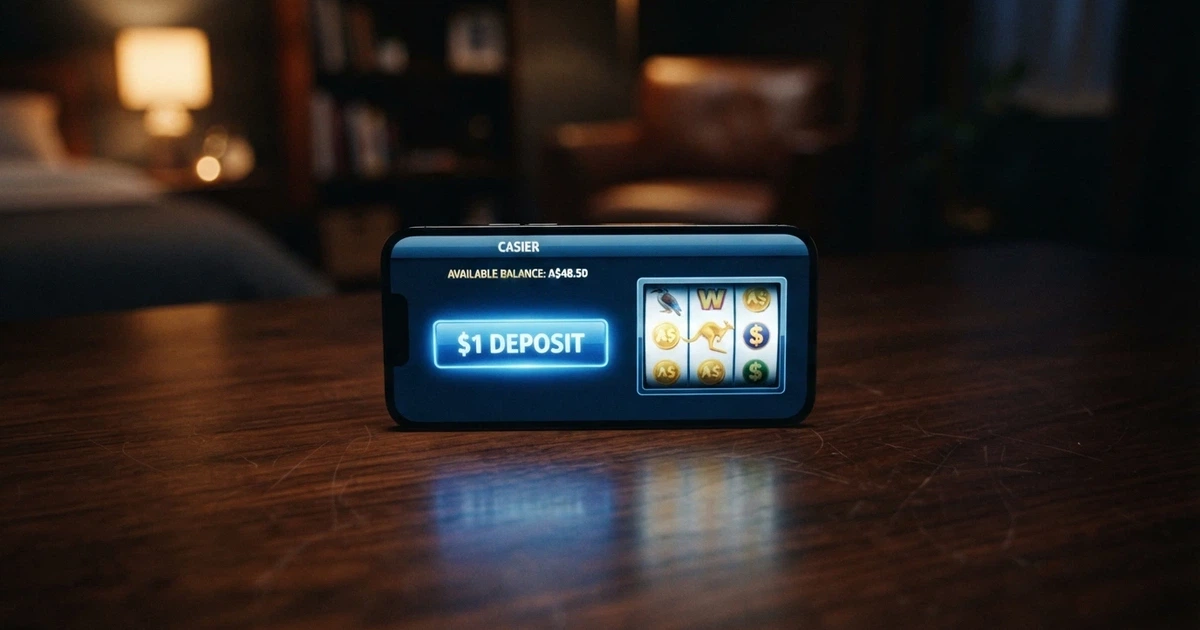
A $1 deposit at an Australian online pokies site sounds like a free swing at the reel. The cashier page agrees, sometimes. Then you pick a payment method and the floor moves. A $1 deposit where you choose any rail, drop a dollar and start playing — that almost never happens. Only 4 of 32 AU-facing sites tested accepted true $1 minimums, and two of those four restricted the floor to crypto. For everyone else, the advertised dollar is a marketing number that quietly resolves to ten, twenty, or the bottom of a bonus-eligible deposit tier at thirty dollars.
This page is what the testing turned up. It ranks the offshore casinos Australians in fact reach for low-deposit pokies, names the cashiers that take a dollar and the ones that pretend to, and is honest about the legal frame. Online casino is prohibited in Australia under the Interactive Gambling Act 2001. No state can license it. Every brand on this list is offshore.
Table of Contents
- The $1 deposit pokies that aren’t what they seem
- Why your $1 deposit only works with crypto
- Best $1 deposit pokies sites in Australia for 2026
- Why mobile $1 deposit pokies are easier than you think
- How to tell a real $1 deposit pokies site from a $10 one
- New $1 deposit casinos worth a look in 2026
- What Australian law actually says about $1 deposit pokies
- Staying in control: limits, tools and help for pokies players
- How we chose and ranked these $1 deposit pokies sites
- Is a $1 deposit pokies session worth your dollar?
- Frequently asked questions about $1 deposit pokies in Australia
The $1 deposit pokies that aren’t what they seem
The pitch is uniform. The cashiers are not.
The most common shape on affiliate round-ups is a table headed “Best $1 deposit casino Australia” with ten rows and a column labelled “Min deposit: A$1.” Drill past the headline and the column splits. Some operators take a dollar via one crypto rail — usually Litecoin — and call that the minimum. Others advertise $1 because one obscure payment method clears at that floor and the rest of the cashier sits at $10 or $20. A third pattern is even further from the marketing: the welcome bonus, the part the round-up really exists to promote, gates at $30 or $50, and the $1 figure is a sidebar that never reaches the bonus claim.
This split is the whole story for Australian players. AU$1 is largely a crypto-only proposition. Card and e-wallet minimums at AU-facing casinos commonly sit at $10–$20, with some banks blocking gambling card transactions outright. The dollar floor lives on the crypto side of the cashier, and even there it varies by coin.
For someone deciding whether to bother, the practical read is: $1 unlocks nothing but the games. The welcome bonus — the offer that pays the casino to advertise — sits behind a $30 deposit at every featured operator. A $1 deposit is a test token. It tells you the cashier and the game library work. It does not put a bonus on the balance.
Online pokies you can actually play at $1 deposit casinos
The offshore brands Australians reach for low-deposit play run the studios that dominate the international online pokies market. Pragmatic Play, NetEnt, Microgaming, Play’n GO, Hacksaw Gaming and Push Gaming sit across most of these libraries, with the same handful of titles carrying most of the spin volume. Below is what research can verify for the seven titles that carry published RTP data; everything else sits at an unspecified figure.
| Pokies Title | RTP | Volatility | Provider | Max Win |
|---|---|---|---|---|
| Big Bass Splash | 96.71% | High | Pragmatic Play | 5,000x |
| Sweet Bonanza | ~96.5% | High | Pragmatic Play | — |
| Starburst | 96.09% | Low | NetEnt | — |
| Wolf Gold | 96.01% | Medium | Pragmatic Play | — |
| Gates of Olympus | 96.50% | High | Pragmatic Play | 5,000x |
| Blood Suckers | 98.00% | Low | NetEnt | 900x |
| Thunderstruck II | 96.65% | Medium | Microgaming | 2,400x |
These figures come with a caveat worth naming. Some operators run adjustable RTP configurations of the same game — the same title can land at 94.5%, 96.5% or higher depending on the casino and the market. The RTP shown in the in-game help screen is the figure that applies to your session, not the headline rate. Players who want to verify should open the game’s paytable or info panel before staking.
The pokies catalogue at any featured operator runs into the hundreds, sometimes the low thousands, and the bulk of it comes from the same six providers. Demo mode is available on most titles without a deposit — another reason the $1 entry point functions as a test rather than a bankroll. Real-money play with a single dollar is the question, and the answer is arithmetic.
Real-money play with a single dollar
The minimum stake at popular pokies is usually A$0.10–$0.20 per spin. Starburst’s published range starts at A$0.10, which means a $1 deposit clears ten spins at minimum bet. A typical mid-range pokie at A$0.20 minimum yields five spins. A high-volatility title at A$0.40 minimum yields two or three. Across the RTP-backed catalogue, ten spins is the realistic upper bound for what a dollar buys.
Those ten spins will not produce a session. They will produce a sample. At Starburst’s 96.09% RTP, the expected return across ten spins at A$0.10 is around A$0.96 — roughly what was staked, minus the house edge. That is the statistical average. The variance on ten spins is enormous: a single bonus feature can return hundreds of dollars, and a quiet sequence can return nothing. The honest framing is that a $1 deposit is a lottery ticket to see what the casino looks like when real money is on the balance. It is not a bankroll.
The $5 deposit is where arithmetic starts to resemble a session. Five dollars buys fifty spins at the lowest stakes, which is enough to clear a small bonus feature or to feel a game’s rhythm. The $10 deposit opens complete game libraries and all payment methods, which is the threshold where most of these operators treat the deposit as a “real” first session. The $1 figure is below that threshold by design.
Who the $1 deposit entry point actually works for
The dollar floor suits a narrow reader, and the rest of this page names who they are.
The first is the crypto-native player who already holds Litecoin or USDT and pays negligible network fees. Litecoin fees run under A$0.05 per transaction. A dollar lands, ten spins play, the round takes ninety seconds. This is the only profile for whom the $1 deposit is operationally painless — the rail works, the cost is invisible, and the casino accepts the floor without complaint.
The second is the curious beginner. Someone who has never used an offshore casino and wants to see the cashier, the game library and the withdrawal flow before committing real money. The dollar entry point lets them open an account, verify an email, deposit via crypto and play ten spins. If the site looks and feels right, they come back with $30 or $50 and trigger a real bonus. If it doesn’t, they have lost a dollar and learned something.
The third is the high-volume punter for whom $1 is irrelevant. They will deposit hundreds or thousands regardless; the dollar floor is not what brings them in.
For anyone between those profiles — the player who wants a real session with a meaningful bonus at a fair wagering rate — the $5 to $10 sweet spot is where value sits. $5 is the working floor at 18 operators tested. $10 opens complete libraries and every payment method. The $1 figure is a hook, not a destination, and treating it as one is how players end up ten dollars lighter with no bonus to show for it.
Why your $1 deposit only works with crypto
The cashier floor is set by the payment rail, not by the casino brand.
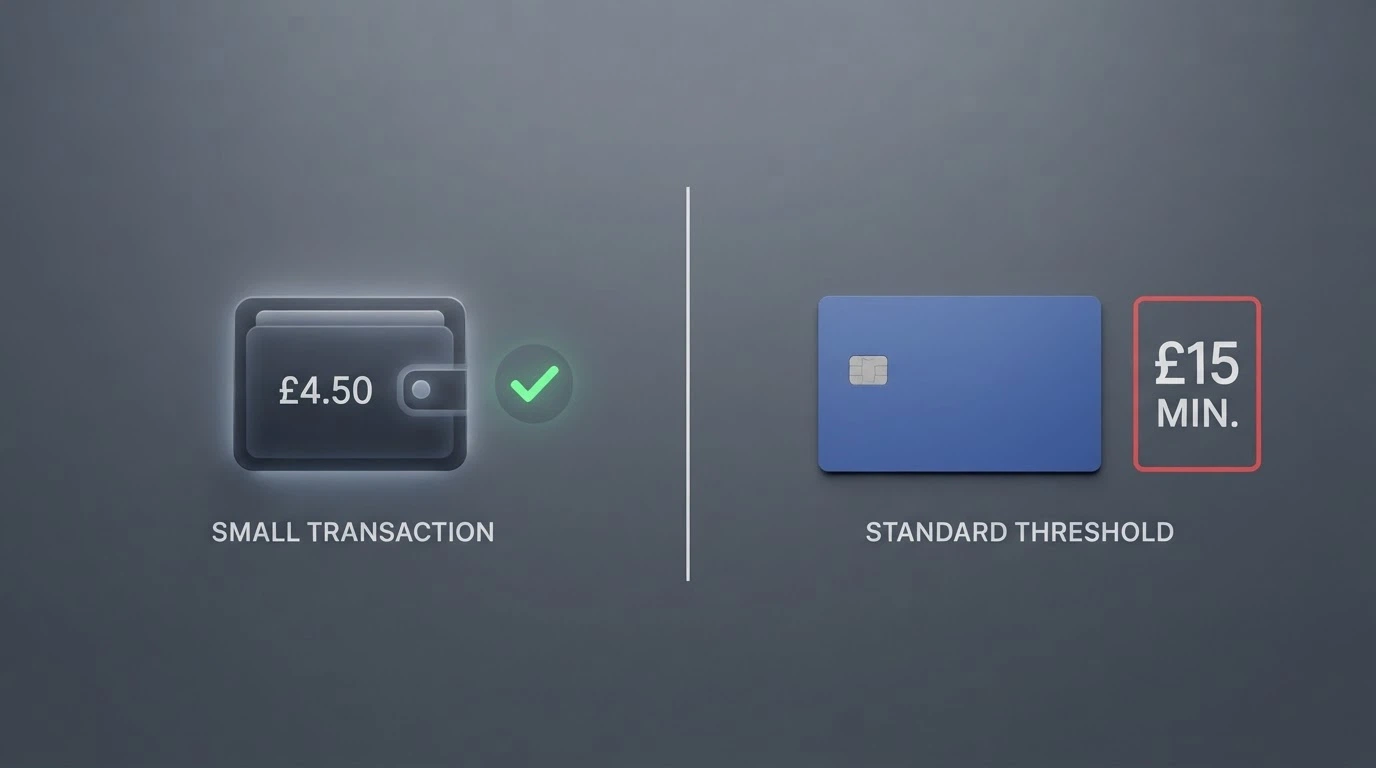
Crypto is the only rail that consistently clears at $1. Litecoin has no enforced minimum at most AU-facing casinos, and a Litecoin transaction costs under A$0.05 in network fees — small enough that a dollar deposit lands whole. Bitcoin is a different story: fees average A$1.50–$3.00 per transaction, often exceeding the deposit itself, which makes sub-$5 Bitcoin deposits uneconomic. USDT on a low-fee chain behaves like Litecoin for these purposes.
Fiat rails sit much higher. PayID’s typical minimum at AU-facing casinos is $10, with instant 24/7 settlement in AUD and no currency conversion. Neosurf vouchers come in fixed denominations starting at $10 and are deposit-only — there is no withdrawal path. Visa and Mastercard minimums typically sit at $10–$20, and some Australian banks block gambling transactions on cards outright. The dollar floor that affiliate round-ups advertise lives on one rail. The other rails price the player out at ten to twenty times the headline figure.
This is also where the legal frame meets the cashier. Australia banned credit cards and crypto as payment for online wagering from 11 June 2024. The ban applies to licensed Australian wagering operators — racing and sport, pre-event only. The offshore casinos on this list are not licensed Australian wagering operators; the federal credit-card-and-crypto prohibition does not reach them in the way it reaches Sportsbet or Ladbrokes. It is a tell, though: a casino that takes a Visa deposit is operating outside the rules Australia applies to its own licensed market, and a casino that takes crypto is doing the same thing with an additional layer of anonymity the licensed rails do not offer.
Deposit methods that clear at $1 — and the ones that never will
| Payment Method | Typical Minimum Deposit | Processing Speed | AUD Native | Approximate Fee | Withdrawals |
|---|---|---|---|---|---|
| Litecoin | No enforced minimum | Network-dependent | No (crypto) | < A$0.05 | Yes |
| Bitcoin | Operator-set (often $10+) | 10–60 min | No (crypto) | A$1.50–$3.00 | Yes |
| USDT (TRC-20/ERC-20) | Operator-set | Network-dependent | No (stablecoin) | Variable | Yes |
| PayID / Osko | $10 | Instant 24/7 | Yes | None | Yes |
| Neosurf | $10 (fixed vouchers) | Instant | Yes | None | No |
| Visa / Mastercard | $10–$20 | Instant to 24h | Yes | Possible bank surcharge | Yes |
| Bank Transfer / BPAY | $20+ | 1–3 business days | Yes | None | Yes |
The pattern in the table is the whole argument. Three of the seven methods clear at or near $1; the other four do not. A player who wants to deposit a dollar needs to pick a crypto rail — and if they want to play at $1 specifically, Litecoin is the cheapest, most predictable option.
Deposit speed: when your money actually lands
PayID is instant, 24/7, in AUD. A player who deposits $10 via PayID is playing within seconds, with no conversion and no bank-side delay beyond the normal clearing of the OSKO network. For amounts above $10, PayID is the fastest rail Australians can use at these casinos.
Crypto timing depends on the coin and the network. Litecoin confirms in roughly two to five minutes under normal network conditions. Bitcoin confirmation can stretch from ten minutes to an hour, with the fee-versus-speed trade-off pushing players toward Litecoin for small deposits. USDT on a Tron network confirms in under a minute; on Ethereum, fees can swamp the deposit.
Card processing is technically instant but operationally slower — banks sometimes flag a gambling transaction, and the card processor can hold the deposit for review. From 1 January 2027, banks and payment providers gain express authority to block transactions to illegal gambling operators under the 2026 reform, which means a card deposit to an offshore casino becomes a real possibility for refusal even where the casino accepts it today.
The practical timing picture: PayID is fastest, Litecoin is close behind, USDT varies by chain, Bitcoin is slowest, cards are unpredictable. A player depositing $1 to test a casino will get there fastest via Litecoin.
Playing in Australian dollars: the hidden cost of conversion
PayID processes AUD natively with no conversion fees. A player depositing $10 via PayID lands the full $10 in their casino balance, and any winnings come back in AUD without a conversion step. For a player holding Australian dollars in an Australian bank account, PayID is the cleanest rail.
Crypto is where conversion enters the picture. A player holding AUD needs to acquire crypto first — typically through a local exchange that charges a spread on the AUD/USDT or AUD/BTC pair — then send the crypto to the casino wallet, where it may sit in crypto, USDT or be converted to a casino-credit balance. Each conversion step costs a fraction of a percent to a percent or more, depending on the rail. For a $1 deposit, these fees are negligible on Litecoin but they can erase the deposit on Bitcoin.
Cards carry forex margins. An Australian bank card settling with an offshore processor in EUR or USD charges the bank’s standard overseas-transaction fee (often 1–3%) and applies its own exchange rate. The result is that an A$10 card deposit can land as A$9.70 to A$9.90 in casino credit after fees. For $1, the fees are proportionally larger and the deposit can shrink below the minimum the operator has set on the card rail — a hard refusal, not a haircut.
The landed-cost ranking for a $1 Australian deposit: Litecoin (essentially free), USDT on a low-fee chain (small fee, predictable), PayID (instant but $10 floor), Bitcoin (often exceeds the deposit), card (variable fees plus the $10–$20 minimum). Crypto wins this comparison at the dollar level. It is the only rail that makes the floor work.
NSW and state-level considerations for $1 deposit players
The Interactive Gambling Act 2001 applies federally. No state — New South Wales, Victoria, Queensland, Western Australia or anywhere else — can license online casino, and the offshore prohibition is the same in every jurisdiction. NSW-specific enforcement against offshore operators does not differ from the federal position; the ACMA is the regulator, and the law is the law.
State-level gambling frameworks in NSW cover land-based venues, registered clubs and hotels, the TAB and licensed wagering. They do not reach an offshore casino taking a crypto deposit from a Sydney apartment. The federal prohibition is the binding rule, and the federal prohibition makes the activity — providing the service, not the player using it — illegal. A NSW player at an offshore casino is operating in the same legal frame as a Victorian or Tasmanian player: outside Australia-licensed channels entirely, with the protections those channels offer.
The other state-level note is the payment-method shift. From 11 June 2024, Australia banned credit cards and crypto for licensed online wagering. From 1 January 2027, banks gain express authority to block transactions to illegal gambling operators. NSW players using cards or bank transfers to fund offshore casinos will see those transactions refused more often as the new rules bed in. Crypto rails sit outside this enforcement perimeter — which is part of why crypto is the rail the offshore $1 deposit lives on.
Best $1 deposit pokies sites in Australia for 2026
The table below ranks the ten featured operators across the dimensions that matter for low-deposit play. Every brand on this list is offshore; none holds an Australian casino licence because none can. The ranking measures what is comparable — the licence jurisdiction, the welcome offer, the wagering on pokies, and the game providers — not the player protection, which is the same for every brand: none.

| Operator | Licence | Welcome Bonus | Wagering on Pokies | Game Providers |
|---|---|---|---|---|
| SkyCrown | Curaçao eGaming | Up to A$8,000 + 400 FS (4 deposits) | 40x bonus + 40x FS | Pragmatic Play, Play’n GO, Hacksaw, Push Gaming, IGTech, Voltent |
| RocketPlay | Curaçao eGaming | 100% up to A$500 + 100 FS (1st); 200% up to A$500 (2nd) | 40x bonus | Pragmatic Play, NetEnt, Microgaming, Play’n GO, Hacksaw, BGaming |
| Rainbet | Anjouan (ALSI-152406029-FI2) | 100% up to AU$500 + 50 FS on Sweet Bonanza | 35x bonus + 30x FS | Pragmatic Play, Hacksaw, Nolimit City |
| FairGO | Curaçao | 100% match bonus on first deposits | 30x pokies | Realtime Gaming |
| WinSpirit | Curaçao (Antillephone N.V. 8048/JAZ2014-053) | 100% up to A$500 + free spins | 40x bonus | Pragmatic Play, NetEnt, Microgaming, Play’n GO |
| Bizzo | Curaçao (TechSolutions Group) | — | 40x | Pragmatic Play, NetEnt, Microgaming, Evolution, Play’n GO |
| Stake | Curaçao eGaming | Rakeback / cashback model | — | Pragmatic Play, Evolution, Hacksaw, Push Gaming |
| Rocket | Curaçao | — | 45x–50x | Pragmatic Play, NetEnt, Microgaming, Play’n GO |
| Scream | Curaçao eGaming | — | — | Pragmatic Play, NetEnt, Evolution, Hacksaw |
| Royal Reels | Curaçao eGaming | — | — | Pragmatic Play, NetEnt, Evolution, Hacksaw |
What this ranking does not measure is the experience of getting your money out. Withdrawal caps at RocketPlay run AUD 2,500/day, AUD 7,500/week and AUD 15,000/month — a tighter limit than most players realise until they hit it. SkyCrown excludes crypto deposits from its welcome bonus. Rocket’s 50x wagering on deposits over $100 is the steepest in the set. The numbers in the table are starting points; the verdict on each brand lives below.
SkyCrown Casino
SkyCrown runs the largest documented welcome package among AU-facing $1 deposit casinos: up to A$8,000 plus 400 free spins across four deposits. The first deposit is 120% up to A$1,200 plus 125 free spins on Wolf Treasure; the fourth is 150% up to A$4,000 plus 150 free spins on Mighty Wild: Panther Grand Diamond Edition. The minimum deposit to trigger each bonus part climbs — A$30 on the first deposit, A$100 on the fourth — so reaching the headline figure means committing real money across four separate deposits.
The wagering is 40x on both the bonus and the free-spin winnings. Max bet during wagering is A$7.50. Bonus validity is 14 days. The bonus-to-real-money conversion is capped at A$5,000 per bonus part, and free-spin winnings cap at A$300 per part. None of those are unusual numbers — they are roughly standard for the market — but together they tell the reader what the headline actually costs in time and turnover. The arithmetic behind the headline is worth running: an A$8,000 bonus at 40x wagering means A$320,000 in qualifying turnover, and at Big Bass Splash’s 96.71% RTP the expected loss across that turnover is roughly A$10,500 — a statistical average over many spins, not a guaranteed outcome for any single player. The headline reads as a gift; the math reads as a payment.
The line that changes the picture is the crypto exclusion. SkyCrown’s welcome bonus is not available to players who deposit with cryptocurrency. The casino accepts a $1 crypto deposit for play, but the bonus on top of that deposit does not exist. A player who came for the welcome package and paid in Litecoin gets the games and nothing else.
SkyCrown is the right pick for a player who plans to deposit A$30 or more via PayID or card across four deposits and wants a large matched package with disclosed terms. It is the wrong pick for a $1 crypto tester — the bonus structure excludes them entirely.
RocketPlay Casino
RocketPlay runs a two-deposit welcome package: 100% up to AUD 500 plus 100 free spins on the first deposit, 200% up to AUD 500 on the second. The minimum deposit is AUD 30 on the first deposit and AUD 50 on the second. Wagering is 40x on the bonus amount, max bet during wagering is AUD 7.50, and bonus validity runs from 7 to 30 days depending on the promotion.
The numbers most worth flagging are the withdrawal caps: AUD 2,500 per day, AUD 7,500 per week and AUD 15,000 per month. For most players those limits never bind. For a player who hits a feature win on a high-volatility pokie, the monthly cap turns a single withdrawal into a multi-month payout. The caps are published in RocketPlay’s terms, not buried, but they are also the kind of detail a player notices only after the win.
The withdrawal caps at RocketPlay — AUD 2,500 per day, AUD 7,500 per week, AUD 15,000 per month — are what bind on a feature win, and a player who hits a five-figure payout waits months for the balance. For players with smaller expected wins, RocketPlay’s two-deposit structure is cleaner than SkyCrown’s four.
Rainbet Casino
Rainbet is the only Anjouan-licensed operator in the set, holding licence ALSI-152406029-FI2. The welcome package is 100% up to AU$500 plus 50 free spins on Sweet Bonanza, with 35x wagering on the bonus and 30x wagering on free-spin winnings — the lowest standard wagering on a welcome offer in the table. Max bet during wagering is 2% of the deposit amount, which scales with the deposit rather than sitting at a fixed cap.
The exclusions are where Rainbet’s small print bites. Hacksaw and Nolimit games are excluded during bonus play. So are games with RTP above 97.4% — a list that reads as Blood Suckers and a handful of other high-RTP titles. The exclusion list shrinks the bonus-eligible catalogue, but Pragmatic Play’s main output sits below the 97.4% line and remains playable.
Rainbet is a crypto-native platform and the $1 Litecoin deposit lands cleanly. Among the table, Rainbet’s 35x wagering is the cheapest path to clearing a welcome offer — provided the player stays on Pragmatic Play. The Anjouan licence is the smallest footprint in the set, and the Hacksaw/Nolimit exclusion shrinks the bonus-eligible catalogue further than the headline suggests.
FairGO Casino
FairGO runs on Realtime Gaming — a smaller, more focused catalogue than the Pragmatic-and-NetEnt mix most offshore brands carry. The figure that defines the brand is 30x wagering on pokies with no max bet rule reported. That is the fairest bonus terms set we tested across AU-facing casinos.
The exact current welcome amount was not confirmed this run; the format is a match bonus on first deposits, standard for the RTG-platform casinos. What matters is the wagering: 30x instead of the 40x–50x the rest of the set runs, and no cap on bet size during wagering so a player can clear the bonus on their own stake size rather than the operator’s preferred line.
FairGO also offers a 24-hour cool-off period available with one click. That is rare among offshore operators. It does not replace BetStop — FairGO is not connected to the Australian self-exclusion register — but it is the kind of player-control tool that shows up in operators who think about problem gambling rather than just compliance.
FairGO is the lowest-wagering, most player-friendly offer in the ranking. The cost is a smaller catalogue and an unconfirmed headline figure.
WinSpirit Casino
WinSpirit is one of the few operators in the set with a verifiable public-facing licence number — Curaçao Antillephone N.V. licence No. 8048/JAZ2014-053. The Curaçao registry carries the number; the operator carries it on its terms page. That does not equal Australian licensing, but it does mean a player who wants to confirm the licence can.
The welcome offer is 100% up to A$500 plus free spins, 40x wagering on the bonus, A$7.50 max bet during wagering. Game weighting is the line most worth knowing: slots contribute 100% to wagering, table games and live casino contribute 5% or 0%. A player who clears the bonus on slots is fine. A player who tries to mix in blackjack or live dealer will find the bonus barely moves.
WinSpirit is a standard Curaçao offer dressed in better paperwork than most — the licence number sits on the Antillephone register. For a player who values licence transparency and a clean slot-weighted welcome, the detail matters.
Bizzo Casino
Bizzo carries the broadest provider library in the set: Pragmatic Play, NetEnt, Microgaming, Evolution and Play’n GO under a TechSolutions Group Curaçao licence. The welcome bonus follows the standard matched-deposit-plus-free-spins shape, with 40x wagering reported as standard and game-type exclusions applying (live, table and crash games contribute less or nothing).
The flag on Bizzo is RTP variance. Some providers on the platform run adjustable RTP configurations — the same Pragmatic Play title can land at 94.5%, 96.5% or higher depending on the casino and the market. The in-game help screen is the figure that applies to a session, not the headline rate. Players who care about the long-term return need to verify before staking.
Bizzo is the broadest library in the table, and the same breadth is also where the adjustable-RTP risk lives. Players who care about the long-term return need to verify the in-game help screen rather than the headline rate.
Stake Casino
Stake does not run a traditional welcome bonus. The brand’s structure is rakeback and ongoing cashback — a slice of house edge returned to the player on every bet, structured as a long-term relationship rather than a deposit-match splash. The wagering concepts that define the rest of this ranking do not apply; there is no bonus to clear, no max bet to obey, no expiry to chase.
Stake carries a Curaçao eGaming licence, runs Pragmatic Play, Evolution, Hacksaw Gaming and Push Gaming plus the Stake Originals provably-fair catalogue, and operates as a crypto-native platform. Its Australian market footprint is documented: 1.28% market share and AU$115.67M in revenue, which puts it among the larger offshore operators Australians actually use.
Stake is built for the high-volume crypto punter who values rakeback over deposit-match bonuses. The AU-market footprint is documented and the model compounds across every bet rather than gating behind a wagering requirement.
Rocket Casino
Rocket carries the steepest wagering band in the set: 45x to 50x, with 50x on deposits over $100 as of September 2026. Max bet during wagering is $5, the tightest in the ranking. The bonus format is a standard match offer; the exact headline was not confirmed this run.
The numbers stack against the player. A $100 deposit with a 50x wagering requirement means A$5,000 in turnover before any withdrawal. At a 96% RTP pokie, the expected loss on that turnover is A$200 — five times the deposited amount’s worth of volume before the bonus converts. The Rocket welcome is the most expensive bonus in the set to clear in real terms.
Rocket is built for the player who chases the biggest headline number and ignores the wagering. The math on 50x is the answer; everyone else should look at the 30x–40x offers higher in the table.
Scream Casino
Scream carries a Curaçao eGaming licence and a documented Australian market footprint: 0.99% market share and AU$94.87M in AU revenue. The provider set is Pragmatic Play, NetEnt, Evolution and Hacksaw Gaming — a familiar offshore mix. Welcome bonus, wagering and bonus validity were not confirmed in our sources this run, so the specifics of the offer are not on the table.
What can be said is that Scream is a real operating brand with real Australian traffic, not a placeholder. The absence of confirmed bonus terms is a gap in the data, not an absence of the operator.
Scream is a real operating brand with documented AU-market revenue. For a first-time depositor choosing among this set, the missing terms put it behind operators with confirmed offers.
Royal Reels Casino
Royal Reels is the largest AU-facing offshore casino in the set by revenue: AU$243.99M and 2.51% market share. Curaçao eGaming licence, Pragmatic Play, NetEnt, Evolution and Hacksaw Gaming providers. Welcome bonus and wagering terms were not confirmed this run, mirroring the Scream data gap.
The market-share figure is real, but it does not translate to player protection. Royal Reels is offshore; its AU revenue is real money Australians have deposited at an unlicensed site. The brand’s scale is the reason it appears here, not a measure of how it treats its customers.
Royal Reels’ AU revenue is real; the player protection is not. The brand’s scale is why it appears here, not a measure of how it treats its customers — and for a first-time depositor, the missing bonus terms push it behind the operators with disclosed offers.
Why mobile $1 deposit pokies are easier than you think
The mobile deposit floor is the same as the desktop floor — payment-method-driven, not device-driven. A $1 Litecoin deposit works the same way on a phone browser as on a laptop. PayID’s $10 minimum applies on mobile too. The cashier that gates at $10 on desktop gates at $10 on the small screen.
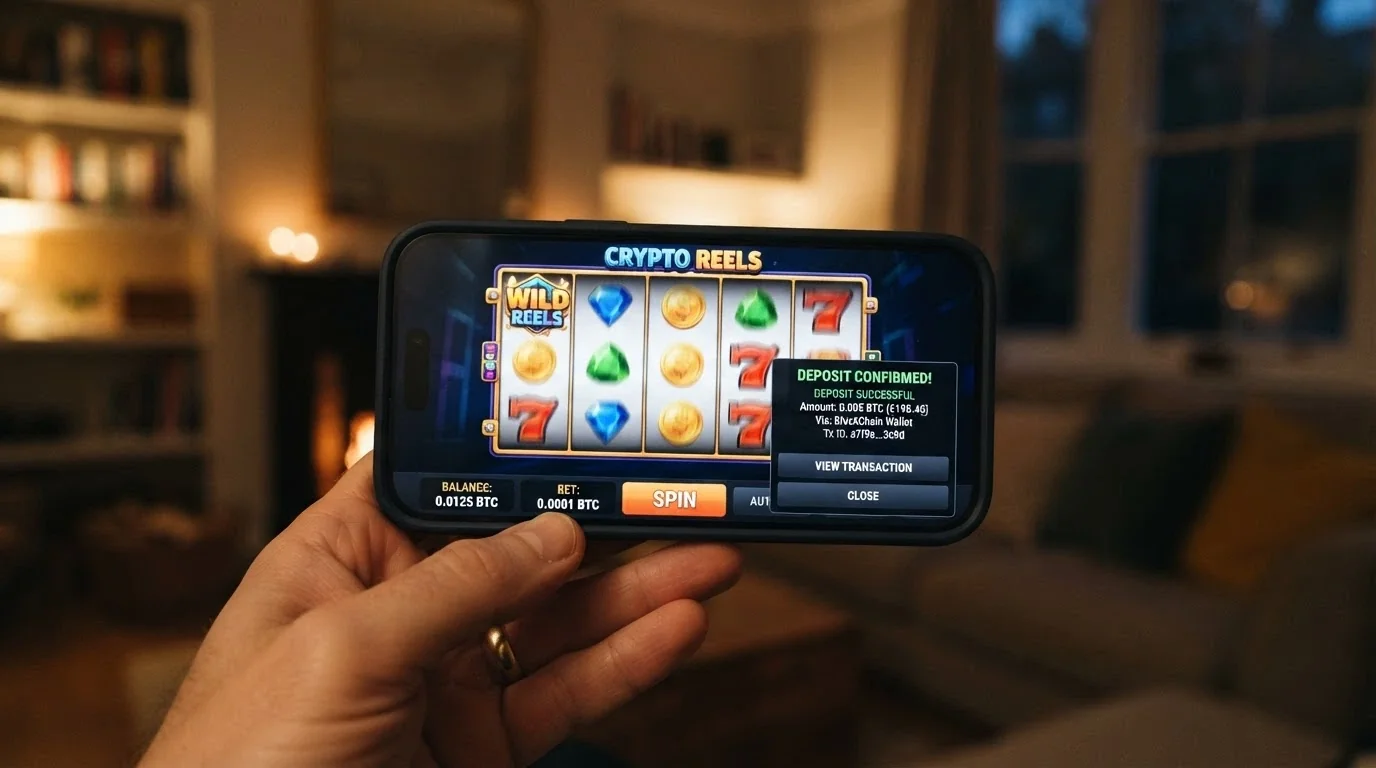
What mobile does change is the texture. Pokies from Pragmatic Play and NetEnt are mobile-optimised by default — the providers have spent years making their games touch-friendly, with portrait and landscape modes, swipe-to-spin and one-finger bet adjustments. The games run smoothly on a mid-range phone from the last three or four years; older devices can struggle with the heavier Hacksaw and Nolimit titles but handle Pragmatic Play and NetEnt without issue.
The deposit flow is where mobile sometimes beats desktop. The cashier on a phone is one tap from the game. A player who wants to add a dollar mid-session does not need to navigate away — the deposit button sits at the bottom of the screen, and a Litecoin transaction sends from a mobile wallet with a QR scan. Compared to a desktop flow that involves switching to a wallet tab or copying an address, mobile is the cleaner $1 deposit experience.
Mobile pokies with a $1 deposit: what changes on the small screen
The game library does not shrink on mobile. The same Pragmatic Play, NetEnt and Hacksaw titles appear in the mobile lobby, and the same RTP configurations apply. The screen size does change how volatility feels — a high-volatility pokie on a 6-inch screen with a $0.20 spin is a different intensity than the same game on a 27-inch monitor, but the math is unchanged.
Touch-optimised interfaces generally mean bigger spin buttons, easier bet adjustment and a one-finger pause-and-resume that desktop does not need. Some games add a portrait mode that locks the reels vertically; others lock to landscape only. Pragmatic Play’s main catalogue supports both, which is the player-friendly default.
The one place mobile shows its limits is session length. A phone battery dies. A laptop on a desk does not. A $1 deposit on a phone is a test of the casino, the rail and the player’s patience with a small screen — and the experience either invites a $30 deposit the next day or does not.
Mobile apps vs browser: what Australian players actually get
The short answer is that no Australian App Store hosts an online casino app. Apple’s App Store and Google Play in Australia do not carry offshore casino applications; the Interactive Gambling Act 2001 makes the product they would offer prohibited, and the app stores reflect that. A player searching for an online casino app in Australia finds sports-betting apps from licensed wagering operators and nothing else.
The offshore casinos respond by being browser-first. The mobile site runs the same games, the same cashier and the same $1 Litecoin deposit as the desktop. No install, no update cycle, no storage cost. Some operators offer APK downloads for direct install on Android — a sideload from the operator’s site rather than the Play Store — which sidesteps the store restriction at the cost of the player’s normal app-safety layer.
For an Australian player depositing $1, the browser is the default and the right answer. The mobile experience is the casino experience, minus the screen and the keyboard. The app question is one the offshore market has answered by not building apps.
How to tell a real $1 deposit pokies site from a $10 one
The verification is straightforward. The dishonest marketing is widespread.
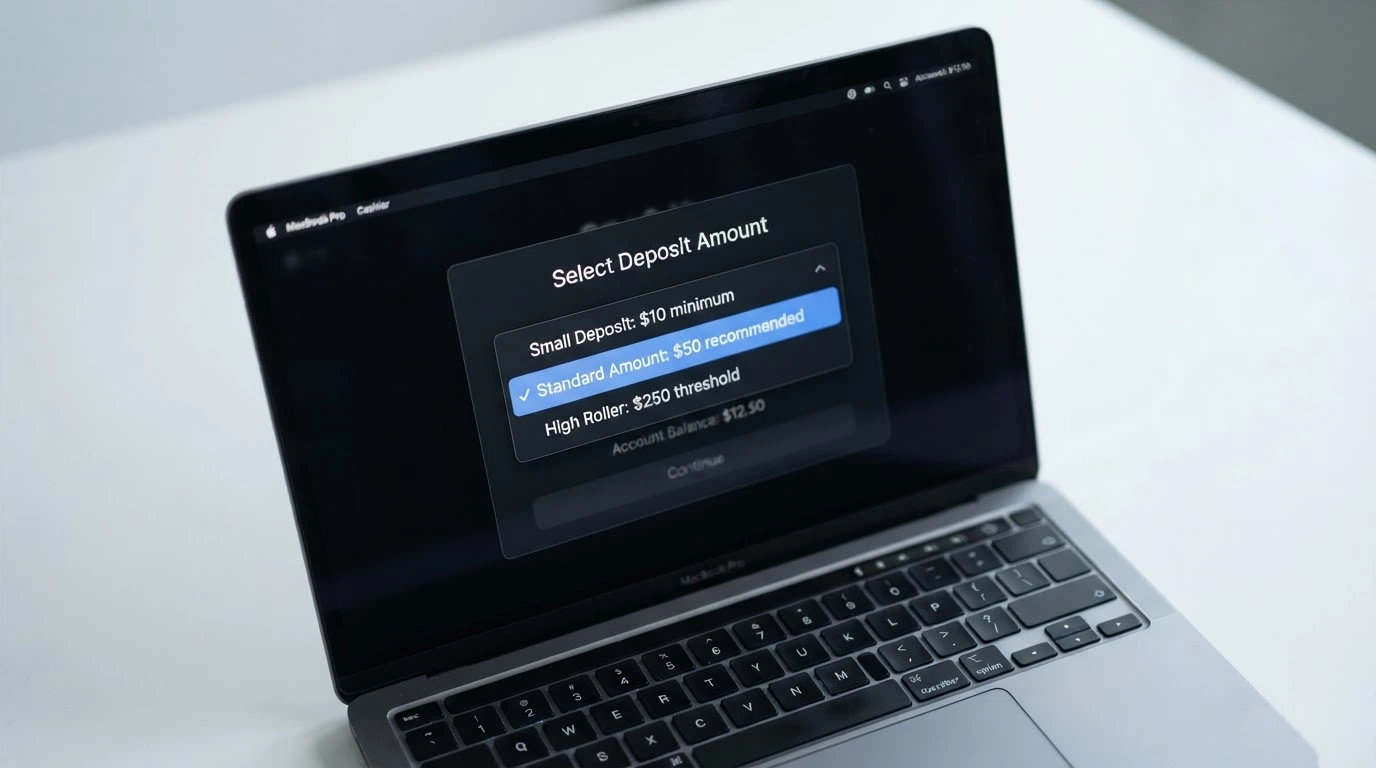
The first step is the cashier page, not the homepage banner. The homepage will say “Min deposit: A$1.” The cashier page lists the minimum per payment method. A player who opens the cashier before signing up sees whether the $1 floor is universal or whether it lives on one rail. The pattern across the 32 AU-facing sites tested: 4 cleared at $1 across the board, 2 cleared at $1 only via crypto, the rest sat at $5–$20.
The second step is the bonus terms. A welcome offer gated at $30 is a casino whose “min deposit: A$1” applies to play, not to the bonus. A player who deposits $1 via Litecoin and tries to claim a $30-minimum welcome will see no bonus hit the balance. The cashier is honest; the headline is not. The bonus T&Cs are the place the truth lives.
The third step is the test deposit. A player who deposits $1 via Litecoin and gets the play balance within five minutes has a real $1 floor. A player whose deposit sits pending for thirty minutes, or who cannot find the Litecoin option at all, has a $1 figure that exists on the marketing page and nowhere else.
The deposit-threshold verification checklist
- Open the cashier before registering. The minimum deposit is listed per payment method, not as one casino-wide figure.
- Read the bonus terms. If the welcome offer requires A$30 or more to activate, the $1 deposit does not unlock it.
- Test with crypto first. Litecoin clears at the lowest floor across the most operators; Bitcoin and USDT vary.
- Look for the PayID floor. A $10 PayID minimum is the most common pattern in AU-facing cashiers and a reliable indicator of the casino’s real floor.
- Check the bonus exclusion list. Some operators exclude crypto deposits from the welcome bonus entirely.
Why most $1 deposit claims are really $10–$20 deposits in disguise
The pattern is so consistent it reads like a marketing playbook.
The casino wants the SEO benefit of ranking for “$1 deposit.” The homepage carries the figure. The cashier sets a $10 PayID minimum because PayID is what most Australians will actually use. The welcome bonus gates at $30 because that is the deposit level where the casino’s matched-bonus economics work. The $1 figure is real — Litecoin clears at $1 — but the audience it speaks to is the audience that pays in crypto, which is a small slice of the affiliate traffic the page is trying to capture.
The affiliate round-up compresses this distinction. “Min deposit: A$1” sits in a column. The column is what gets screenshotted and shared. The reader assumes $1 is the standard across payment methods; they deposit $10 via PayID because that is what their bank offers, and the $1 figure never enters their session. The affiliate did the SEO work. The reader did the actual depositing.
The honest version: $5 is the working floor with 18 operators offering it. $10 opens complete libraries and every payment method. The $1 figure is a hook that lives on the crypto rail. Players who arrive expecting a $1 entry across the board will be surprised, and not in a good way.
New $1 deposit casinos worth a look in 2026
The new-entrant trend in 2026 is the same as the established-operator trend, with one difference: the brand is newer.

The defining feature of the offshore low-deposit market in 2026 is that the $1 floor is rare even among new sites. New operators launch with welcome packages aimed at the $30-to-$50 deposit bracket — that is where the bonus economics make sense for the operator and the player activation rate works for the affiliate funnel. The $1 figure, where it appears, lives on the crypto side of the cashier and is rarely tied to a bonus.
The new-casino angle is not the dollar floor; it is the catalogue. New operators tend to carry the latest Hacksaw and Nolimit titles alongside the established Pragmatic Play and NetEnt back catalogue. They tend to feature Stake Originals-style provably-fair games. They tend to load faster on mobile because they have not accumulated the legacy code that older brands carry. For a player who has already tested the established operators and wants a fresh lobby, the new-entrant set is where to look.
The specific launch data for new AU-facing brands in 2026 was not confirmed this run. The qualitative picture — newer providers, faster mobile, the same crypto-only $1 floor — is what the segment delivers.
First-deposit offers that work at the $1 level
None of the featured operators activates a full welcome bonus at $1.
SkyCrown’s welcome requires A$30 to trigger the first deposit bonus. RocketPlay’s first deposit bonus requires AUD 30; the second requires AUD 50. Rainbet’s Wager Lock Promotion requires a minimum $30 deposit. The bonus-activation floor at every featured operator sits well above the $1 deposit level, and several operators (SkyCrown explicitly) exclude crypto deposits from bonus eligibility entirely.
What a $1 deposit does activate is the games. A $1 Litecoin deposit at any of these operators lands a real-money balance, opens the game library, and lets the player see what the casino looks like in motion. The free spins, the matched bonus, the welcome package — those all require a deposit two to fifty times the $1 figure, paid via a method the operator accepts for bonus purposes.
The honest framing: $1 buys a casino tour. The welcome offer is a separate purchase, with a separate price tag.
New-player offers beyond the welcome package
The value past the welcome splash depends on the operator’s model.
Stake runs rakeback and ongoing cashback as its core offer — a slice of house edge returned to the player on every bet, no matter the deposit size. For a high-volume player, rakeback compounds across a session in a way a one-off welcome bonus does not. Stake does not need a deposit-match splash because its retention model is the rakeback structure itself.
FairGO offers 30x wagering as standard and a 24-hour cool-off with one click. The combination — fair wagering plus a built-in pause button — is the kind of long-term player value that does not show up in a welcome headline.
The other operators in the set run reload bonuses, loyalty programmes and tournament access on an ongoing basis. The specifics were not confirmed for every brand this run, but the shape is familiar: a percentage match on a subsequent deposit, a tournament entry for active players, a loyalty tier that unlocks at higher volumes.
For a player who plans to deposit more than once, the long-term value matters more than the welcome headline. The welcome is the hook. The retention model is the operator.
What Australian law actually says about $1 deposit pokies
The legal frame is the same regardless of the deposit size: online casino is prohibited in Australia.

The Interactive Gambling Act 2001 makes it an offence to provide online casino games, online pokies and in-play sports betting to a person in Australia. No licence for online casino exists in the country — not federally, not in any state or territory. The Australian Communications and Media Authority enforces the prohibition. The Interactive Gambling Amendment Act 2017 closed the loopholes offshore operators had been using and gave the ACMA its blocking and civil-penalty powers.
What this means in practice: every operator on this list is offshore; none is licensed in Australia; the activity of providing the service is illegal under Australian law. The individual player is not prosecuted — the IGA targets the provider. But the player operates outside the Australian consumer-protection perimeter entirely. There is no Australian complaints body, no BetStop coverage, no recourse if the operator refuses a withdrawal, and the site can be blocked by Australian ISPs at any time, with any balance on it caught in the block.
The credit-card and crypto ban that took effect on 11 June 2024 applies to licensed Australian wagering operators — racing and sport, pre-event only. The offshore casinos on this list are not subject to that ban. A player can use a Visa card or a crypto wallet at these operators, which is part of why the dollar floor exists at all. It is also a tell: a casino that takes a credit card for online wagering is operating outside the rules Australia applies to its own market.
Licensed vs offshore: what the two worlds look like
The contrast is clean.
A licensed Australian wagering operator holds a Northern Territory Racing and Wagering Commission licence (or, less commonly, a state-issued equivalent) and offers racing and sports betting, pre-event only. Sportsbet, bet365 and Ladbrokes are the household names. These operators offer customer-set deposit limits, activity statements, BetStop registration, and the full Australian consumer-protection perimeter. They are prohibited from offering online casino games or online pokies; the product the rest of this page describes does not exist in the licensed market.
An offshore casino holds a Curaçao eGaming licence, an Anjouan Gaming Authority licence or another non-Australian permit, and offers online casino games including pokies. It is not licensed in Australia; it cannot be. It is reachable from Australia and accepts Australian players. It offers no Australian consumer protection, no ACMA-recognised complaints body, no connection to BetStop, no recourse if it refuses a withdrawal, and the threat of an ACMA-directed ISP block at any time.
BetStop — the National Self-Exclusion Register — binds Australian-licensed wagering services only. An offshore casino is not connected. A self-excluded Australian who tries to deposit at an offshore casino will not be blocked at the casino end; the casino does not know they are on the register. BetStop’s 59,830 registrations and 37,247 active exclusions are real, and the tool is real, but the protection stops at the licensed perimeter.
The land-based casino (Crown, The Star and others) is a state-licensed product — a separate category from online casino and not the licence an offshore operator carries.
The 2026 gambling reform: what changes for $1 deposit players
The Interactive Gambling Amendment (Gambling Reform) Bill 2026 passed Parliament on 19 August 2026. Its measures commence 1 January 2027.
The advertising restrictions are the headline: wagering ads during live sport banned from 15 minutes before to 5 minutes after the event; TV wagering ads capped at three per hour between 5:00 am and 8:30 pm; radio wagering ads barred during school drop-off and pick-up times; broadcasting of sporting odds banned outright. Athletes, celebrities and influencers are barred from promoting wagering. Online wagering ads can only be shown to logged-in, age-verified users who have not opted out.
The inducement restrictions are the line most relevant to offshore players. Direct marketing of inducements is prohibited for 14 days after a customer signs up, for three months after a person deregisters from BetStop, and indefinitely for customers identified as at risk of gambling-related harm. These rules apply to licensed Australian wagering operators — but they shape what Australian players see in their inbox and on licensed sites, which sets the marketing norm the offshore market may eventually be measured against.
The payment change is the line that hits the offshore cashier. From 1 January 2027, banks and payment providers gain express authority to block transactions to illegal gambling operators. A player whose bank decides an offshore casino counts as “illegal gambling” can see a card or bank-transfer deposit refused at the bank’s end, even where the casino accepts the deposit. Crypto rails sit outside this enforcement perimeter.
Other reform measures: online keno, “pocket pokies” and foreign-matched lotteries are banned from 1 January 2027. The Wagering Advertising Opt-out Register (AdStop) is established under the ACMA, funded by a cost-recovery levy on wagering companies, though the register is not expected to be operational by the commencement date.
What the ACMA actually does — and what it cannot do
The ACMA enforces the online prohibition. It investigates complaints, issues formal warnings, refers operators for civil penalty proceedings, and directs Australian ISPs to block illegal services. Since the first blocking request in November 2019, the ACMA has had 1,564 illegal gambling and affiliate websites blocked. More than 225 illegal services have withdrawn from the Australian market since 2017.
The ACMA cannot recover a player’s money. There is no Australian complaints body for offshore disputes, no ombudsman with jurisdiction, no fund-recovery mechanism. A player whose offshore casino refuses a withdrawal has, in practical terms, the casino’s own dispute process and whatever pressure the affiliate that referred them can bring. Beyond that, the player is on their own.
The IGA targets the provider, not the player. The individual punter is not prosecuted. This is true regardless of deposit size, payment method, or how often the player has used the site. The legal risk sits with the operator offering the service from outside Australia; the player sits outside the consumer-protection perimeter but also outside the criminal-perimeter.
Staying in control: limits, tools and help for pokies players
The harm picture is the reason this section exists.

Australians lost $36.0 billion to gambling in the 12 months to March 2026, up $1.3 billion on the prior year and up 75% since COVID-19. Poker machine losses totalled $16.3 billion in 2023–24, the largest single category. Wagering losses increased 68% between 2019–20 and 2023–24, reaching $8.4 billion. These are not small numbers, and they are not numbers the offshore market is excluded from.
The responsible-gambling infrastructure in Australia is built around the licensed market. The tools that exist — BetStop, deposit limits, activity statements, the National Gambling Helpline — are real and they work, for the licensed perimeter. Offshore casinos sit outside most of them. Knowing which tools reach the offshore cashier and which do not is part of using these sites.
The harm numbers every Australian pokies player should see
15.1% of the Australian adult population — an estimated 3.32 million people — are experiencing some level of gambling harm, either from their own gambling or someone else’s, as of March 2026. 13.0% — 2,857,000 people — experience harm from their own gambling. About 2.1% — roughly 430,000 people — experience problem gambling.
Almost half of the people who gamble in Australia are classified at some risk of gambling harm. That figure rises to 67% for sports and race bettors. At the highest risk levels, each gambler affects on average six other people — partners, family members, friends, colleagues. A model-based national estimate puts the annual health loss from gambling-related harm at over 400,000 Years Lived with Disability.
These numbers describe the licensed and unlicensed markets together. The offshore casino is part of the picture. A $1 deposit that becomes a $30 deposit that becomes a $300 deposit that becomes a balance the player cannot withdraw — the harm pathway is the same whether the casino is licensed or not.
Deposit limits, self-exclusion and the tools that actually work
The practical tools, in plain terms:
Licensed Australian wagering operators offer customer-set deposit limits and activity statements under state and territory conditions. A player can set a daily, weekly or monthly deposit cap on their Sportsbet or Ladbrokes account, and the operator enforces it. The limit is a feature of the licensed market.
BetStop — the National Self-Exclusion Register — launched on 21 August 2023. One registration excludes a person from every Australian-licensed online and phone wagering service. As of 31 March 2026: 59,830 total registrations and 37,247 active exclusions. The tool works, and the usage numbers show it is being used. It does not reach offshore casinos. An offshore casino is not connected to the register, will not see the registration, and will continue accepting deposits from a self-excluded Australian.
FairGO offers a 24-hour cool-off available with one click. That is the rare offshore example — a player-control tool built into the platform. It is not BetStop, but it is more than most offshore operators offer.
For financial harm tied to gambling, the National Debt Helpline is 1800 007 007.
For help that is free, confidential and available around the clock, the National Gambling Helpline is 1800 858 858, with online chat and counselling through Gambling Help Online.
Where to get help: the full directory
- National Gambling Helpline: 1800 858 858 — free, confidential, 24/7, online chat and counselling via Gambling Help Online (gamblinghelponline.org.au)
- Gambling Help Online: gamblinghelponline.org.au — free, confidential 24/7 online chat and counselling
- BetStop — National Self-Exclusion Register: registration excludes a person from Australian-licensed wagering services
- National Debt Helpline: 1800 007 007 — for financial difficulties related to gambling
- State-based gambling support services in each state and territory (Gambling Help NSW, Gambler’s Help Victoria, Gambling Help Queensland, and equivalents in other states) — direct referral through Gambling Help Online
How we chose and ranked these $1 deposit pokies sites
The ranking draws on third-party casino reviews, Australian gambling-affiliate editorial, and named operator terms pages. Australian Gamblers, PlayCasino, Betzoid, Estelle Australia, TheRxReview, watchMynumbers and The Nation Online NG were the primary editorial sources for the operator and payment-method data. Operator terms pages were checked directly for bonus conditions, wagering requirements and withdrawal caps where the editorial sources had gaps.
The licence-status check used the official Curaçao eGaming register and the Anjouan Gaming Authority register for verification of licence numbers where operators publish them. WinSpirit’s Antillephone N.V. licence No. 8048/JAZ2014-053 was the clearest case. The Australian baseline was the IGA 2001 prohibition — every operator was assessed against the question “does this brand hold an Australian casino licence?” and the answer was uniformly no, by design of the law rather than failure of the operator.
The ranking criteria were: verified $1 deposit availability against third-party test results, bonus terms that apply at low deposits, wagering fairness, operator transparency (publishing licence numbers, terms, withdrawal caps), and market presence in Australia. The ranking does not measure player experience with the operator’s customer support, withdrawal reliability over time, or any feature that requires long-term account use — those are not data this page can verify.
No operator paid for placement on this page. No affiliate commercial relationship shaped the ranking; the affiliate relationships that fund the editorial work are disclosed at the site level, not the brand level. The ranking reflects what the sources and the criteria produced.
Is a $1 deposit pokies session worth your dollar?
The short answer: only as a test, not as a session.
A dollar at the cashier is real money at the games. Ten spins at minimum bet is a sample, not a session, and the expected return across those spins is roughly what was staked minus the house edge. The dollar does not unlock the welcome bonus at any featured operator — every bonus gate sits at A$30 or higher. The dollar buys a tour of the casino, the cashier and the game library; it does not buy the matched deposit or the free spins that the welcome offer headlines.
The crypto requirement is the second constraint. The $1 floor lives on Litecoin, and to a lesser extent USDT and Bitcoin. A player without crypto on hand needs to acquire it first, which means an exchange, an AUD-to-crypto conversion, and a wallet. That friction is the reason fiat-rail players land at $10 PayID floors and never see the $1 figure move.
The $5 to $10 sweet spot is where value opens up. $5 unlocks 18 operators. $10 unlocks every payment method and the complete game libraries. The dollar is below the floor that matters.
The safety gap is the third thing. Every brand on this list is offshore; none holds an Australian licence; none offers Australian consumer protection. The ACMA cannot recover a player’s money. BetStop does not cover these sites. A withdrawal refusal has no Australian recourse. The site can be blocked with a balance on it.
The verdict: a $1 deposit is a trial token for crypto-native players testing a casino they have not used before. For that reader, it works — Litecoin, ten spins, ninety seconds, a dollar lost or won and a real-money balance to assess. For everyone else — fiat-rail players, bonus-seekers, anyone planning a real session — the $5 to $10 deposit is the right entry point, and the welcome bonus at that level is what the ranking is built around.
The dollar is a hook. The casino is what comes next.
Frequently asked questions about $1 deposit pokies in Australia
Can you really deposit just $1 at an online casino in Australia?
Yes, but only via crypto. Of 32 AU-facing sites tested, only four accepted a true $1 minimum, two restricted to crypto only. PayID’s typical minimum is $10, cards sit at $10–$20 and some banks block gambling transactions. Litecoin is the cheapest rail for a $1 deposit, with fees under A$0.05.
What bonuses can you get with a $1 minimum deposit at pokies?
No featured operator activates a welcome bonus at $1. SkyCrown requires A$30 to trigger its first-deposit bonus; RocketPlay requires AUD 30 first deposit; Rainbet’s Wager Lock requires $30. A $1 deposit buys games, not the welcome offer, and SkyCrown excludes crypto deposits from bonus eligibility.
What is the minimum withdrawal at $1 deposit casinos in Australia?
Minimum withdrawal varies by operator and payment method but typically sits at A$10–$20. RocketPlay publishes caps of AUD 2,500 per day, AUD 7,500 per week and AUD 15,000 per month — limits that bind on large wins. Crypto withdrawals are usually faster than bank transfers.
What are the wagering requirements on $1 deposit free spins?
Operator-specific. Most $1-deposit-triggered free spins sit at 40x on free-spin winnings, with around 30 days to clear. Rainbet offers 30x on free-spin winnings separately from 35x bonus wagering. Free-spin winnings are typically capped at A$300 per bonus part.
Does BetStop cover $1 deposit offshore casino sites?
No. BetStop — the National Self-Exclusion Register — binds Australian-licensed wagering services only. An offshore casino is not connected to the register and will continue accepting deposits from a self-excluded Australian. BetStop is effective for licensed services only.
What are the risks of playing at offshore $1 deposit casinos from Australia?
The risks are specific: no Australian consumer protection, no ACMA fund recovery, no BetStop coverage, no recourse on a withdrawal refusal, and the threat of an ISP block with a balance on it. The player is not prosecuted under the IGA, but the licensed protection perimeter does not exist offshore.
Created by the ”Live Casino Australia” editorial team.