
The Best Live Dealer Casino Online Australia for Real Money in 2026
 Available in AU
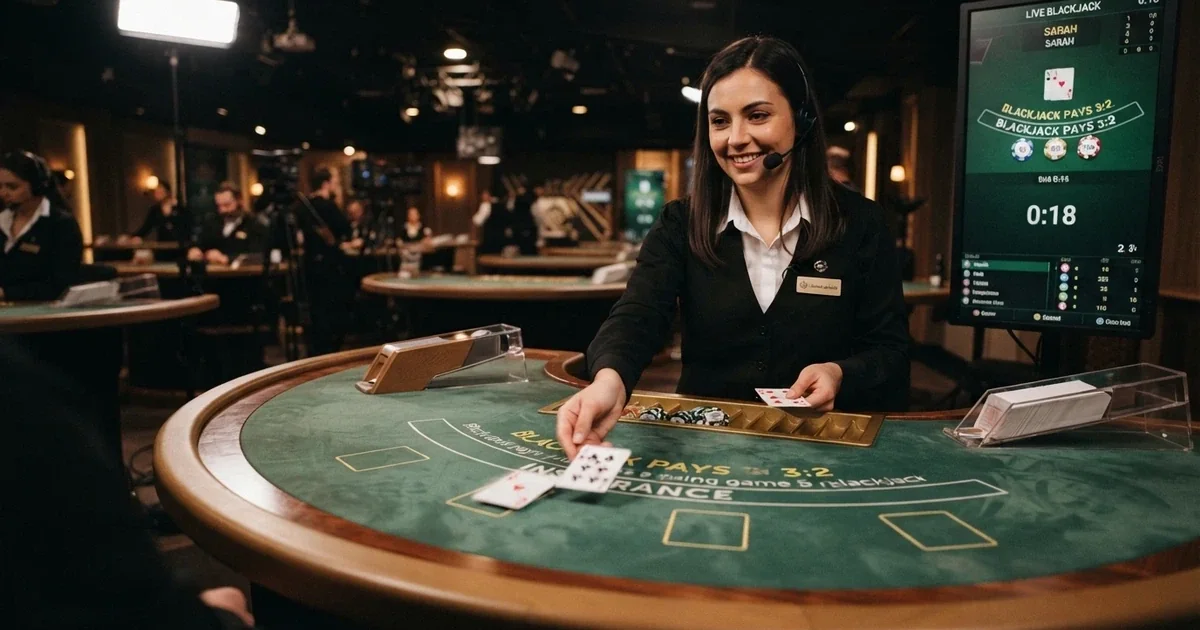
A live dealer casino streams real tables in real time — a human dealer, physical cards, a roulette wheel you can see spin — to a player sitting anywhere with a decent internet connection. For an Australian player, the experience is identical to what a London or Toronto player sees on the same provider’s table. The difference is what sits around it: no operator offering this product to Australians holds an Australian licence, because no such licence exists. The Interactive Gambling Act 2001 makes providing online casino games — live dealer included — an offence, and ACMA has overseen the blocking of 1,751 illegal gambling and affiliate websites since November 2019 to enforce it.
Current as of 18 October 2026 · verified against ACMA’s BetStop register and the Interactive Gambling Act provider list on livecasino-au.com.
Table of Contents
- What a Live Dealer Casino Actually Means for an Australian Player
- Australia’s Best Offshore Live Dealer Casinos, Ranked
- The Live Dealer Games Worth Your Time (and the Ones That Aren’t)
- Why Most Live Casino Bonuses Work Against You
- Crypto at Live Dealer Casinos: Faster Cashouts, Zero Bank Traces
- The Offshore Reality: No Live Dealer Casino Is Licensed in Australia
- Playing Safe When the Safety Net Has a Hole
- How We Selected and Ranked These Live Dealer Casinos
- What You Should Actually Do With This Information
- Frequently Asked Questions
What a Live Dealer Casino Actually Means for an Australian Player
A live dealer casino is the streamed cousin of the table-game floor you would walk through at Crown Melbourne or The Star Sydney. Real cards, real wheels, real human dealers — all of it captured by cameras in a studio and delivered to your browser or phone in seconds. The result you see on the felt is the result the dealer physically produced; the bet you place goes through the casino’s software, but the outcome is generated by equipment, not a random number generator. That distinction matters because it is what makes a live casino a casino rather than a video game.
The Australian player reaches these tables through offshore websites. None of the operators discussed on this page is licensed under any Australian jurisdiction, because the Interactive Gambling Act 2001 prohibits the provision of online casino games to a person in Australia. State and territory regulators — the Northern Territory Racing and Wagering Commission chief among them — license wagering on races and pre-event sport, lotteries and keno. Online casino sits outside that frame. The legal status of every brand on this page is therefore the same: offshore, no Australian licence, prohibited supply under the IGA. What differs is product, payment routes, and bonus structure — and that is what this page ranks.
The Mechanics: Real Dealers, Real Tables, Real-Time Streaming
A live dealer studio looks like a high-end television production crossed with a card room. HD and 4K cameras are mounted above each table, with secondary angles capturing the dealer’s hands and the player’s interface. Optical character recognition software reads the cards or wheel outcome in real time and pushes the result to the player’s screen before the dealer has finished announcing it. A chat window sits beside the video feed; the player types a message, the dealer reads it on a prompter and answers aloud. The latency between the studio and the player’s screen runs from one to three seconds on a stable connection.
Pragmatic Play runs one of the larger live production facilities from a studio in Bucharest, broadcasting more than 43 tables in 4K resolution. Evolution Gaming operates an even larger network across multiple studios in Europe and North America. Most of the Australian-facing sites on this page run Evolution and Pragmatic Play Live as their two primary feeds — they are the duopoly of the live vertical, with smaller studios handling specific niches.
A few practical points worth knowing. The stream is real, but the bet is processed by software on the casino’s side. The dealer has no influence on outcomes — they spin the wheel, deal the cards, follow the rules, and let the equipment decide. Game control unit sensors inside the table record each spin or hand and reconcile it against the video feed, so a player disputing a result is disputing against the equipment record, not the dealer’s judgement. Live dealer games are not beatable through card counting online the way they are in a back-room casino — the shoe reshuffles between hands or uses a continuous shuffler — but blackjack’s RTP still rewards basic strategy at 99.50% because the maths of the game does not change.
Online vs Land-Based: What You Gain and What You Lose
A live dealer table at A$0.10 minimum sits next to a VIP room accepting A$25,000 a hand on the same provider’s network. The spread between those two limits is the single biggest difference between streamed tables and a physical casino floor. Crown Melbourne’s most accessible blackjack generally opens around A$15 to A$25 a hand, and high-roller rooms start higher still. The online equivalent pushes the floor down to where a casual punter can play a few hands for the price of a coffee and the ceiling up to where a whale can sit at a table a land-based venue would not bother staffing except on a busy Saturday.
What you lose is the room. The felt, the cocktail waitress, the bloke three seats down arguing about a split — the social layer that turns a table game into an evening out. The chat function partially replaces it, but the typing latency and the strange intimacy of talking to a screen are not the same as leaning across a blackjack box. Atmosphere trades for accessibility, and the trade-off is worth it for some players and not for others.
What you keep is the game. Roulette spins the same, baccarat deals the same, blackjack pays 3:2 the same. The only difference in the rules is the reshuffle and the speed — Speed Baccarat from Pragmatic Play clears a hand in about 27 seconds, which is faster than any dealer on a physical floor. Whether that speed is a feature or a problem depends on how much you enjoy the rhythm of a real table.
Real-Money Play vs Free-to-Try Demo Mode
Live dealer tables are real-money only. There is no demo mode for blackjack, roulette or baccarat on a live stream — the studio is paying a dealer to deal, and the cost of the feed is paid by the players at the table. Demo play exists on the random-number-generator table games that sit beside the live section on most casinos, but those are not the product being ranked here.
The closest thing to a trial is observer mode — some live tables let you watch without betting, which lets you see the dealer’s pace, the chat tone, the stream quality and the table layout before committing. Low-stakes tables at A$0.10 a hand serve the same purpose for players who want to test with small sums rather than nothing. Both options let you judge the experience; neither lets you evaluate payout speed, KYC friction or bonus terms, which are the parts of an offshore casino where the actual cost of using one tends to surface.
How Review Sites Actually Score a Live Dealer Casino
Most affiliate review sites that rank Australian live dealer casinos use a checklist approach — game-library breadth, bonus size and fairness, payment method coverage, mobile experience, customer support response time. The longest review pages in this niche run to 47 or 50-point scoring rubrics. The shorter ones run on a five-star visual and a paragraph of boilerplate per operator.
What the rubrics consistently miss is the regulatory layer. Almost no affiliate page names the Interactive Gambling Act 2001, ACMA’s enforcement record, or BetStop. Crypto and credit-card bans for licensed wagering since June 2024 are rarely explained. The 2026 reform package — passed on 19 August 2026 and commencing on 1 January 2027 — does not appear on the competitor set at all. Responsible gambling infrastructure is either a single link to the helpline or absent. The pages that rank these casinos do so as if Australia were a normal licensed market, and the result is a ranking surface that looks complete but is missing the part that decides what happens when something goes wrong.
That gap is part of why this page exists. The ranking below uses the same commercial criteria every affiliate uses — game count, bonus structure, payment speed, market presence — and adds the legal context those reviews leave out.
Australia’s Best Offshore Live Dealer Casinos, Ranked
Ten operators make up the ranking. All are offshore; none is licensed in Australia. The order reflects AU market presence, live-dealer product depth, and the quality of the bonus terms that research could verify. Several brands in the ranking carry thin publicly confirmed data — bonus terms, provider names, wagering requirements — and the write-ups name that gap rather than fill it with marketing copy.
| Operator | Licence / Regulatory Status | AU Market Share — est. |
|---|---|---|
| Skycrown Casino | Offshore — no Australian licence (product prohibited under IGA) | — |
| Royal Reels | Offshore — no Australian licence | 2.51% |
| Rocket Play | Offshore — no Australian licence | 9.4% |
| Stake | Offshore — Curaçao licence (widely reported); no Australian licence | 1.28% |
| WinSpirit | Offshore — no Australian licence | 1.55% |
| Rainbet | Offshore — no Australian licence | 1.28% |
| FairGO | Offshore — no Australian licence | 0.8% |
| Scream Casino | Offshore — no Australian licence | 0.99% |
| Bizzo Casino | Offshore — no Australian licence | 0.57% |
| Rocket Casino | Offshore — no Australian licence | 0.57% |
The licence column is identical for every row by design. No operator on this page holds an Australian online casino licence because no such licence exists. The market share column shows estimated share of Australian traffic reaching offshore casinos, drawn from publicly reported operator data — and the gap beside Skycrown reflects that no equivalent figure surfaced for that brand this run.
Skycrown Casino
Skycrown runs the most live-dealer-friendly bonus structure in the ranking. The welcome package totals A$8,000 plus 400 free spins across four deposits, but the number that matters for live table players is the weekly cashback: 10% of net losses on live dealer play, paid up to A$1,500 per week, with zero wagering requirements attached. The minimum qualifying loss is A$150; the minimum cashback payment is A$15. Cashback lands every Wednesday before 08:00 UTC as real money to verified accounts — it is not gated behind a VIP tier, which is unusual.
The game library runs to more than 8,000 titles. Evolution Gaming and Pragmatic Play Live carry the live dealer floor; NetEnt rounds out the slot catalogue. Nine cryptocurrencies are accepted alongside PayID and card. Minimum deposits start low. The combination of a cashback rebate that converts losses into withdrawable cash and a provider lineup that covers every live game worth playing makes Skycrown the operator best suited to a player who plans to spend more than a weekend at the tables.
Royal Reels
Royal Reels sits second on AU market share at 2.51% of the offshore-AU traffic pool, with reported revenue of A$243.99 million. The site is a high-traffic Australian-facing brand — its name is everywhere in the AU-facing comparison set — but publicly confirmed data on its live-dealer-specific bonus, provider list, and wagering terms is thin. The live casino section advertises 24/7 access and the standard suite of blackjack, roulette and baccarat, but the specifics that would separate it from a generic offshore site were not confirmed this run.
For a player prioritising brand familiarity and an Australian-leaning interface over a verified bonus structure, Royal Reels fits. For a player comparing live cashback rates or specific provider lineups, the gap in the public data leaves more assumptions than conclusions to work with.
Rocket Play
Rocket Play is the largest operator in the ranking by AU market share — 9.4% of the offshore-AU pool, with A$632.69 million in reported revenue. Evolution Gaming live dealer tables are confirmed on the AU-facing domain, with a minimum deposit of A$35. The rest of the live-dealer product — bonus structure, wagering terms, full provider list — was not confirmed this run.
What that scale means in practice is straightforward: more Australian players are already playing there than at any other brand on this list. The traffic does not make the bonus better or the withdrawal faster, but it does mean a community of players to compare notes with, and a brand that has held its AU market share against the ACMA blocking regime for long enough to be worth taking seriously as an operation rather than a launch site.
Stake
Stake is the crypto-native operator of the ranking. Curaçao-licensed, Bitcoin-denominated, and the only brand on this page that names its welcome bonus in BTC rather than AUD — 100% up to 1 BTC plus 100 free spins. The 10% weekly cashback runs with no wagering requirements, similar to Skycrown’s live-specific rebate but applied across the full casino rather than just live tables. Evolution and Pragmatic Play Live games sit on the platform.
AU market share runs to 1.28% with A$115.67 million in revenue, which is smaller than Rocket Play or Royal Reels but still meaningful. For a player with Bitcoin or stablecoin already in their wallet who wants the deposit-to-table flow to clear in seconds rather than minutes, Stake is the operator built for that pattern. For a player funding from an AUD bank account and not holding crypto, the conversion friction makes the proposition weaker.
WinSpirit
WinSpirit operates at 1.55% AU market share with A$110.3 million in revenue, and advertises 24/7 live casino access on-site. The specific providers and bonus terms behind that access were not confirmed this run. The brand fits a player looking for a stable mid-sized offshore casino with a live dealer section that does not require an account at one of the bigger names — a niche that is real, even if the publicly available data on this particular brand is light.
The 24/7 claim is the operational detail worth noting. Live tables run around the clock when a studio is staffed, and the bigger providers operate multiple studios in different time zones to keep tables open continuously. A site advertising 24/7 live access is signalling it is not running a skeleton schedule during off-peak Australian hours.
Rainbet
Rainbet is a smaller entrant at 1.28% AU market share with A$83.13 million in revenue. Live dealer access is part of the offering, but the publicly confirmed specifics — providers, bonus terms, wagering multipliers — were not surfaced this run. The market presence is real; the data needed to assess the live product against the rest of the ranking is not.
For a player willing to register, deposit small, and evaluate the live product directly, Rainbet offers a typical offshore configuration. The same KYC at withdrawal, the same offshore recourse problem, the same absence of BetStop coverage as every other brand on this list — none of which makes it worse than the rest, just unverified.
FairGO
FairGO brands itself as an Australian-facing casino, with the name and positioning aimed at local players. The AU market share of 0.8% and A$69.11 million in revenue are real but modest; the live-dealer-specific configuration was not confirmed this run.
The Australian naming is a positioning choice, not a regulatory one. FairGO is offshore like every other operator on this page, holds no Australian licence, and offers no recourse to Australian consumer protection law if a withdrawal is refused. The branding makes the site feel local; the licence status does not change.
Scream Casino
Scream Casino runs at 0.99% AU market share with A$94.87 million in revenue, putting it in the same band as WinSpirit and Rainbet by traffic. Live dealer specifics were not confirmed this run, and the brand’s profile sits closer to a smaller mid-tier offshore casino than to the names at the top of the ranking.
The honest read is that the revenue figure indicates a real player base, but the unconfirmed live product makes it hard to recommend on product merit alone. Investors in reliable, verified data might prefer an operator with a more transparent live product than this one currently provides.
Bizzo Casino
Bizzo Casino runs 40-plus software providers across a 2,000-game library, with Evolution and Pragmatic Play Live among them. The welcome package totals A$2,500 plus 300 free spins. AU market share is 0.57% with A$51.38 million in revenue — smaller than the top of the ranking but with the broadest provider lineup.
For a player who values choice of live game variants over bonus size, Bizzo’s 40-provider range is the practical advantage. More providers means more blackjack rule sets, more roulette wheel types, more baccarat side bets, and more game-show variants like Crazy Time and Monopoly Live. The bonus is solid if unspectacular, and the live product depth is the real reason to consider this brand over a similarly sized competitor.
Rocket Casino
Rocket Casino is a separate brand from Rocket Play at the third position in this ranking — same first word, different operator. AU market share runs to 0.57% with A$43.22 million in revenue. Live dealer specifics were not confirmed this run.
The naming overlap is the practical warning. A player searching for the high-traffic Rocket Play brand above and landing on Rocket Casino by accident will find a different site with different terms, different bonuses and a smaller player base. The two are not affiliated, and confusing one for the other is the kind of mistake that comes from skimming a search result page rather than reading the URL.
The Live Dealer Games Worth Your Time (and the Ones That Aren’t)
Three core table games anchor the live dealer floor: blackjack, roulette and baccarat. Game-show variants — Lightning Roulette, Crazy Time, Monopoly Live — sit beside them as higher-volatility alternatives with bigger headline multipliers and worse headline RTP. Knowing which is which is what separates a player who pays a fair price to play from one paying the premium for the show.

| Game | RTP |
|---|---|
| European Roulette (Pragmatic Play) | 97.30% |
| Standard Blackjack (Pragmatic Play, basic strategy) | 99.50% |
| Speed Baccarat Banker bet (Pragmatic Play) | n/a |
The table covers three specific titles from a single provider, because that is what research confirms with named figures. The same games from Evolution Gaming run with the same maths — the RTP is determined by the rules, not the studio — but where research names an RTP for a specific title, that title is what the table carries.
Blackjack: The Strategy Player’s Live Table
Blackjack is the highest-RTP live game on the floor at 99.50% with basic strategy. The reason is the maths of the game itself: the player acts after the dealer, doubling and splitting decisions shift the house edge below one percent, and the 3:2 payout on a natural blackjack is generous relative to the alternatives. A player running a basic strategy chart — the canonical decisions on hit, stand, double, split for every player hand against every dealer up-card — plays at near-optimal return indefinitely.
The variants matter. Speed Blackjack shortens decision time to a few seconds per hand, which is fine for experienced players and punishing for anyone still consulting a strategy chart. Infinite Blackjack expands the seat count beyond the seven-handed table, which means no waiting for a seat but no other players to share the social layer. Both run the same 99.50% return with basic strategy. Live dealer table limits at AU-facing casinos open at A$0.10 per hand on standard tables and reach past A$25,000 per hand in VIP-exclusive rooms.
The skill element is real, and it is why blackjack is the only live game on this page where the player’s decisions change the outcome materially. Roulette and baccarat are decided by bet selection; blackjack is decided by hand selection. A player who learns basic strategy is paying 0.50% to play. Casual betting without strategy, by contrast, gives up significant house edge unnecessarily.
Roulette: Single-Zero Wheels and Multiplier Mayhem
European roulette runs at 97.30% RTP on the main bet — the same maths as a physical single-zero wheel. Pragmatic Play’s European Roulette tables use TCS John Huxley wheels and track the last 500 results in a statistics panel beside the stream, so a player who believes in streak betting has the data to argue with. The odds do not change with the streak; the 2.7% house edge applies to every spin regardless of what the last 500 said.

The game-show variants are a different proposition. Evolution’s Lightning Roulette XXXtreme adds Chain Lightning for additional lucky bet spots and pushes multipliers up to 2,000x on straight-up numbers. The base game still pays 97.30% on the outside bets, but the inside bets lose a chunk of their return to fund the multiplier prize pool — every Lightning Number that hits a multiplier is paid out of a fund fed by reducing the standard 35:1 payout to something closer to 30:1 on most inside bets. Standard XXXtreme Lightning Roulette generates one to five Lightning Numbers per round with multipliers from 50x to 500x each. The trade is straightforward: a worse return on average for a chance at a much larger payout.
A player who wants the pure roulette experience plays the European single-zero wheel. A player who wants the spectacle accepts the lower RTP for the multiplier show. Both are legitimate choices; they are not the same game.
Baccarat: Speed Hands and High-Roller Appeal
Baccarat’s Banker bet runs at 98.94% RTP — the second-highest return on the live floor after blackjack’s basic-strategy line, and the reason the game dominates the VIP room. The Player bet is slightly worse; the Tie bet is much worse and should be ignored. Most serious baccarat players bet Banker exclusively and accept the commission.
Speed Baccarat from Pragmatic Play clears a hand in about 27 seconds, the fastest structured card game in the live portfolio. The shorter round suits high-volume players who measure their session in hands rather than minutes, and suits the operator’s table economics because more hands per hour means more rake from commission-based games. A player who enjoys the slower pace of a standard table finds Speed Baccarat slightly mechanical; a player who wants volume finds it ideal.
The high-limit appeal is structural. Baccarat’s house edge on the Banker bet is one of the lowest in the casino, the table limits run higher than blackjack or roulette at the same provider, and the game has a long cultural association with the high-roller room. A punter with a few hundred dollars a hand and a whale with A$25,000 a hand can both find a table suited to their bankroll on the same provider’s network.
The Studios Behind the Stream: Evolution, Pragmatic Play and the Rest
Evolution Gaming and Pragmatic Play Live are the two studios behind the vast majority of live dealer tables an Australian player will encounter on offshore sites. Both run multiple studios, both broadcast in HD and 4K, both offer the full suite of blackjack, roulette and baccarat plus an expanding catalogue of game-show variants. A casino offering “live dealer games” without one or both of these providers is either a white-label reseller on top of their streams or running a much smaller studio’s catalogue.
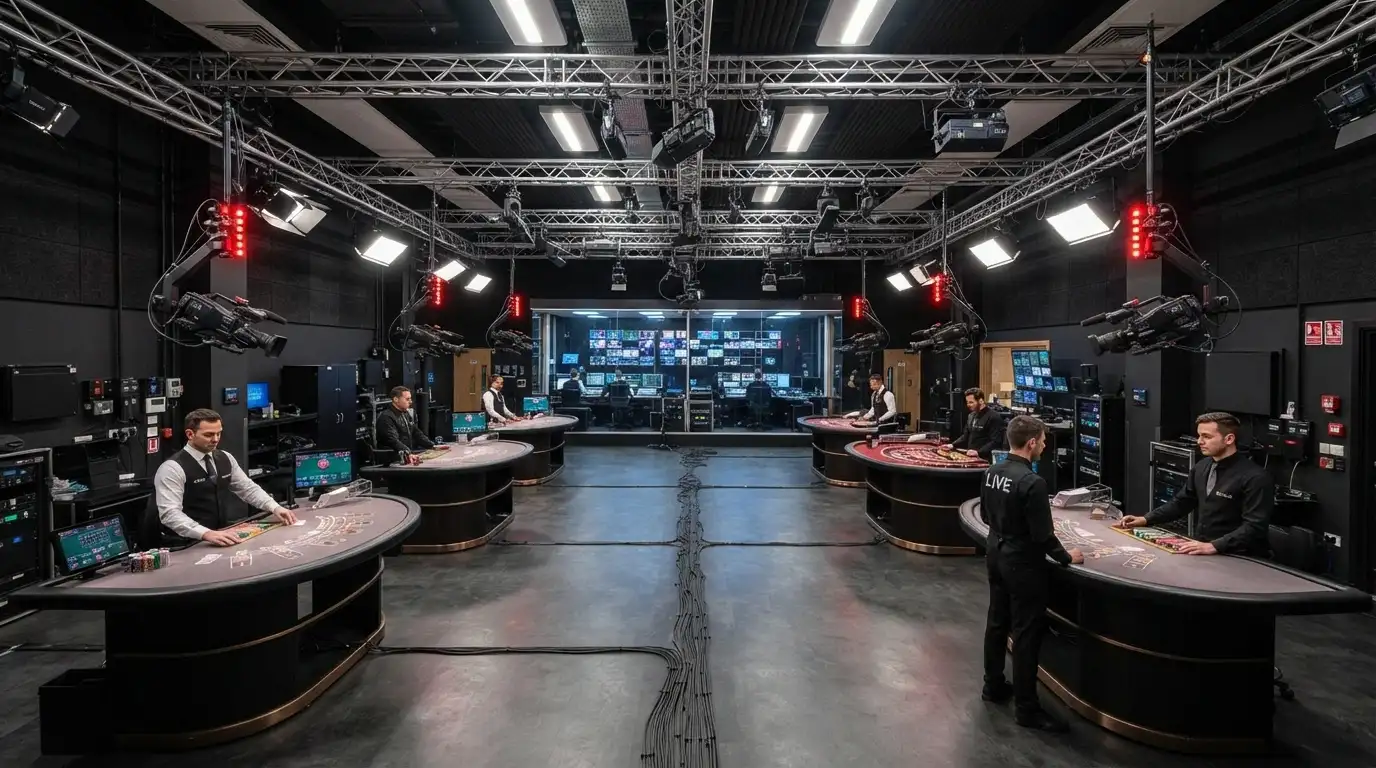
Pragmatic Play’s Bucharest studio runs more than 43 tables in 4K resolution — one of the larger single-studio operations outside Evolution’s network. Evolution’s footprint is bigger still, with studios in Latvia, Malta, Romania, Canada and the United States feeding a single integrated platform. The two compete most directly on game-show innovation: Crazy Time, Monopoly Live and Lightning Roulette are Evolution originals; Boom City, Mega Wheel and PowerUP Roulette are Pragmatic’s answer.
A player does not need to choose between providers — most offshore sites carry both — but the provider badge is worth checking before depositing. A site advertising live casino without naming Evolution or Pragmatic Play is signalling either a smaller studio with thinner game variety, or a white-label that resells the same streams under a different brand. Neither is disqualifying, but both are worth knowing before signing up.
Why Most Live Casino Bonuses Work Against You
The headline bonus number is the start of the calculation, not the answer. A welcome package advertised at A$8,000 across four deposits sounds like A$8,000 of value. Once you read the small print — the wagering requirement, the contribution rate, the validity window, the game restrictions — the figure shrinks. Live table players see it shrink fastest of all, because table games typically contribute between 5% and 20% toward wagering requirements while slot titles contribute the full 100%. A bonus that requires 30x to 50x playthrough at 10% contribution is asking for ten times the volume it appears to.

Cashback is the exception. A cashback bonus that returns real money on losses with zero wagering does not run a contribution rate at all — it pays cash on a percentage of net losses, period. The two operators in this ranking that ship a verified zero-wagering cashback — Skycrown at 10% weekly up to A$1,500 on live play, Stake at 10% weekly across the full casino — are the two whose bonus structure genuinely suits a live table player. The deposit-match welcome bonuses elsewhere on the list require careful reading before they become anything other than a slower path to the same place.
Welcome Bonuses on Live Dealer Tables: Read the Fine Print
Skycrown’s A$8,000 welcome package splits across four deposits; the first deposit carries the largest share and typically works out around A$2,000 in matched bonus cash. A standard wagering requirement for a package like this runs 30x to 50x the bonus amount, midpoint at 40x — meaning A$80,000 in turnover on live dealer play before the bonus converts to withdrawable cash. Run that A$80,000 through live blackjack’s 99.50% RTP, and the player’s expected loss on the playthrough alone comes to A$400. That is the bonus’s real cost: roughly twenty cents on the dollar of the headline figure, paid in tiny slices across tens of thousands of hands.
The contribution rate compounds the issue. If the casino counts live dealer play at 10% toward wagering, the A$80,000 playthrough becomes A$800,000 of actual table action, with the expected loss scaling with the turnover. The 5% to 20% table contribution band research documents is exactly why the marketing number and the real cost sit so far apart. A player who reads the bonus terms before depositing ends up choosing a smaller offer with friendlier live contribution, or skipping the welcome bonus entirely and playing cashback-only. Those who skip the fine print until it is too late often find their bonus value vanished before the first withdrawal.
No-Deposit Live Casino Offers: Rare, Small and Worth Knowing About
No-deposit bonuses at Australian-facing casinos typically range from A$5 to A$25 in bonus credits or up to 50 free spins — small enough that the wagering requirement on the winnings usually eats the value before withdrawal. Live dealer tables rarely qualify at all; the no-deposit bonus is almost always slot-locked, because the casino needs the new player on the highest-margin product to recoup the free credit. No featured operator in this ranking carries a confirmed no-deposit live-casino bonus this run, which matches the industry norm.
A player who finds a no-deposit offer advertised on a live casino should check three things before signing up: whether live dealer play is in the eligible games list, what the wagering requirement is on the winnings, and whether there is a maximum cashout cap that turns the offer into a token gesture. The offers that pay out genuinely are uncommon; the offers that look generous on a banner and pay out A$20 after an hour of playthrough are common.
Cashback: The Bonus That Pays You Back Without Wagering
Cashback is the bonus type that works the way players hope bonuses work. A percentage of net losses over a set period is returned as real money, with no wagering requirement on the returned amount. Skycrown’s 10% weekly live cashback returns up to A$1,500 per week on live dealer losses, with a minimum qualifying loss of A$150 and a minimum payment of A$15. Stake’s 10% weekly cashback runs across the full casino with the same zero-wagering structure. Both credit the cashback automatically — no opt-in, no bonus code, no claim step — to verified accounts.
The difference from a deposit match is structural. A welcome bonus asks a player to risk their own money to clear a target. A cashback rebate asks a player to play, then refunds a slice of what they lost. The first builds a wagering treadmill; the second builds a safety net. For a live table player planning a multi-week session at the same site, the cashback structure pays out more reliably than the deposit match — not because the cashback rate is higher, but because the wagering multiplier is zero.
Crypto at Live Dealer Casinos: Faster Cashouts, Zero Bank Traces
Crypto is the fastest route in and out of an Australian-facing live dealer casino, and the most legally fraught. Bitcoin and stablecoin deposits clear in seconds on the right network; withdrawals do the same in reverse. A player funding from an Australian bank account, on the other hand, is moving through PayID, BPAY, or card rails that the licensed-wagering regime has spent two years tightening around crypto specifically.
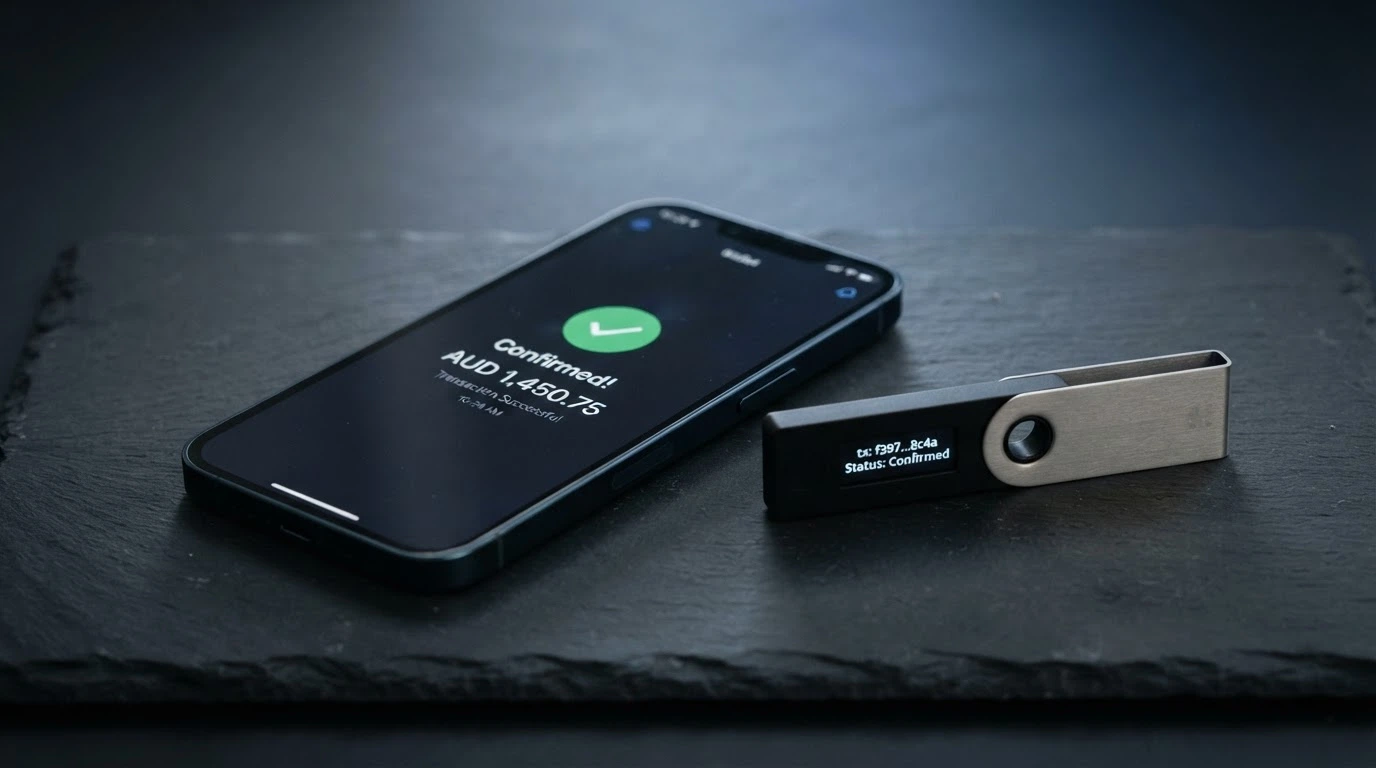
The legal context is the part that does not fit on a payment-methods page. Credit cards, credit-related products and digital currency have been banned as payment for online wagering since 11 June 2024 under the Interactive Gambling Amendment (Credit and Other Measures) Act 2023. The penalty for an operator that fails to enforce the ban runs to A$247,500. The ban applies to licensed Australian wagering operators — which is why a Sportsbet or bet365 deposit page lists debit cards, PayID and BPAY but not Bitcoin. Offshore live dealer casinos are not bound by the ban, which is why a Skycrown or Stake deposit page lists nine cryptocurrencies and asks no questions about it.
Bitcoin and Crypto Deposits at Live Dealer Casinos
The deposit flow on a crypto-friendly offshore casino runs from the player’s wallet to a casino-controlled address, with the network’s confirmations standing in for the bank’s clearing time. Skycrown accepts nine cryptocurrencies — Bitcoin, Ethereum, Litecoin and the major stablecoins among them. Stake is crypto-native: the entire account ledger runs in BTC, ETH and stablecoin by default, with no fiat deposit option advertised on the homepage. Both flows take seconds once the wallet is funded.
The legal tension is the part the deposit page does not spell out. Crypto deposits to a gambling site from an Australian bank account are not illegal for the player — the IGA targets the provider, not the consumer — but the bank-side monitoring of crypto on-ramps has tightened under the same regime that banned credit cards. A player using an Australian exchange to convert AUD to BTC, then routing the BTC to an offshore casino, is moving through a paper trail that the exchange holds and the bank can request. That is not the same as anonymity. It is at most pseudonymity, and at withdrawal it usually ends with the same KYC check a fiat withdrawal would face.
Payout Speed: Crypto vs Fiat Withdrawal Routes
The speed comparison is the cleanest part of the case for crypto. Lightning Network Bitcoin deposits settle in under five seconds and cost less than one cent in network fees. On-chain Bitcoin transactions cost A$1 to A$5 in fees and take 10 to 30 minutes to confirm. USDT on the TRC20 network processes withdrawals in 3 to 8 minutes. PayID deposits clear in under 5 minutes at AU-facing crypto-friendly casinos. Fiat withdrawals to an Australian bank account take one to three business days once KYC clears, regardless of how the deposit was funded.
The cost difference is small per transaction but compounds across a session. A player making ten withdrawals a month at A$3 per on-chain Bitcoin fee pays A$30 a month in network costs; the same player on Lightning pays under ten cents. For a high-volume live table player cycling winnings in and out, the network choice on the way out matters as much as the deposit method on the way in.
The operational detail is that KYC applies to withdrawals regardless of route. Crypto does not exempt a player from identity verification at the cashout step — the casino still wants photo ID and proof of address before the first withdrawal, and the time-to-KYC is the bottleneck that determines how fast a payout actually feels. A crypto withdrawal that clears KYC in 24 hours is faster than a fiat withdrawal that takes the same KYC plus a bank’s processing window. A crypto withdrawal that takes a week because the KYC team is slow is no faster than anything else.
Anonymity and the Bank-Undetectable Australian Player
Crypto delivers pseudonymity, not anonymity. The blockchain records every transaction permanently; the only thing it does not record is a name. The moment a player converts crypto to fiat through an Australian exchange, or spends it at a merchant that reports to the tax office, the name attaches to the address. An Australian player treating crypto as invisible to their bank is treating the on-ramp and the bank monitoring as separate systems, which they are not.
The KYC checkpoint at withdrawal is where the practical anonymity ends anyway. Offshore casinos require identity verification before the first cashout — usually a photo of government ID, proof of address, and sometimes a selfie. The verification typically takes 24 to 72 hours. A player who thought they were moving through an anonymous channel discovers they are moving through the same identity check as everyone else, just on a faster rail.
The 2027 banking-blockage reform changes the wider picture. From 1 January 2027, banks and payment providers gain express authority to block transactions to illegal gambling operators. That authority applies to crypto on-ramps and fiat transfers alike; an Australian bank monitoring outbound flows will have a clearer legal mandate to refuse a transaction to a known offshore gambling destination. The reform does not criminalise the player — the IGA still targets the provider, not the consumer — but it does compress the routes through which an Australian bank account can reach an offshore casino.
The Offshore Reality: No Live Dealer Casino Is Licensed in Australia
Every brand on this page operates outside Australian law. That is not editorial colouring; it is the regulatory state of the market. The Interactive Gambling Act 2001 prohibits the provision of online casino games — live dealer included — to a person in Australia. State and territory licensing covers wagering on races and pre-event sport, lotteries, and keno. There is no licence for online casino anywhere in the country because the activity the licence would cover is itself prohibited.
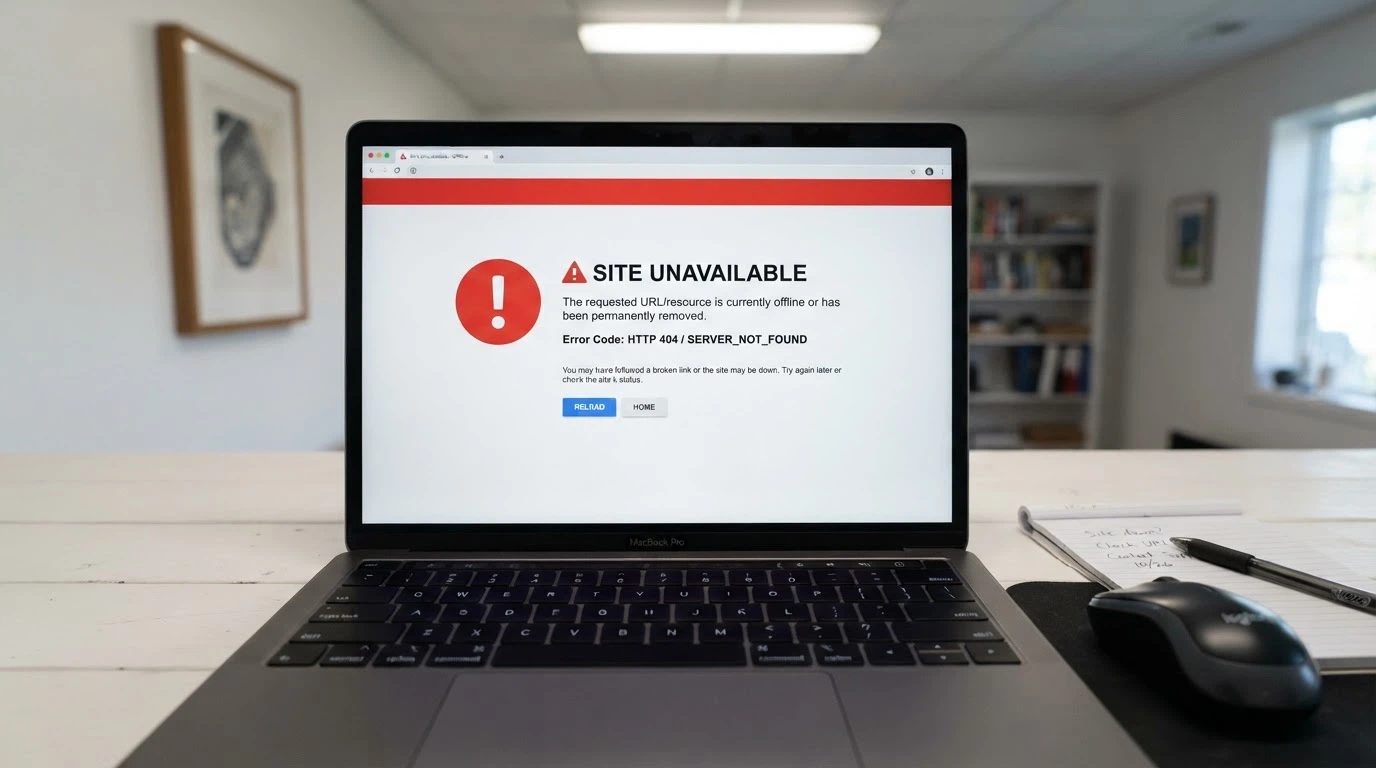
The consequence for a player is concrete. An offshore casino offers no Australian consumer protection, no access to BetStop, no recourse if the operator refuses a withdrawal, voids a win, or simply stops responding. The site can be added to ACMA’s blocking list — the same list that already runs to 1,751 entries — at any time, leaving a balance stranded on a domain that no longer resolves through an Australian ISP. None of this means an offshore casino is automatically a scam; the big ones in this ranking have operated for years and pay out most players most of the time. It means the protections a player takes for granted at a licensed bookmaker do not exist here.
The Interactive Gambling Act: What It Prohibits and What It Permits
The Interactive Gambling Act 2001 makes it an offence to provide certain online gambling services to a person in Australia. The prohibited services are online casino games (including live dealer tables), online pokies (slots), and in-play betting on a sporting event once it has started. ACMA’s description of the regime is direct: banned services include online casinos. The penalty regime targets the provider, not the consumer — the IGA’s enforcement teeth are infringement notices, civil penalties and site blocking, all aimed at the operator offering the service.
What the Act permits is narrower than most players assume. Wagering on races and on sporting events placed before the event begins is licensable through state and territory regulators. Lotteries and keno are licensable. The Northern Territory Racing and Wagering Commission, administered through Licensing NT, is the de facto national licensor — Sportsbet, bet365, Ladbrokes and around 50 other wagering brands hold NT licences on terms up to 20 years. None of those licensed wagering operators offers live dealer casino games, because offering them would put the operator in breach of the very Act under which they are licensed. The minimum age for any commercial gambling activity in Australia is 18.
ACMA Enforcement: Site Blocks, Warnings and the 1,751 Blocked Domains
ACMA’s enforcement record runs in numbers that grow every quarter. Since issuing its first blocking request in November 2019, the regulator has overseen the blocking of 1,751 illegal gambling and affiliate websites by Australian ISPs. More than 230 illegal services have withdrawn from the Australian market since the strengthened enforcement regime began in 2017 — a quiet form of compliance that does not show up in the blocking list but represents the same outcome from the player’s perspective.
The quarterly cycle carries the same shape. In Q4 2025, ACMA looked into 483 enquiries and complaints, completed 23 investigations into 45 gambling sites, found 69 breaches of the IGA, and issued 10 formal warnings. Thirty-eight of the 69 breaches were for providing a prohibited interactive gambling service — casino-style games including blackjack, roulette, poker and slots — to Australian customers. The largest single enforcement action of the period ran against Tabcorp, which was issued eight infringement notices totalling A$158,400 in January 2026 for providing a prohibited in-play betting service.
The pattern is consistent. ACMA investigates, finds breaches, issues warnings, escalates to infringement notices, and eventually refers operators for civil penalty proceedings or site blocking. A formal warning is the first step on that ladder. The site-blocking regime is the last step, and it is irreversible from the operator’s side — once a domain is on the list, it stays there until the operator proves the service has been withdrawn from the Australian market. A player with an open account on a newly blocked domain has a real problem on their hands, and no Australian regulator to escalate it to.
The 2026 Gambling Reform: What Changes from January 2027
The Interactive Gambling Amendment (Gambling Reform) Bill 2026 passed Parliament on 19 August 2026. Its measures commence on 1 January 2027. The reform package is the most significant expansion of the IGA since the 2017 amendments, and the parts that affect offshore live dealer casinos most directly are the bank-blocking authority and the inducement marketing prohibitions.
From 1 January 2027, banks and payment providers gain express authority to block transactions to illegal gambling operators. The legal mandate that has existed informally through transaction monitoring becomes a statutory power. From the same date, no more than three wagering advertisements may run per hour between 6:00 am and 8:30 pm, with a live-sport blackout from 15 minutes before the event until 5 minutes after. Direct marketing of inducements is prohibited for 14 days after a customer signs up, for three months after a person deregisters from BetStop, and indefinitely for customers identified as at-risk. The reform does not directly prohibit offshore casino play — the IGA’s provider-targeting structure remains unchanged — but it does tighten the routes through which an Australian player can fund one, and the legal cover under which an Australian bank can refuse the transaction.
For the offshore live dealer market, the practical effect is a slow squeeze. The product prohibition is unchanged. The payment routes through Australian banks gain a clearer legal basis for refusal. The advertising and inducement rules apply to licensed operators first, but the cultural shift they signal — that gambling marketing is being drawn tighter, not looser — runs in the same direction the offshore market is being pushed.
What Happens When an Offshore Casino Goes Wrong
The honest answer is that the player has very few places to take the complaint. Australian consumer protection law does not apply to an offshore operator with no Australian presence. BetStop’s coverage does not extend to offshore casinos — the register covers around 150 licensed wagering providers, none of which offer live dealer games. The dispute resolution services that licensed operators are required to participate in do not have jurisdiction over an offshore brand. A player with a refused withdrawal, a voided win, or a closed account has, in practical terms, the casino’s own internal complaints process and whatever public reputation pressure can be applied through affiliate review sites and player forums.
The site-blocking risk is the other side of the same coin. An offshore casino added to ACMA’s blocking list can vanish from Australian ISPs overnight. A player with a positive balance on the day of blocking has no Australian regulator to appeal to and no legal route to compel a withdrawal from an offshore operator that may now be refusing to process Australian customers specifically. The risk is small per operator — most major offshore casinos have operated for years without being blocked — but it is not zero, and it lands on the player when it crystallises.
A credit-card or crypto deposit request from a gambling site is itself a useful tell. Licensed Australian wagering operators cannot accept either payment method under the Interactive Gambling Amendment (Credit and Other Measures) Act 2023. A site that does accept them is, by definition, not operating under an Australian wagering licence. The deposit page tells the player what the licence page would, if a licence existed.
The tax position is the one piece of good news in this section. Betting and gambling winnings are not assessable income under section 6-5 of the ITAA 1997, and gambling losses are not deductible under section 8-1, unless the person is carrying on a business of betting or gambling. The Australian player does not owe tax on a live dealer win and cannot claim the loss against other income. The casino keeps its edge; the ATO stays out of the player’s session.
Playing Safe When the Safety Net Has a Hole
The responsible-gambling infrastructure in Australia is well-built for the products it covers, and silent on the products it does not. BetStop, the National Gambling Helpline, Gambling Help Online, state-based counselling services — the architecture exists, is funded, and reaches the people it was designed for. What it does not reach is the offshore live dealer casino, and that gap is what an Australian player using the operators on this page needs to understand before depositing.
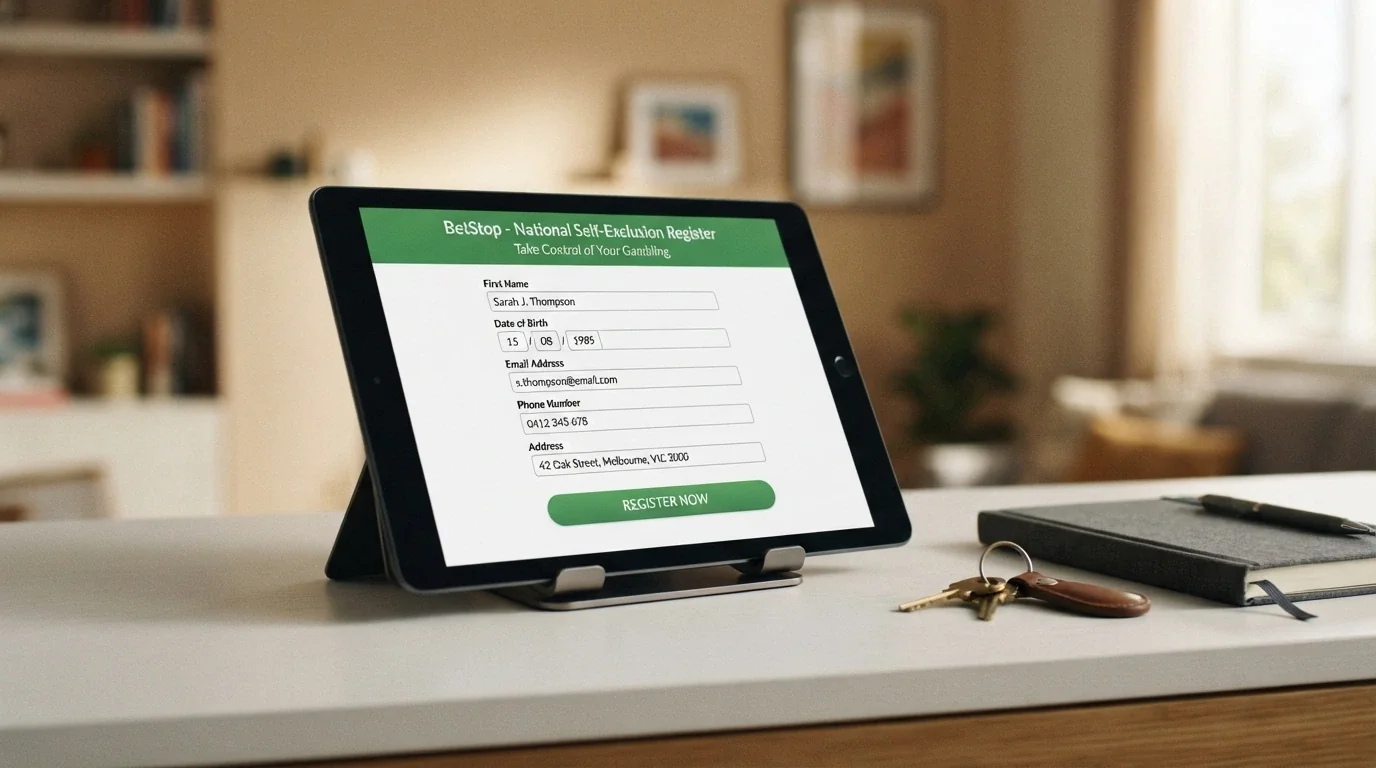
About 2.1% of Australian adults — roughly 430,000 people — experience problem gambling, with the Australian Institute of Health and Welfare putting high-risk gambling at 1.8% in 2022. The figures come from a population in which licensed wagering is the dominant product; the offshore casino contribution to the same harm profile is less well measured, but the underlying drivers — chasing losses, playing to escape, betting more than affordable — are the same.
BetStop and the Self-Exclusion Gap at Offshore Casinos
BetStop — Australia’s National Self-Exclusion Register — launched on 21 August 2023 and by the end of Q3 FY 2025–2026, on 31 March 2026, 59,830 people had registered to self-exclude from all licensed online and phone wagering providers in Australia. Of those, 37,247 exclusions were active, with the remaining 22,583 either completed or cancelled early. The register works in one step: a single registration excludes the person from every licensed wagering provider in the country, of which there are approximately 150. Licensed operators must close accounts, refuse bets, decline new account applications, and cease marketing.
BetStop does not apply to offshore casinos. The register explicitly excludes gambling services illegally provided in Australia — the offshore live dealer brands on this page are not connected to it. A player who registers with BetStop blocks themselves from every licensed Australian bookmaker but remains free to deposit at an offshore casino. Self-exclusion through BetStop runs from a minimum of three months to a lifetime, which is the right design for the products it covers; for the products it does not cover, the design leaves a hole.
A player who has registered with BetStop and is concerned about migrating play to an offshore casino has limited formal options. The offshore operators do not participate in BetStop, do not honour Australian self-exclusion, and have no obligation to close an account because a BetStop registration exists. The practical self-exclusion from offshore sites is a personal one — closing accounts directly, using bank-level gambling blocks, and committing to the exclusion outside any register.
Deposit Limits, Reality Checks and the Tools You Can Still Use
Offshore live dealer casinos typically offer deposit-limit, session-limit, and reality-check tools on the responsible-gambling page of the player’s account. The specific configuration varies by operator and the publicly confirmed details were not verified this run across the ten operators in this ranking, but the broader industry standard is a daily, weekly and monthly deposit ceiling, a session-time reminder, and a cool-off period ranging from 24 hours to several weeks. None of these tools is enforced by an Australian regulator; the casino offers them voluntarily and the player has to opt in.
The self-imposed alternatives are often more reliable. Australian banks offer gambling-transaction blocks through their fraud and card-management systems — a debit card blocked at the merchant category level will not fund an offshore casino deposit. Prepaid cards with hard caps, separate bank accounts used only for gambling deposits, and disciplined manual limits enforced through a written budget all do the same job the operator’s deposit limit does, but without the operator’s ability to raise or remove the cap.
The 2027 reform adds a structural backstop. From 1 January 2027, banks and payment providers gain express authority to block transactions to illegal gambling operators. The authority is express — the reform writes it into the relevant statute — which means a player who has asked their bank to block gambling transactions has the law on their side, not just the bank’s discretionary policy. The mechanism is not yet active, but its direction is set.
Where to Get Help: Helpline, Counselling and Support Services
The free help infrastructure every Australian can access right now includes three services that operate around the clock and cost nothing to use. The National Gambling Helpline on 1800 858 858 is staffed 24/7 with confidential counsellors. Gambling Help Online runs web chat and email counselling through gamblinghelponline.org.au. State-based Gambling Help services provide face-to-face and telephone counselling in every state and territory, with referral pathways to financial counselling, mental health support, and peer groups like Gamblers Anonymous.
The helpline is for anyone affected by their own gambling or someone else’s. A player who notices their session lengthening, their deposit ceiling rising, their losses starting to chase themselves, can call at any hour without giving their name. The conversation is confidential, the counsellors are trained, and the service is free. The same applies to Gambling Help Online for players who prefer chat or email. The decision to call does not require a crisis — the service exists for the run-up to a crisis as much as for the crisis itself.
The prevalence figures put the scale in context. Roughly 430,000 Australian adults experience problem gambling; another slice of the population sits in the high-risk band without meeting the clinical threshold. The numbers are not a warning about offshore casinos specifically; they are a warning that gambling harm is common enough that any player who is depositing regularly is playing in a population where the help services exist for a reason.
How We Selected and Ranked These Live Dealer Casinos
The ranking combines three criteria: AU market presence, live-dealer product depth, and the quality of bonus terms that publicly confirmed sources could verify. Market presence is the share of Australian traffic each operator captures, drawn from publicly reported operator data. Live-dealer product depth is the provider lineup — Evolution and Pragmatic Play Live as the duopoly, with provider breadth as a secondary signal. Bonus quality on live tables is the wagering requirements, contribution rates, and the presence of zero-wagering cashback.
The sources used are operator websites, affiliate review sites that publish testing methodologies, ACMA’s quarterly enforcement reports, BetStop’s quarterly statistics, and the regulation skill backbone that synthesises the IGA, ITAA 1997 and related statutes. The competitor review pages in this niche are uniformly affiliate sites; their rubrics inform the commercial criteria but their silence on the regulatory layer is what this page attempts to correct. The 47-point and 50-point scoring frameworks that dominate search results are useful for what they measure and unhelpful for what they leave out.
The limits of this ranking are explicit. No real-money deposit testing was performed on any operator. The live-dealer-specific configurations for several brands — Royal Reels, WinSpirit, Rainbet, FairGO, Scream Casino, Rocket Casino — were not confirmed by publicly available sources this run, and the write-ups name that gap rather than fill it with marketing copy. Where a per-operator figure is missing, the table carries an em dash, and the prose treats the operator qualitatively. The legal analysis applies equally to every brand; the commercial ranking separates them only where the data does.
What You Should Actually Do With This Information
The verdict this page reaches is straightforward: no Australian player has a clean option in this market, and the choice is therefore about which compromise to accept. The cleanest legal option — playing at a licensed Australian wagering operator — does not exist for live dealer games, because no such licence exists. The offshore option is what every brand on this page represents, and the ranking orders them by how well they deliver the product within the constraints the IGA imposes.
The bonus takeaway is that cashback beats deposit match for live table players. The wagering structure of a welcome bonus works against table play because of the contribution rate, and the only bonus type that does not run that treadmill is cashback with zero wagering. Two operators in the ranking — Skycrown on live play, Stake across the full casino — ship exactly that product. A player who plans to spend more than a weekend at the tables should weight the cashback rebate more heavily than the welcome package.
The payment-route recommendation depends on what the player is optimising for. Crypto delivers the fastest withdrawals and the lowest fees, with the caveats that KYC applies at the cashout step regardless of deposit route, and that Australian bank monitoring of crypto on-ramps has tightened. PayID delivers the fastest fiat deposits and works with Australian bank accounts directly. Cards and bank transfers are the slowest route but the most familiar. The 2027 reform will tighten all of these further as banks gain the express authority to block illegal gambling transactions.
The responsible-gambling checkpoint is the one every player should run before depositing, regardless of which operator they choose. BetStop covers licensed wagering only. The National Gambling Helpline on 1800 858 858 and Gambling Help Online are free, confidential, and available 24/7. The harm-prevalence figures — 2.1% of Australian adults in the problem-gambling band, 1.8% in the high-risk band — describe the population any regular player is part of. The offshore casino on the other side of the deposit button is not subject to Australian harm-minimisation law. The player is the harm-minimisation layer.
Frequently Asked Questions
Can I play live dealer blackjack and roulette for real money in AUD from Australia?
Yes — but only at offshore casinos. No operator holds an Australian online casino licence because the Interactive Gambling Act 2001 prohibits providing one. You can deposit in AUD, play Evolution and Pragmatic Play Live tables, and withdraw in crypto or fiat, with no Australian consumer protection covering disputes or refused payouts.
Do live dealer casino bonuses work on table games like blackjack and roulette?
Mostly no, in the way players hope. Welcome bonuses typically credit live table play at 5% to 20% of the slot rate, while carrying 30x to 50x wagering requirements. A A$2,000 bonus can demand A$80,000 in playthrough at standard contribution rates, which is why cashback with zero wagering suits live table players better than deposit matches.
How do live dealer casinos handle withdrawals and KYC for Australian players?
Offshore casinos require identity verification before the first withdrawal — usually a photo of government ID and proof of address, sometimes a selfie. Verification typically takes 24 to 72 hours. Crypto withdrawals clear faster than bank transfers once KYC is complete, but the same identity check applies regardless of payment route.
What is the minimum bet at a live dealer table in an Australian-facing casino?
Standard live dealer tables at AU-facing casinos start from A$0.10 per hand or spin on roulette and blackjack. VIP-exclusive rooms push maximums past A$25,000 per hand. The wide range means low-stakes players and high-rollers play on the same provider’s network, just at different tables suited to their bankroll.
Are crypto and Bitcoin deposits accepted at live dealer casinos in Australia?
Yes at offshore casinos, no at any Australian-licensed operator. Credit cards and crypto have been banned as payment for online wagering since 11 June 2024 under the Interactive Gambling Amendment (Credit and Other Measures) Act 2023. Offshore brands like Skycrown accept nine cryptocurrencies; licensed Australian sportsbooks do not.
What is BetStop and does it cover offshore live dealer casinos?
BetStop is Australia’s National Self-Exclusion Register, covering roughly 150 licensed wagering providers in one step. By 31 March 2026, 59,830 Australians had registered. Offshore live dealer casinos are not connected to BetStop — a self-exclusion blocks licensed bookmakers only, not the offshore sites on this page.
Created by the ”Live Casino Australia” editorial team.