
Tether Casinos Australia: How Offshore Crypto Sites Compare in 2026
Current as of 28 October 2026. Licence claims verified against the Australian Communications and Media Authority (ACMA) register.
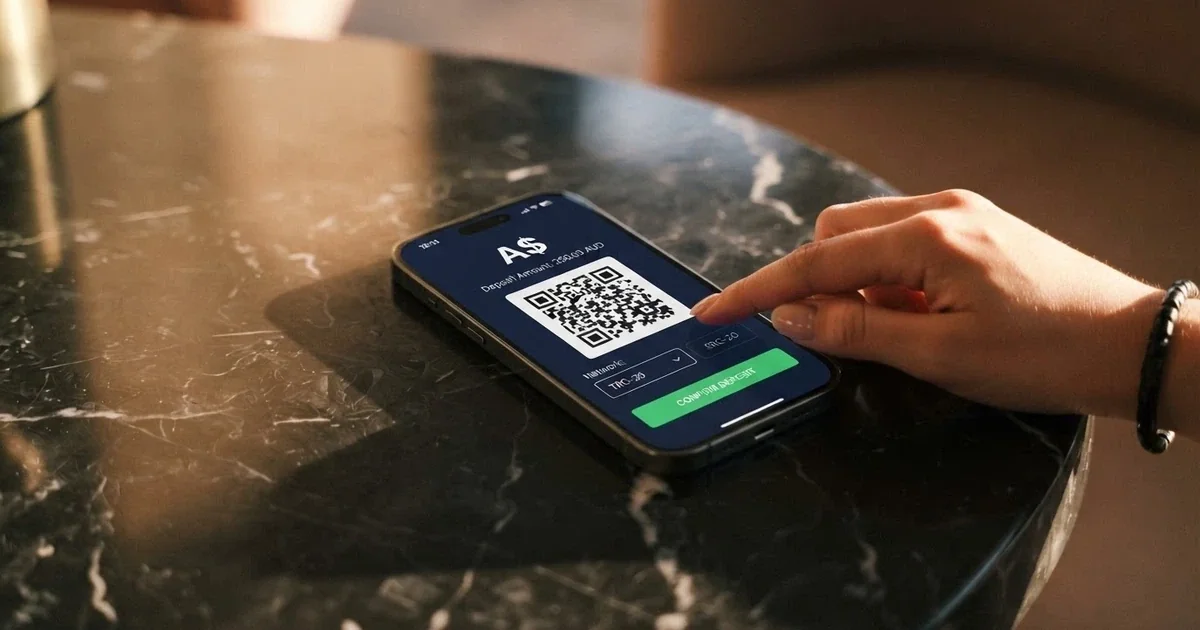
Tether — known everywhere as USDT — is the cryptocurrency most likely to show up in an Australian’s wallet before it shows up in a casino cashier. It is pegged one-to-one with the US dollar, which removes the volatility that makes Bitcoin and Ethereum deposits feel like a second wager, and it runs on networks that move dollars across the world in seconds. That combination explains why an Australian player shopping for an online casino in 2026 keeps landing on crypto sites that name USDT first and Australia second — even though online casino is prohibited in Australia under the Interactive Gambling Act 2001.
This page compares ten offshore casinos that accept USDT deposits from Australian players. It works through the exchange-to-casino payment flow, the bonus terms that quietly shrink every headline number, the games worth a USDT deposit, the network choice that decides whether a transaction costs one dollar or thirty, and the legal picture — because every site named here sits outside Australian licensing, and a player should know what that means before sending anything through a wallet.
Table of Contents
- What It Actually Means to Play at a USDT Casino From Australia
- The USDT Casinos Australian Players Are Using in 2026
- How Tether Keeps Your Casino Play Private (and Where It Doesn’t)
- Why Your 2026 USDT Casino Bonus Is Smaller Than the Advertised Number
- From Pokies to Live Blackjack: The Games Worth Your USDT Deposit
- Getting Your Money In and Out: The Network Choice That Saves You Up to 15% on Every Deposit
- Why Mobile USDT Casino Play No Longer Means a Second-Rate Experience
- Free-Play vs Real-Money USDT Slots: What Each Mode Is Actually Good For
- The Uncomfortable Legal Truth About USDT Casinos and Australian Players
- Staying in Control: Where Offshore USDT Casinos Leave You on Your Own
- How We Selected and Ranked These USDT Casinos
- Should You Play at a USDT Casino From Australia? What the Numbers Say
- Frequently Asked Questions
What It Actually Means to Play at a USDT Casino From Australia
USDT is what cryptocurrency becomes when you take the volatility out. The token is pegged 1:1 to the US dollar — meaning one USDT is designed to track one US dollar — so a $200 deposit today is still worth $200 when the player withdraws tomorrow, regardless of what Bitcoin did overnight. No other widely-accepted crypto offers that stability. BTC and ETH can move 5–10% in a session, which turns a casino balance into a leveraged bet on the market the player came to forget.
The reason this matters in Australia specifically is the gap in the licensed market. Under the Interactive Gambling Act 2001, online casino games, online pokies and in-play sports betting are prohibited services. What Australian-licensed wagering operators offer is pre-event sports betting, racing and lotteries — not the casino product most people picture when they hear “online gambling”. Crypto has been banned as payment for licensed online wagering since 11 June 2024, alongside credit cards. An Australian gambling site that accepts a USDT deposit is, by that single fact, operating outside Australian licensing rules.
That is the frame for everything on this page. The casinos below accept Australian players, accept USDT, and accept that they are doing so from outside the Australian perimeter. The comparison that follows is between offshore operators, on the terms offshore operators publish, with the protection that an Australian licence would have provided left on the other side of the border.
From Exchange to First Bet: The USDT Casino Payment Flow
The journey from Australian dollars to a USDT casino balance runs through four steps, and the cost of each one decides whether crypto is the cheap payment method the marketing claims or just an expensive way to add steps.
The first step is buying USDT on an Australian exchange. CoinSpot and Swyftx both support TRC-20 USDT — the cheaper network — at a transaction cost of A$1–2 per purchase. The exchange takes an AUD deposit through PayID or bank transfer and credits USDT to a wallet the player controls.
The second step is picking the right network at the cashier. Most USDT casinos list TRC-20 and ERC-20 side by side, and the choice is the single most expensive decision an Australian USDT player makes before placing a bet. The third is sending the USDT from the exchange wallet to the casino wallet. On TRC-20 the transfer confirms in 30–60 seconds; on ERC-20 it takes 3–5 minutes and a higher network fee. Minimum deposits at USDT casinos typically run $10–$50 in USDT.
The fourth step is the round trip back: withdraw from the casino to a personal wallet, send it to the exchange, convert USDT to AUD, and withdraw AUD to a bank account. Casino-side USDT withdrawals are free at most sites and clear in 0–2 hours. Exchange conversion from USDT to AUD costs 0.1–1% plus the spread, settled the same day.
Why Australian Players Keep Turning to Tether Casinos
The draw is not crypto enthusiasm. It is the gap.
Australia’s licensed wagering operators cannot offer an online casino product, because the Interactive Gambling Act 2001 prohibits it. The licensed path delivers sports betting, racing, lotteries and keno — useful products, but not the casino product the phrase “online gambling” brings to mind for most readers. A player who wants slots, blackjack or live-dealer tables in 2026 has to leave the licensed market to find them.
Crypto sits at that exit for two reasons. First, speed: USDT deposits land in one to five minutes at most casinos, compared with the bank-transfer pauses that domestic AUD methods sometimes impose. Second, the dollar peg: USDT does not move while it sits in a casino balance, so a player is not also betting on the crypto market while playing slots.
The licensed market’s response, since 11 June 2024, has been to block crypto as a payment rail for online wagering alongside credit cards. That removes the payment method from the licensed side without restoring the casino product. The result is a market where the only place to use USDT for casino play is offshore, and every site accepting it has signed up, by that one fact, to operate outside the Australian rules.
The USDT Casinos Australian Players Are Using in 2026
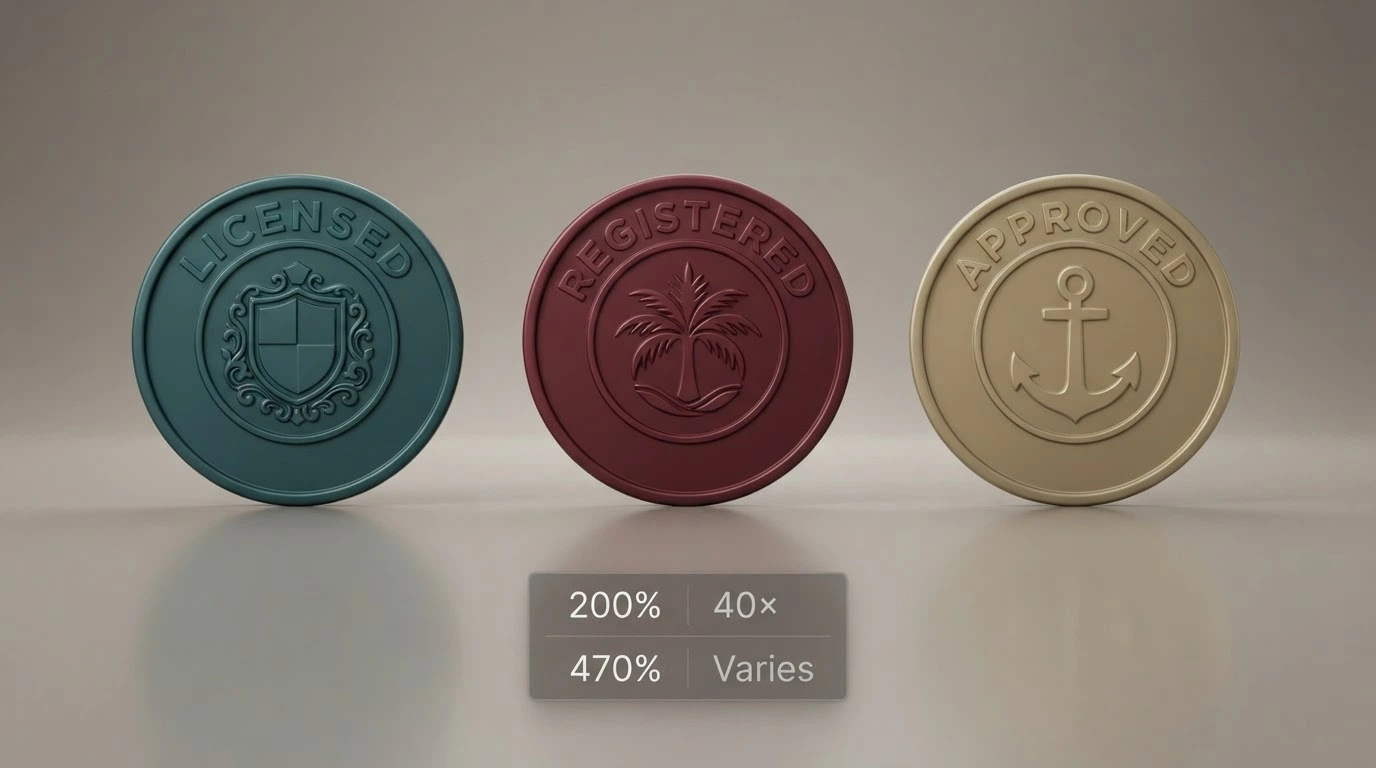
Ten operators make up the comparison below. They are ordered by the depth of public information available about them, with the most-documented first. Where research did not return specifics — bonus terms, game catalogue, licence register confirmation — the cell reads as an em dash, because an empty cell is more honest than a guess.
| Operator | Licence | Welcome Bonus | Wagering | Free Spins |
|---|---|---|---|---|
| Stake | Curaçao | 200% up to $2,000–$3,000 | 40× | — |
| BitStarz | Curaçao | Up to A$10,000 or 5 BTC + 180 FS | 40× | 180 (deposit) + 30–50 (no-deposit) |
| SkyCrown | Curaçao | Up to A$8,000 + 400 FS (NOT for crypto depositors) | 40× | 400 across 4 deposits |
| BC.Game | Curaçao | 470% across 4 deposits | Varies by tier | 400 |
| Vave | — | 150% up to 85,000 USDT + 100 FS | Varies | 100 + 40 no-deposit |
| Cloudbet | Curaçao | Up to 2,500 USDT cash rewards + 30% rakeback + 100 FS | None on cashback | 100 |
| Wild Fortune | Tobique | — | — | — |
| Rainbet | — | — | 10× | — |
| FairGO | — | — | — | — |
| Bizzo Casino | Curaçao | — | — | — |
Seven of the ten hold a Curaçao licence; one holds a Tobique Gaming Commission licence; two publish no licence information research could verify; none holds an Australian licence, because no Australian licence for online casino exists. The wagering column tells most of the story: 40× is the norm, Rainbet sits well below at 10×, and Cloudbet offers no wagering on its cashback component at all.
What Separates the Strongest USDT Casinos From the Pack
Four filters sort the list above into a short one. Licence quality comes first: Curaçao and Tobique are real registrations in real jurisdictions, but neither is an Australian licence, and neither gives an Australian player recourse if the operator refuses a withdrawal. A clear bonus structure is second: 30×–40× wagering is the band most reviewed platforms sit in, with bonus validity typically 7–14 days. Stake’s 30-day window is the longest in the set.
Game depth is third. BC.Game lists 10,000+ titles; BitStarz sits at 6,500+; Vave publishes 11,000+ slots but does not break the count down by category. The catalogues behind the larger numbers are dominated by the same Pragmatic Play, NetEnt and Evolution titles that appear across the licensed market.
Withdrawal speed is fourth, and the numbers behind it are sharp. BitStarz introduced a 10-minute payout promise in December 2025 and delivered on it in testing. BC.Game processes withdrawals instantly at higher VIP tiers. Wild Fortune averaged 5 hours 24 minutes across tested crypto withdrawals — fast by bank-transfer standards, slow against the instant-payout names. Across the rest of the set, casino-side withdrawals in USDT are free and process in 0–2 hours.
New and Rising USDT Casino Brands Worth a Look
The newer entrants in the featured set are the ones with the shortest track record and the most aggressive bonus structures. BC.Game’s 470% match across four deposits is the most generous headline number in the table, and the operator’s 140-level VIP system is the deepest loyalty scheme in the comparison. The trade-off is thin public information: BC.Game’s terms page does not always publish a fixed wagering multiplier per deposit tier, so a player has to read the bonus terms inside the cashier before claiming.
Vave is the other new-entrant outlier. It is one of two operators in the featured set — BitStarz is the other — that offers a real no-deposit entry point for Australian players, in the form of 40 free spins on registration, with winnings capped at 50 USDT and a 40× wagering requirement. The deposit welcome package sits at 150% up to 85,000 USDT, with a minimum deposit of just 20 USDT. The trade-off is that Vave publishes no licence information research could verify.
The pattern across newer brands: bigger numbers, less documentation. A player who wants to test a new casino with their own money should read the bonus terms carefully and accept that the absence of a verifiable licence in any of these cases is itself information.
Stake
Stake is the highest-volume crypto casino in the comparison, Curaçao-licensed since 2017 and operating without an Australian permit. The welcome offer is a 200% deposit match up to $2,000–$3,000 with a 40× wagering requirement and a 30-day clearing window — the longest validity in the featured set. Minimum deposit is $50.
The game library runs to 40+ providers including Stake Originals, Pragmatic Play, Evolution, Hacksaw Gaming and Nolimit City. The Originals are provably fair — verifiable game outcomes the player can audit themselves — and the live-dealer coverage runs through Evolution. USDT deposits are accepted on TRC-20, ERC-20 and Solana; deposits are instant and withdrawals take under 10 minutes.
The catch sits in a single line of the terms: welcome-bonus wagers are capped at 1% of the initial deposit per bet. That single rule is the difference between a clearing bonus and an indefinitely-extended one, and a player staking more than 1% during wagering risks the bonus being voided. For a player who wants the largest crypto catalogue in the comparison and is comfortable staking in small increments, Stake is the obvious choice. High-stakes players, however, should approach this offer with caution given the per-bet restriction.
BitStarz
BitStarz is the multi-currency veteran of the set — operating since 2014, Curaçao-licensed, with 6,500+ games and a 10-minute payout promise introduced in December 2025 that delivered in testing. The welcome package runs up to A$10,000 or 5 BTC across four deposits, plus 180 free spins credited at 20 per day over nine days, with a 40× wagering requirement.
The unusual feature is the no-deposit entry. New Australian players receive 30–50 free spins without funding an account, with winnings capped at $100. Minimum deposit equivalent is $20 across 15+ supported cryptocurrencies including USDT.
BitStarz is the most complete operator in the comparison for an Australian player who wants both a no-deposit trial and a deep deposit welcome. The trade-off is the same as the rest of the set: Curaçao is not Australia, and a blocked site means a trapped balance.
SkyCrown
SkyCrown’s headline number is A$8,000 plus 400 free spins across four deposits, with 40× wagering, a 14-day validity window per stage, a maximum bet of A$7.50 during wagering, free-spin winnings capped at A$300 and maximum cashout of A$5,000 per bonus stage. Minimum deposits run A$20–A$50 per stage. Curaçao-licensed, operating since 2022.
The single most important fact about SkyCrown for an Australian USDT player is buried in the terms page: the fiat welcome package is not available to crypto depositors. A USDT depositor does not see the A$8,000 figure in their cashier. The first-deposit offer that does appear to a crypto player is 120% up to A$1,200 + 125 free spins on Wolf Treasure, with a A$30 minimum.
For an Australian player depositing in USDT, SkyCrown is the operator where the headline and the reality are furthest apart. Read the crypto-specific terms before claiming.
BC.Game
BC.Game carries the largest catalogue in the comparison at 10,000+ titles, including the BC Originals provably fair suite — Crash, Plinko, Dice, Limbo and Mines, each with verifiable outcomes. Curaçao-licensed since 2017. Welcome bonus runs 470% across four deposits with 400 free spins included; wagering varies by tier and bonus validity is 7 days from activation. The 140-level VIP system is the deepest loyalty ladder in the set.
The key operational feature is the KYC threshold: withdrawals under $3,000 are processed without identity verification. That is a specific number from BC.Game’s terms, not a universal crypto-casino standard. Above it, standard KYC kicks in.
One source consulted during this review lists Australia as a restricted territory at BC.Game, which means an Australian player may find the site refuses to load or refuses withdrawals at the source’s discretion. For an Australian player willing to test that, BC.Game offers the most generous bonus structure and the deepest game catalogue in the featured set.
Vave
Vave is one of the few operators in the comparison offering a real no-deposit entry. New Australian players receive 40 free spins without funding an account, with winnings capped at 50 USDT and a 40× wagering requirement. The deposit welcome package runs 150% up to 1.5 BTC or 85,000 USDT plus 100 free spins, with a minimum deposit of 20 USDT. The slot library sits at 11,000+ titles — Pragmatic Play, Play’n GO, Spinomenal and Iron Dog Studio among the named providers.
The single gap in the Vave write-up is the licence: research did not surface a verifiable registration, and the operator does not prominently display one on the page most players land on. The no-deposit entry and the small minimum deposit are the most accessible in the comparison; the absence of a published licence is the corresponding cost.
For an Australian player who wants to test a USDT casino with no skin in the game, Vave is the obvious starting point. Players prioritizing a clearly-defined regulatory backing may find this lack of information a significant hurdle.
Cloudbet
Cloudbet is the 2013-vintage sportsbook-and-casino hybrid in the comparison, Curaçao-licensed, with a welcome offer that breaks the standard crypto-casino mould. Instead of a deposit match with a 40× wagering multiplier, Cloudbet runs up to 2,500 USDT in cash rewards plus 30% rakeback plus 100 free spins, with no wagering requirement on the cashback or rakeback component.
The practical effect is that the rakeback portion of the Cloudbet offer is withdrawable as it is earned, without being run through a multiplier first — a structural difference from the rest of the set. The game library runs on NetEnt, Microgaming, Playtech, Pragmatic Play Live and Evolution, with a heavier weighting toward sports betting than the pure-casino names.
This setup provides a rare, transparent alternative for anyone looking to bypass complex wagering requirements entirely.
Wild Fortune
Wild Fortune is the Tobique Gaming Commission-licensed operator in the comparison — a smaller jurisdiction than Curaçao but a real licence rather than an unspecified one. The available performance data is thin: tested crypto withdrawals averaged 5 hours 24 minutes, which is fast against industry norms and slow against the instant-payout names higher in this ranking.
Welcome bonus, free spins, wagering, game providers and slot count are all unpublished in the sources consulted during this review. For an Australian player, that means Wild Fortune cannot be compared on the terms a meaningful comparison needs — bonus value, game depth, clearing difficulty. The known facts are licence and speed. Everything else requires a deposit to discover.
Rainbet
Rainbet’s single published differentiator is a 10× wagering multiplier, the lowest in the comparison by a wide margin against the 30×–40× norm. Its AU operator market share is reported at 1.28%. Welcome bonus, free spins, game providers and slot count are all unpublished.
The 10× multiplier is genuinely unusual, and if Rainbet’s welcome offer is comparable in size to the rest of the set, that figure alone makes it the easiest bonus in the comparison to clear. The gap is that the comparison cannot confirm what the welcome offer is. Despite the limited data, the exceptionally low multiplier remains the most compelling reason to consider this brand.
FairGO
FairGO holds a reported 0.8% of the AU operator market share and publishes no licence, bonus, wagering, free-spin or game-provider information in the sources consulted. The name suggests an Australian-market focus; the available data does not confirm any of the things an Australian depositor would want to check before sending USDT.
The thin-data position is itself the verdict here. A player who chooses FairGO is choosing based on a brand name and a market-share figure, not on comparable specifications.
Bizzo Casino
Bizzo Casino is reported as Curaçao-licensed and holds 0.57% of the AU operator market share. Welcome bonus, free spins, wagering, game providers and slot count are all unpublished in the sources consulted.
The position is the same as Wild Fortune and FairGO: a brand name and a market-share figure are what the comparison has, and a depositor’s decision would need to be made on data this review could not verify.
How Tether Keeps Your Casino Play Private (and Where It Doesn’t)
USDT deposits do not show up on a bank statement as a casino transaction. They do not trigger card-blocker software. They do not require a card-issuing bank to permit gambling-related transactions, which is a meaningful advantage in a market where most Australian banks block gambling payments as a matter of policy. That is the privacy case for USDT at the casino cashier.
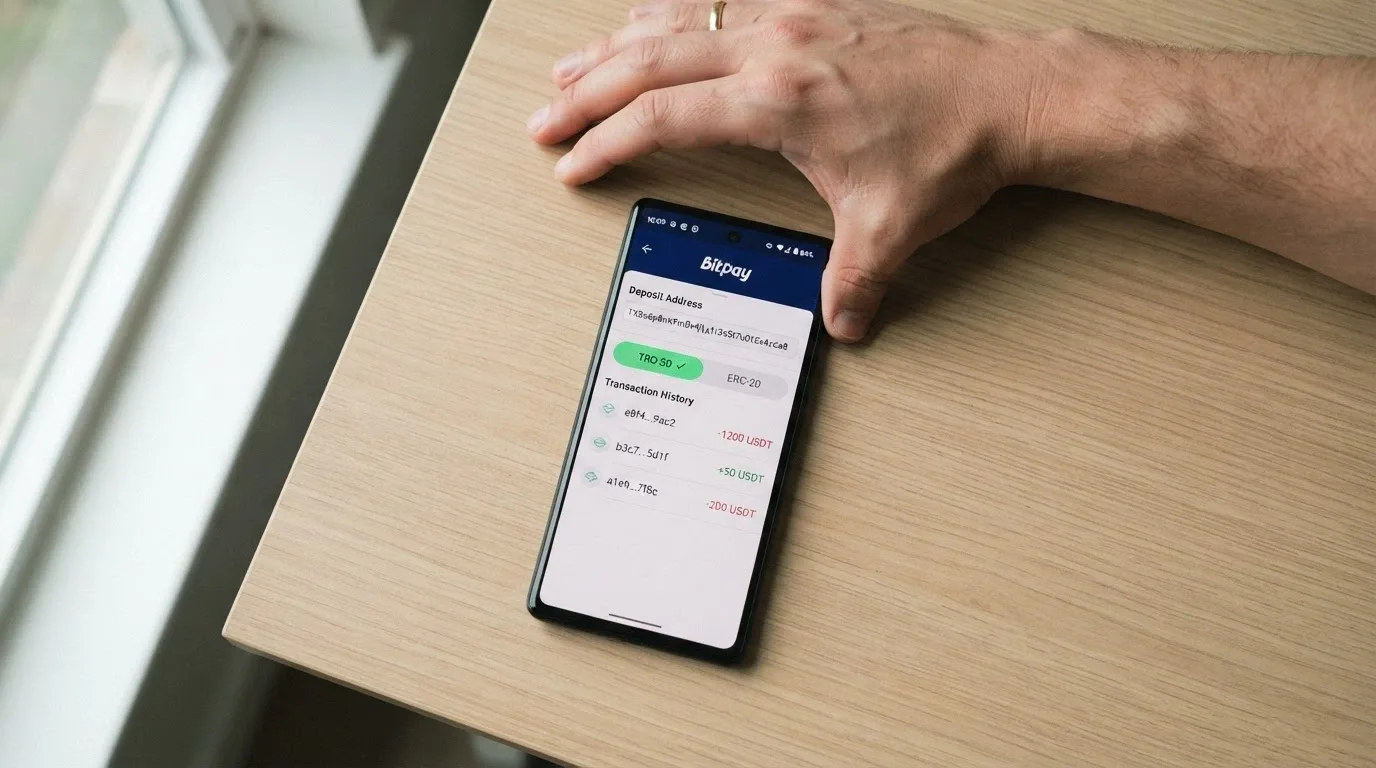
It is partial privacy. The blockchain records every transaction permanently, and a USDT transfer is traceable from wallet to wallet by anyone who holds both addresses — including law enforcement, exchanges during onboarding, and any compliance team at a receiving operator. The Tether network itself is pseudonymous, not anonymous.
Three thresholds cut into the privacy further. First, KYC: BC.Game allows withdrawals under $3,000 without identity verification, but every other operator in the comparison imposes identity checks at some point, and most impose them at deposit or first withdrawal. Second, AUSTRAC’s Travel Rule: at AU$10,000 in crypto-to-fiat conversion, Australian exchanges must apply enhanced customer due diligence, which means ID, source-of-funds documentation and reporting. Third, the casino itself: any operator processing enough volume eventually complies with chain-analytics firms that flag wallets linked to known gambling services, which can result in frozen withdrawals.
What a USDT deposit buys an Australian player is separation from the bank statement, not separation from the ledger.
No-KYC Play: Where USDT Casinos Let You Skip the ID Check
BC.Game’s published threshold is the clearest number in the comparison: withdrawals under $3,000 are processed without KYC. Above that figure, standard identity verification kicks in. That is one operator’s published threshold; the others in the set are quieter about where their thresholds sit.
The general pattern at offshore crypto casinos is that low-volume play — small deposits, infrequent withdrawals, single-session activity — often clears without an ID request, while larger cumulative activity triggers the standard onboarding flow: government photo ID, proof of address, sometimes source-of-funds documentation. The ID request usually arrives at the first withdrawal above the threshold, not at deposit, and it can be delayed by weeks.
For a player whose stake is modest and whose withdrawals stay below the operator’s threshold, USDT is closer to the anonymous experience the marketing implies. For a player whose cumulative withdrawals climb, the casino’s compliance team will eventually want to know who they are.
Provably Fair Games: What the Term Means and Why It Matters With USDT
Provably fair is a blockchain-based verification system. Instead of trusting the casino’s audit or the regulator’s oversight, the player can verify that a game’s outcome was determined before the bet was placed — using a cryptographic hash that the player could not have predicted and the casino could not have changed after the fact. BC.Game’s BC Originals (Crash, Plinko, Dice, Limbo, Mines) are the most prominent provably fair titles in the comparison; Stake’s Stake Originals run on a similar mechanism.
Provably fair is a substitute for regulation, not an addition to it. It works because the maths is auditable by anyone with the hashes. It also only covers the games that implement it — typically the casino’s in-house titles. The thousands of third-party slots and live-dealer tables in the same catalogue are not provably fair, even when the casino markets the term alongside them. A Pragmatic Play slot’s outcome is determined by Pragmatic Play’s certified random number generator; the casino is showing a trust claim the casino does not itself control.
For an Australian player at an offshore site with no regulator to escalate to, provably fair is the one mechanism that does not require trusting the operator. It only applies where the operator says it applies.
Why Your 2026 USDT Casino Bonus Is Smaller Than the Advertised Number
A 200% welcome bonus sounds like a gift. It is rarely one. The arithmetic turns a $2,000 bonus headline into $80,000 of required wagering at 40×, and that $80,000 has to be run through games with a house edge of typically 3–4%. Assuming only the bonus amount is wagered, on a representative 96.50% RTP slot, the expected loss is the turnover multiplied by the gap between 100% and the RTP — roughly $80,000 × 0.035, or about $2,800. The bonus that advertised itself as $2,000 in extra value carries a $2,800 statistical cost to the player, on average across many spins.
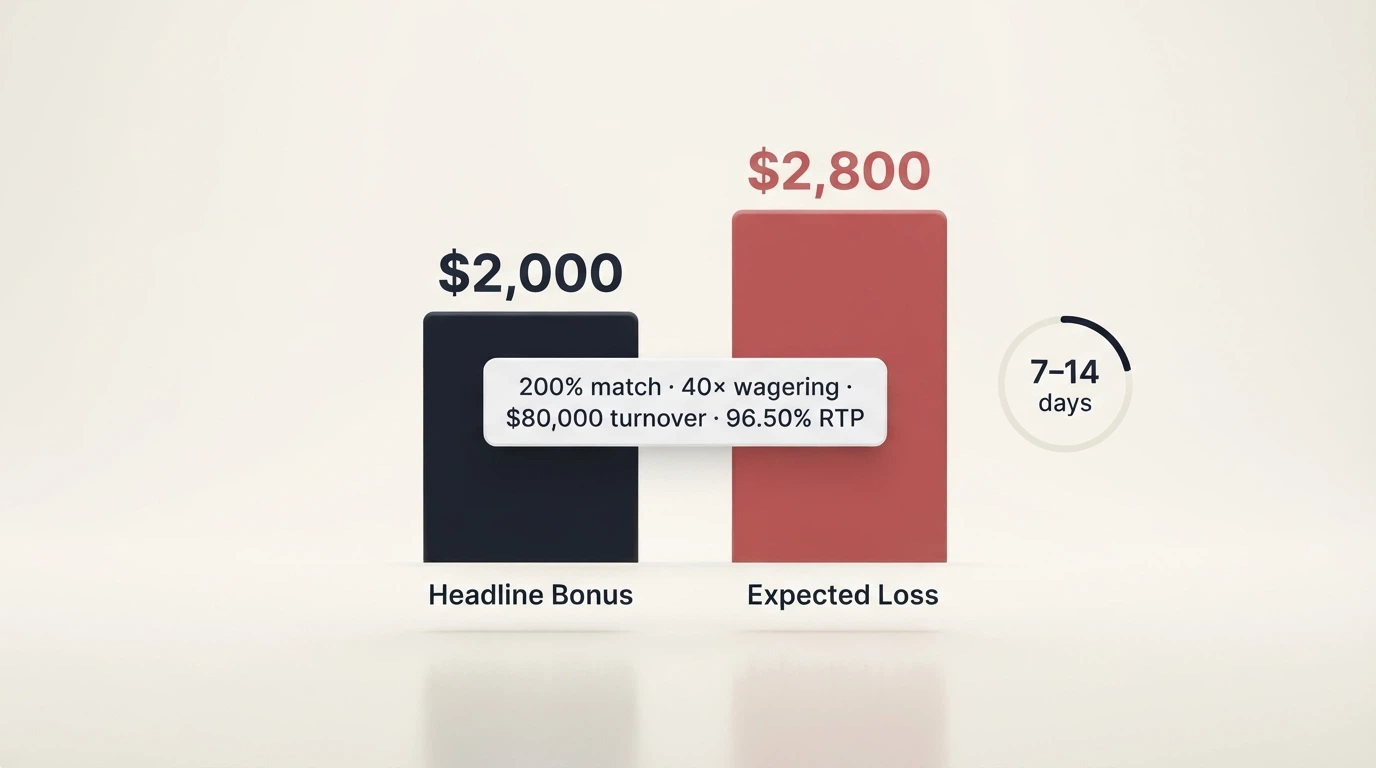
That expected loss is a statistical estimate, not a guaranteed outcome for any single player. Some sessions will clear the bonus profitably, others will lose more, and the average over many players converges on that $2,800 figure. The headline and the cleared value are two different numbers, and the cleared value is the one that matters.
The other rules shrink the headline further. Bonus validity typically runs 7–14 days at reviewed platforms, which is short for an $80,000 turnover target. Maximum bet limits during wagering — A$7.50 at SkyCrown, for example, with Stake’s 1% per-bet cap — make it harder to clear the wagering with a few large bets. Free-spin winnings are often capped, maximum cashout is often capped, and games contribute to wagering at different rates, sometimes excluding the highest-RTP titles entirely.
The advertised bonus and the cleared value are two different things, and the cleared value is the number that matters.
Welcome Bonus Packages Compared: What You Actually Get After Wagering
Across the featured set, four operators publish the numbers that determine whether a bonus clears. Stake runs 200% up to $2,000–$3,000 at 40× with a 30-day window — the longest validity in the comparison. BitStarz runs up to A$10,000 or 5 BTC plus 180 free spins at 40× across four deposits. SkyCrown’s headline A$8,000 plus 400 free spins is not available to USDT depositors; the crypto-eligible first deposit is 120% up to A$1,200 plus 125 free spins. BC.Game’s 470% across four deposits is the largest headline number, with a wagering multiplier that varies by tier and a 7-day bonus validity from activation — the shortest in the comparison.
Cloudbet breaks the pattern: its welcome offer runs cash rewards up to 2,500 USDT plus 30% rakeback plus 100 free spins, with no wagering requirement on the cashback or rakeback component. That structural difference is the only one in the set that returns withdrawable funds without a clearance multiplier.
Rainbet’s 10× wagering multiplier is the lowest in the comparison, if its published bonus sits at a comparable scale. Vave’s 40× wagering is in line with the norm, with no-deposit free spins adding a second entry point.
The variation is wide enough that two players with the same deposit can finish a bonus clearance hundreds of dollars apart. Read the wagering multiplier, the validity window, the max bet and the excluded games before claiming any of them.
No-Deposit Free Spins: Rare, Capped and Worth Understanding
Two operators in the featured set offer a no-deposit free-spin entry: Vave with 40 free spins (40× wagering, 50 USDT cap) and BitStarz with 30–50 free spins ($100 cap). Both make the no-deposit offer a small, capped trial rather than a path to a real payout.
No-deposit USDT bonuses are rare across the wider crypto-casino market. Where they exist, the standard pattern is 10–50 free spins with a $50–$100 maximum cashout. The cap is the point: the offer is designed to let a player test the cashier and one or two games without funding an account, not to give a new player a real balance to chase.
For an Australian player who wants to see how a USDT casino feels without committing funds, the no-deposit free spins at Vave or BitStarz are the only genuine test-drive entries in the comparison. The 50 USDT cap at Vave and the $100 cap at BitStarz are the ceilings on what either trial is worth.
From Pokies to Live Blackjack: The Games Worth Your USDT Deposit
USDT casinos in the featured set carry thousands of titles — 6,500+ at BitStarz, 10,000+ at BC.Game, 11,000+ at Vave — but the catalogue size is not the same as the catalogue quality. The titles worth a USDT deposit are the slots with a published RTP the player can verify, and the live-dealer tables with the lowest house edge.
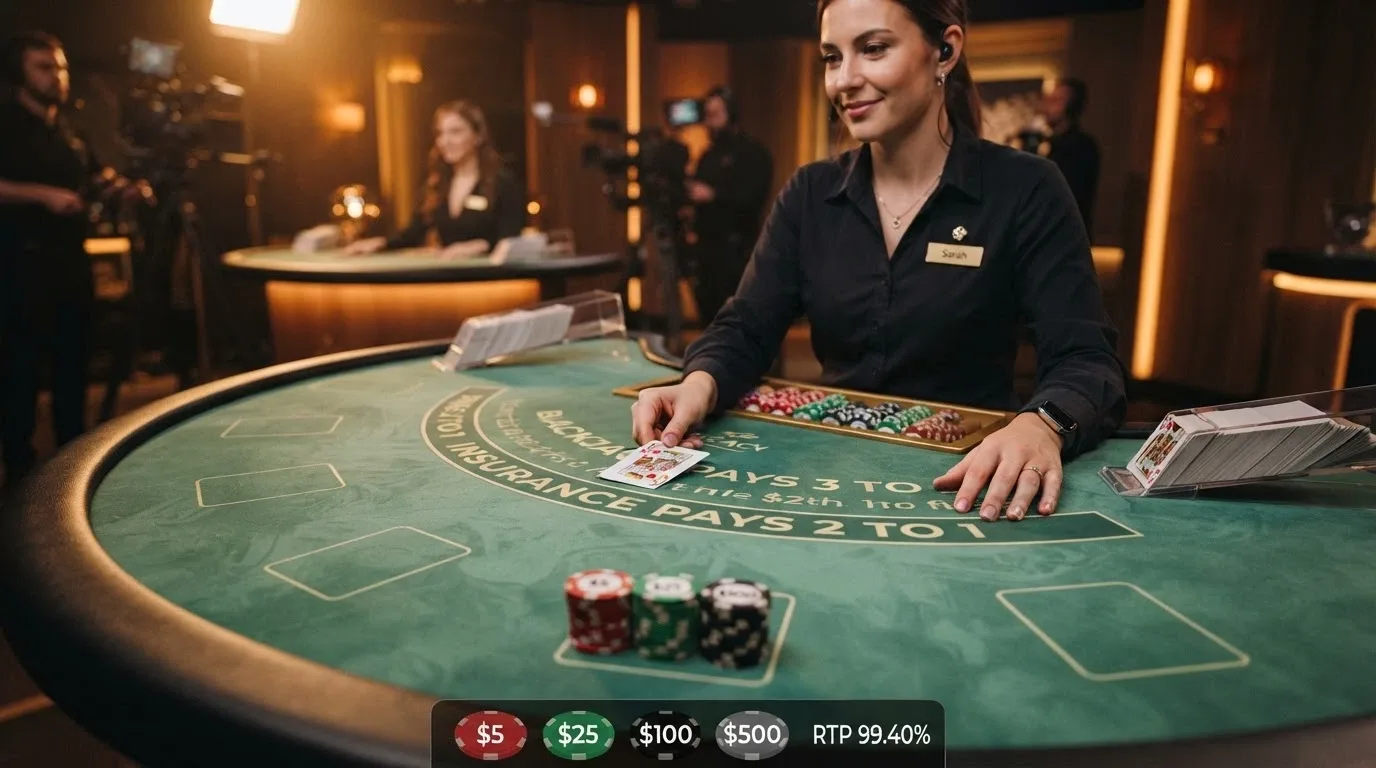
The provider mix across the featured set is dominated by the same names. Pragmatic Play, NetEnt and Evolution appear across most of the major operators. BGaming, Hacksaw Gaming, Nolimit City and Play’n GO fill the rest of the slots catalogue. The live-dealer offering is concentrated at Evolution and Pragmatic Play Live, with minimum bets starting at $0.50 on standard blackjack tables.
The titles below are the ones research returned with a published RTP. Anything else in the catalogue is guesswork.
| Title | Provider | RTP | Volatility |
|---|---|---|---|
| Gates of Olympus | Pragmatic Play | 96.50% | High |
| Elvis Frog in Vegas | BGaming | 96.02% | — |
| Big Bass Bonanza | Pragmatic Play | 96.71% | — |
| Gonzo’s Quest Megaways | NetEnt | 96.00% | — |
| Starburst | NetEnt | 96.09% | — |
| Sweet Bonanza | Pragmatic Play | 96.51% | — |
| Live Blackjack | Evolution | 97.00% | — |
| Lightning Blackjack 6+ | Evolution | n/a | — |
The slots cluster between 96% and 97% RTP, which means a 3–4% house edge on every spin. Lightning Blackjack 6+ sits at 99.40%, with a house edge of 0.60% — a fraction of a typical slot’s. The volatility figure research returned was limited to Gates of Olympus, where it is published as high; the others carry a published RTP but no published volatility class, which is why those cells read as em dashes.
The headline number to take from this table is the slot-vs-table spread. A player who wants to maximise the value of a USDT deposit is playing Lightning Blackjack at $1 minimum, not a 96.50% slot at a higher stake.
Live Dealer Tables: Blackjack, Roulette and Where the Edge Sits
Evolution’s Lightning Blackjack 6+ carries a 99.40% RTP — the highest in the comparison’s table-game catalogue and a meaningfully different proposition from any slot. Standard Evolution Live Blackjack sits at 97% RTP with a $0.50 minimum bet. The gap between Lightning Blackjack and a 96% slot is 3.4 percentage points of RTP, which compounds meaningfully across a session.
Pragmatic Play Live runs a parallel catalogue at most featured operators, with roulette, blackjack, baccarat and game-show titles like Sweet Bonanza Candyland and Mega Wheel. Minimum bets vary by table; the live-dealer studios operating at the featured casinos — primarily Evolution and Pragmatic Play Live — both run mobile-optimised streams.
The cost difference is structural. A $0.50 minimum bet at 97% RTP is a very different proposition from a $1 minimum bet at 99.40% RTP, and both are different from a $0.20 spin at 96%. A player who treats the live-dealer floor as the default rather than a side bet will keep more of a session than one who treats the slots as the default and the tables as a side bet.
Getting Your Money In and Out: The Network Choice That Saves You Up to 15% on Every Deposit
The network decision is the most expensive choice an Australian USDT casino player makes before placing a bet. On a $200 deposit, sending USDT on TRC-20 costs roughly $1 in network fees — about 0.5% of the bankroll. Sending the same $200 on ERC-20 costs $5–30 in Ethereum gas fees, depending on network congestion, which can consume 5–15% of the bankroll before the first spin.
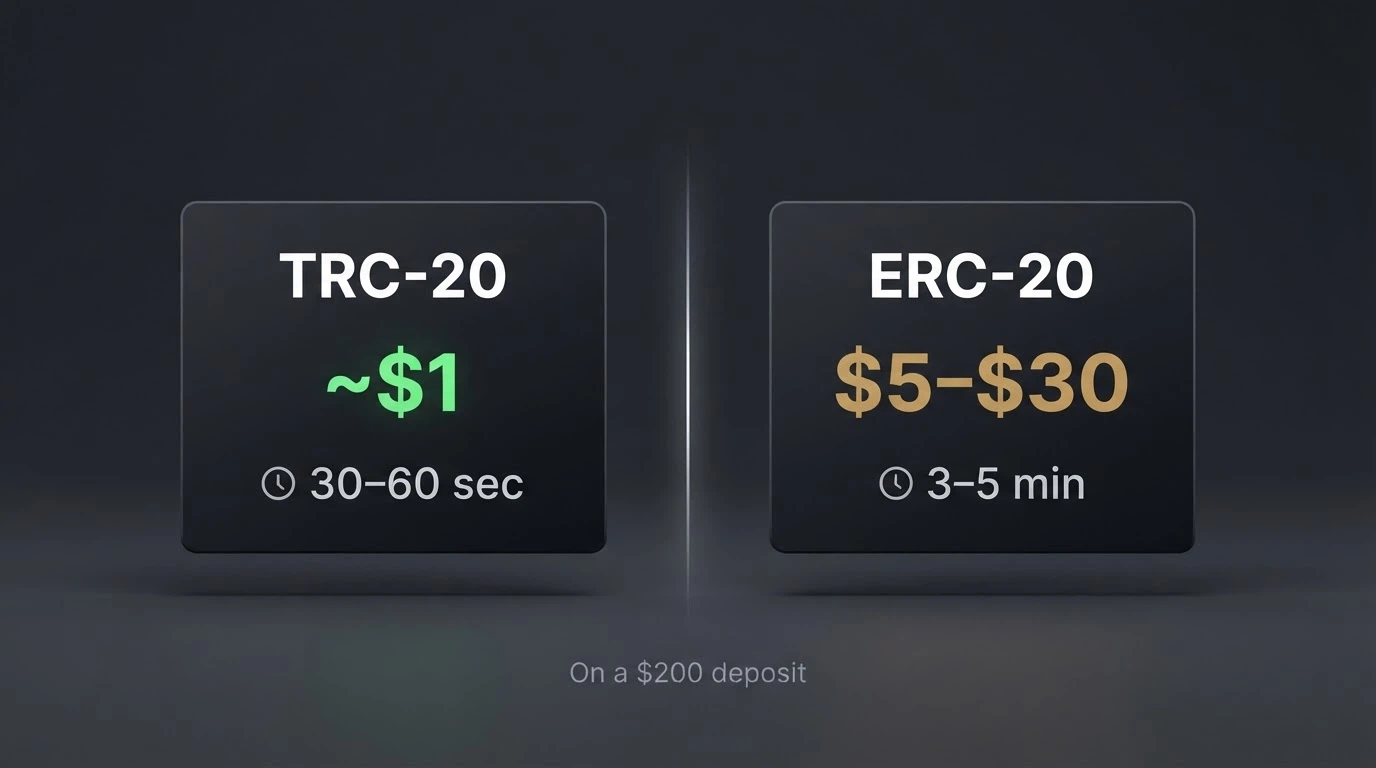
That is not a marketing difference. It is a real cost that comes out of the player’s deposit. The choice is not between two methods the casino offers; it is between paying a small fee to fund a balance and paying a large fee to fund a smaller balance.
| Network | Fee per Transaction | Confirmation Time | Confirmations Required | Address-Mismatch Risk |
|---|---|---|---|---|
| TRC-20 (Tron) | ~USD$1, under A$2 | 30–60 seconds | 1–3 blocks (~3s each) | Permanent loss |
| ERC-20 (Ethereum) | USD$5–30 (A$3–15) | 3–5 minutes | 12 confirmations | Permanent loss |
USDT also exists on BSC (BEP-20) and Solana (SPL), both of which the player will see listed at some casinos. Fee and timing data for those networks was not surfaced in research; the structural risk — sending USDT to a wallet address on the wrong network — is the same. A TRC-20 transfer sent to an ERC-20-only address is permanently lost, with no customer-service path to recover it.
TRC-20 vs ERC-20: The Network Decision That Determines Your Cost
TRC-20 sits on TRON, where transaction fees are a flat ~USD$1 per transfer regardless of size. The cost does not scale with the amount sent, so a $50 deposit and a $5,000 deposit cost roughly the same network fee. Confirmation is fast — 1–3 blocks, around 3 seconds each, settling the transfer in under a minute in most cases.
ERC-20 sits on Ethereum, where fees are the gas costs of the underlying network. Those costs move with congestion: a quiet network might charge $2 in gas, while a busy one can charge $30. The $200-deposit math that turns 5–15% of a bankroll into network fees assumes a representative busy-network gas cost; a quiet-network deposit is cheaper. Confirmation takes 12 Ethereum blocks, typically 3–5 minutes.
The structural mistake is sending USDT on the wrong network. Sending TRC-20 USDT to an ERC-20-only address means the funds are lost permanently, because the receiving wallet is configured for a different chain and the transfer cannot be redeemed. The casino’s cashier typically shows the wallet address and the network; matching both before sending is the single piece of admin that prevents the most expensive mistake available.
How Fast Your Winnings Actually Land Back in Your Wallet
Casino-side USDT withdrawals are free at most sites and process in 0–2 hours, with the instant-payout names — BitStarz with its 10-minute promise, BC.Game at higher VIP tiers — clearing faster than that. The full trip back to Australian dollars adds an exchange conversion step on top.
CoinSpot’s USDT TRC-20 withdrawal time was tested across six withdrawals between February and May 2026 and ranged from 3 minutes 42 seconds to 8 minutes 11 seconds. Exchange conversion from USDT to AUD costs 0.1–1% plus the spread, settled the same day. AUSTRAC’s Travel Rule kicks in at AU$10,000 in crypto-to-fiat conversion, triggering enhanced customer due diligence — meaning the exchange will request ID and source-of-funds documentation before processing larger withdrawals.
From 1 January 2027, the position changes. Banks and payment providers gain express authority to block transactions to illegal gambling operators, with a maximum civil penalty of $364,000 for non-compliance. That is a payment-blocking provision, not an account-freezing one for individual players, but it raises the prospect that an Australian bank could decline a deposit or withdrawal linked to a USDT casino even at sub-AU$10,000 amounts.
For a player choosing between crypto and AUD bank transfer at the cashier, USDT on TRC-20 is the cheapest and fastest path — and the one with the most legal weather ahead.
Why Mobile USDT Casino Play No Longer Means a Second-Rate Experience
The mobile experience at USDT casinos in 2026 is the desktop experience at a smaller screen. The game catalogues run the same titles; the cashier carries the same networks; the live-dealer streams are mobile-optimised; the deposit flow runs through the same wallet QR code or address paste. The only practical loss is the screen real estate, which matters most at live-dealer tables where the betting interface can feel cramped on a phone.
The catalogue-side reality is that most USDT casinos have stopped treating mobile as a second platform. Pragmatic Play, NetEnt and Evolution all design their games for mobile browsers first; live-dealer studios stream at resolutions that hold up on phone screens; the cashier flows that work on desktop work on mobile with no download. The few operators that publish dedicated apps do so for app-store visibility rather than for features the mobile browser lacks.
The gap is small and getting smaller.
Mobile Browser vs App: What the Experience Actually Looks Like
Most USDT casinos serve the full catalogue through a mobile browser with no download — open the site, log in, deposit, play. The UX of depositing USDT on a phone screen is the same wallet QR scan or address paste that runs on desktop, with the additional step of confirming the network on a smaller interface. A mismatch between network selected and wallet address sent is harder to spot on a phone, which makes the network-selection screen worth a closer look before each deposit.
The few operators that offer a dedicated app — primarily the larger brands like Stake and BC.Game — trade the convenience of an installed app for the visibility risk that comes with app-store distribution. The features inside are not materially different from the mobile browser. A player who prefers an app downloads one; a player who prefers to keep their phone uncluttered uses the browser. Neither loses access to anything meaningful.
Free-Play vs Real-Money USDT Slots: What Each Mode Is Actually Good For
Demo mode is a research tool. It lets a player test a slot’s mechanics, volatility and bonus frequency without risking USDT, and that makes it useful for one specific purpose: deciding whether a slot is worth a real-money deposit. It is not a substitute for the real-money experience it previews, because the outcomes in demo mode are simulated, not random-number-generated by the provider’s certified engine in the same way real-money play is.
Most USDT casinos expose demo mode inside the slot lobby — typically a “Play for Fun” or “Demo” button beside the real-money entry. The mode runs on the same game client with the same mechanics, but the balance is a play-money credit the casino tops up automatically. Real winnings cannot be withdrawn from demo play, and some titles — typically the jackpots and a few progressive slots — are excluded from demo mode entirely.
For a player evaluating a USDT casino, demo mode is the lowest-cost way to see whether the lobby navigation, the game-loading speed and the bonus features match the catalogue description. For a player who already knows the slot and just wants to play, demo mode is a distraction.
No-Deposit Play: What You Can Actually Try Without Funding an Account
Two ways to play without funding an account. Demo mode is unlimited play with zero real winnings — useful for testing mechanics, useless for cashing out. No-deposit free spins are limited play with capped real winnings — Vave offers 40, BitStarz offers 30–50, both with a 40× wagering requirement and a $50–$100 maximum cashout.
The no-deposit free spin is the closer experience to real-money play, because it runs on the same random number generator with the same wagering terms as a deposit-triggered bonus. The ceiling is what makes it a trial and not an opportunity: 50 USDT at Vave and $100 at BitStarz are the maximum a player walks away with, regardless of how the spins land.
A player who wants to test a USDT casino’s cashier and one or two games can do so without depositing, at Vave or BitStarz, and walk away with a capped balance if the spins are kind. A player who wants a real session funds an account and reads the bonus terms before claiming.
The Uncomfortable Legal Truth About USDT Casinos and Australian Players
Online casino is prohibited in Australia. The Interactive Gambling Act 2001 makes it an offence to provide online casino games, online pokies or in-play sports betting to a person in Australia. There is no licence for online casino anywhere in the country — not federally, not in any state or territory. Every operator named on this page is an offshore entity offering an unlicensed product to Australian players. None holds an Australian casino licence because none can.
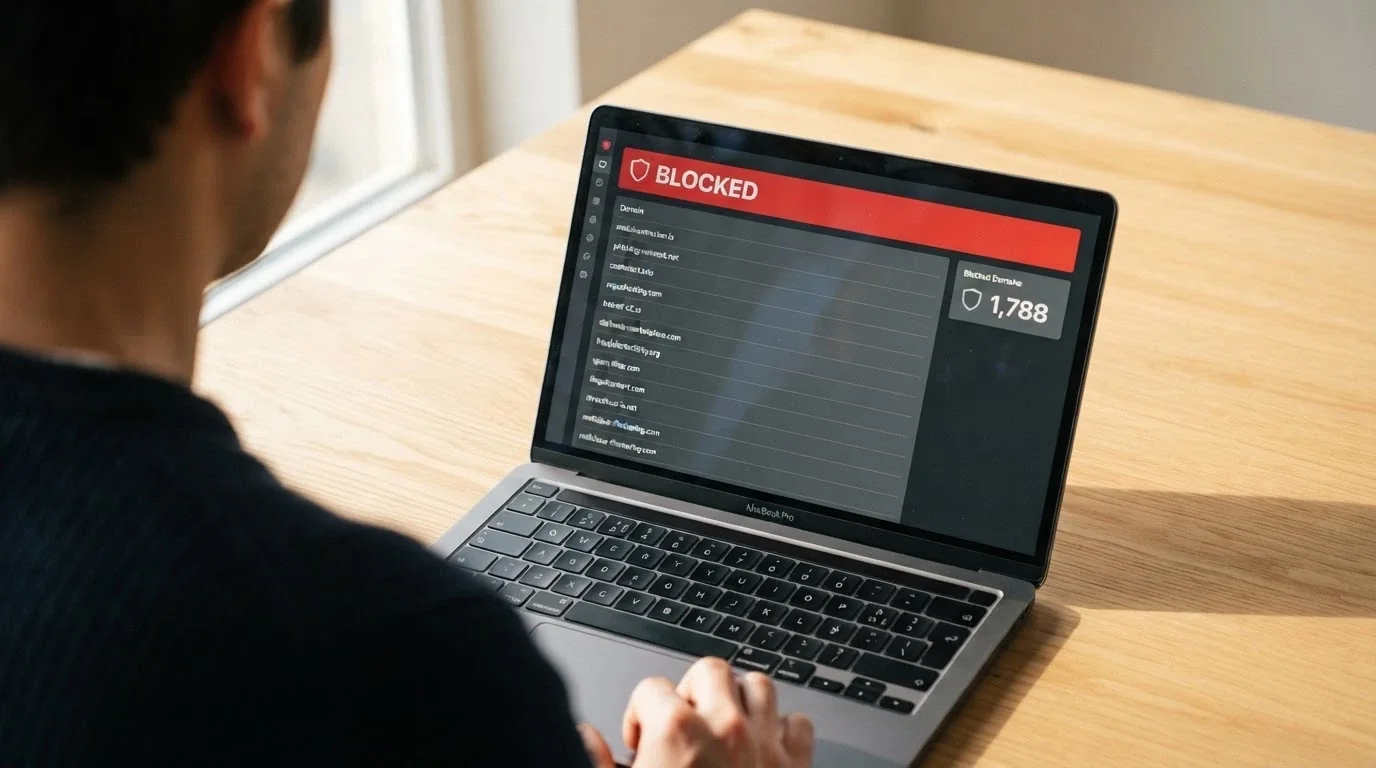
The regulator is the Australian Communications and Media Authority (ACMA), which investigates complaints, issues formal warnings, refers operators for civil penalty proceedings and directs Australian ISPs to block illegal sites. Since November 2019, the ACMA has had 1,788 illegal gambling and affiliate websites blocked by Australian ISPs. Over 230 illegal services have withdrawn from the Australian market since the ACMA began enforcement in 2017.
The individual player is not prosecuted under the IGA — the Act targets the provider. What an Australian player loses by playing at an offshore casino is not criminal liability. It is the entire Australian consumer protection layer: no ACMA complaint escalation, no ombudsman, no deposit guarantee, no BetStop coverage, no recourse if the operator refuses a withdrawal or voids a win. The site can be blocked at any time, potentially with a balance still on it.
This is the trade-off. Lower fees and faster withdrawals on the payment side; zero Australian protection on the consumer side. The decision belongs to the player, and the rest of this page has laid out the figures to inform it.
The Crypto Payment Ban and What It Means in Practice
The Interactive Gambling Amendment (Credit and Other Measures) Act 2023 banned credit cards, credit-related products and digital currency (crypto) as payment for online wagering, commencing 11 June 2024. An operator that fails to enforce the ban faces penalties of up to $247,500. The ban applies to licensed wagering — but online casino was already prohibited before the ban, so the practical effect on the licensed market is small and the practical effect on the offshore market is none.
An Australian who is asked for a credit card or a crypto deposit by a gambling site is being served by someone outside the Australian rules. The payment method is itself a tell.
The penalty structure targets the operator, not the player. The enforcement record sits with the ACMA, not with the player’s bank. What the ban signals is the regulator’s view of the offshore crypto casino market — and that signal is that the regulator considers it outside its perimeter, which it is.
Offshore Licensing: What Curaçao and Tobique Actually Mean for Your Money
A Curaçao or Tobique licence is a legal document from a small jurisdiction. It means the operator is registered somewhere, has met that jurisdiction’s minimum requirements for a gambling licence, and is subject to that jurisdiction’s regulator in the narrow sense of its rules. It does not give an Australian player recourse.
There is no Australian complaints body for offshore casinos. ACMA cannot recover a player’s funds, cannot force a withdrawal and cannot compel an operator to honour a disputed bonus term. The Curaçao Gaming Control Board and the Tobique Gaming Commission operate in their own jurisdictions and have no authority over Australian consumer disputes. The DNS-level blocking the ACMA can order can occur at any time — and if a player has a balance on a site when it goes dark, the balance is unreachable.
For a player choosing between Curaçao-licensed offshore casinos, the licence is a real document from a real regulator — but it is a document that operates outside Australia, and the protection it offers is the protection of those jurisdictions, not the protection of the ACMA.
Staying in Control: Where Offshore USDT Casinos Leave You on Your Own
The Australian responsible-gambling safety net was built for the licensed market, and it stops at the border.
What AU-licensed operators must provide: BetStop, the National Self-Exclusion Register; activity statements; take-a-break functionality; deposit limits. BetStop launched on 21 August 2023 and, to the end of Q3 FY 2025–2026, 59,830 people had registered to self-exclude from all licensed online and phone wagering services in Australia. As of 31 March 2026, 37,247 people had active exclusions; the remaining 22,583 had completed or cancelled their exclusion early.
What offshore casinos do not provide: any of the above. An offshore casino is not connected to the register and will continue accepting a self-excluded person’s money.
The prevalence figures sit on the same scale as the gap. Approximately 2.1% of Australian adults — roughly 430,000 people — experience problem gambling. The Australian Institute of Health and Welfare put high-risk gambling at 1.8% in 2022. Those figures describe the population the licensed safety net was built for. The same population, at an offshore crypto casino, has none of it.
BetStop, Helplines and the Offshore Gap: What Help Actually Reaches You
The help that reaches an Australian player regardless of where they play is the National Gambling Helpline — 1800 858 858, free, confidential, staffed 24/7 — and Gambling Help Online, which provides online chat and counselling at gamblinghelponline.org.au. Both services are independent of any casino’s licensing and operate for any Australian regardless of where they gamble.
What does not reach an offshore casino player is the binding effect of a BetStop registration, which only excludes the player from Australian-licensed wagering services. An offshore casino will not honour a BetStop registration. For a player who has registered on BetStop and is concerned about their gambling at an offshore site, the practical options are wallet-level self-exclusion (configuring a crypto wallet to block transfers to known casino addresses), deposit cooling-off (asking the casino to impose a deposit limit, knowing the casino may decline), and the helpline above.
The concrete harm of the offshore route, where responsible gambling is concerned, is the gap between what is offered and what is enforceable.
How We Selected and Ranked These USDT Casinos
The featured set is built from operators that publicly accept Australian players, accept USDT, and surface in published USDT-casino comparisons. Sources consulted during this review included operator terms pages, the ACMA register and enforcement record, published payout-time tests and bonus-terms aggregators.
Every licence claim was checked against the relevant regulator’s register where one exists — Curaçao’s GCB register, the Tobique Gaming Commission’s public listings, and the ACMA’s own list of licensed Australian wagering operators. No operator in the featured set holds an Australian licence, because no Australian licence for online casino exists. The benchmark for “licensed” in this comparison is therefore offshore, and the offshore-licence landscape is what the table reflects.
The ranking criteria, in order of weight: licence backing (real registration versus unspecified), bonus fairness (wagering multiplier, validity, max bet, max cashout), game depth (catalogue size and provider mix), withdrawal speed (tested or promised payout times), and data transparency (how much the operator publishes in verifiable form). Where two operators score similarly on the first four, the fifth separates them — and the operators with the least published data sit at the bottom of the ranking because an unverified comparison is not a useful comparison.
What this review cannot say about the lower-ranked operators — Wild Fortune, Rainbet, FairGO, Bizzo — is whether their offers are competitive. The data to make that judgement is not public. A player who chooses one of them is choosing based on a thinner evidence base than a player who chooses Stake or BitStarz, and that is itself part of the comparison.
Should You Play at a USDT Casino From Australia? What the Numbers Say
The arithmetic of a USDT casino session from Australia splits cleanly down the middle.
On one side: USDT on TRC-20 costs about A$2 in network fees, deposits clear in under a minute, withdrawals clear in 0–2 hours at most sites and instantly at the top names. The bonus offers in the featured set — 200% at Stake, 470% across four deposits at BC.Game, A$10,000 plus 180 free spins at BitStarz — are larger than anything the licensed Australian market could offer, because the licensed market does not offer casino products at all.
On the other side: every operator in the comparison is offshore, every licence is offshore, and every protection an Australian player would expect is offshore. The ACMA has blocked 1,788 illegal gambling and affiliate websites since November 2019 and referred another 133 for blocking in Q4 2025 alone. From 1 January 2027, banks gain express authority to block transactions to illegal gambling operators, with a $364,000 penalty for non-compliance. BetStop, which has 37,247 active exclusions as of 31 March 2026, does not reach offshore casinos.
The expected loss on a representative bonus illustrates the gap between the marketing and the math. A 200% match bonus of $2,000 at 40× wagering, run through a 96.50% RTP slot, generates $80,000 in required turnover and an expected loss of roughly $2,800 — a real cost to the player for a bonus that advertised itself as $2,000 in extra value.
The decision is the player’s. What the page provides is the figures: the cheapest payment path that exists in Australian online gambling, the bonus terms that quietly shrink every headline number, the games with the published RTPs, the legal perimeter that catches every operator named, and the help that still reaches a player regardless of where they play.
If the choice is to play, the responsible-gambling resources below are independent of any casino’s licensing and operate for any Australian.
Frequently Asked Questions
Are USDT casino winnings taxable in Australia?
No. Betting and gambling winnings are not assessable income under section 6-5 of the ITAA 1997 for recreational players. Losses are not deductible under section 8-1. The operator pays wagering tax where the customer is; the player keeps what they walk away with, minus the house edge.
What happens if my crypto casino gets blocked by the ACMA?
The site becomes unreachable through Australian ISPs, taking any balance with it. ACMA cannot recover funds from offshore operators and has no authority to compel a withdrawal. The only realistic path is contacting the operator directly through an overseas channel and hoping for cooperation.
Is USDT (Tether) a safe payment method for online gambling?
USDT is reliable, settles in seconds, and the dollar peg removes volatility. It is not regulated: USDT deposits are not protected by Australian consumer law, and a casino refusing a withdrawal has no Australian complaints body to escalate to. The payment method is safe; the destination is not.
How do I deposit Tether (USDT) at an Australian online casino?
Buy USDT on an Australian exchange such as CoinSpot or Swyftx with AUD via PayID or bank transfer. Open the casino cashier, select USDT, choose TRC-20 — cheaper than ERC-20 unless specified otherwise — copy the wallet address and send from the exchange wallet. Deposits clear in 1–5 minutes.
What are the network fees for sending USDT to a casino?
On TRC-20: roughly USD$1, under A$2, flat regardless of amount. On ERC-20: USD$5–30 depending on Ethereum congestion. On a $200 deposit, TRC-20 fees are about 0.5% of the bankroll; ERC-20 fees can be 5–15%. USDT also exists on BSC and Solana, cheaper than ERC-20 but with less research.
How long does a USDT withdrawal take from an online casino?
Casino-side: 0–2 hours at most operators, under 10 minutes at Stake, promised in 10 minutes at BitStarz, instant at higher VIP tiers at BC.Game. Exchange-side after that: 4–8 minutes on CoinSpot TRC-20 in published testing. The full round trip from casino withdrawal to AUD bank deposit typically completes within a day.