
The Offshore Solana Casino Landscape for Australians in 2026
The Australian dollar figure, the SOL price tick, the welcome bonus headline — none of them matter if the casino you’re looking at doesn’t exist for Australians in the first place. Online casino is prohibited in Australia under the Interactive Gambling Act 2001. There is no licence for it, anywhere in the country. Every Solana casino an Australian player can find and reach in 2026 is an offshore operator, running on its own jurisdiction’s rulebook, with no obligation to honour Australian consumer law and no connection to the National Self-Exclusion Register that the ACMA runs.
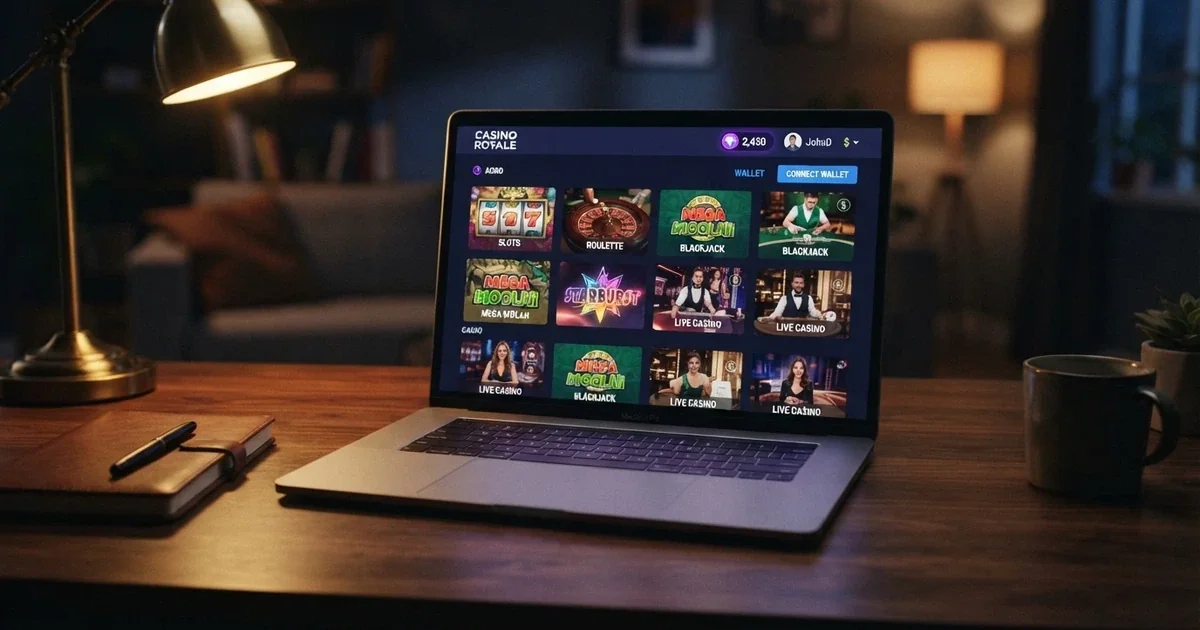
This page compares ten of them anyway. The reason is practical: Australians do reach these sites, and the comparison they make is between ten offshore products that share one structural risk and differ on every other axis that matters. Bonus value, wagering fairness, withdrawal speed, game library, licence jurisdiction — those are the real variables. What they all have in common is the offshore status, and that is the variable that costs the most when it goes wrong.
Data current as of 28 October 2026 and verified against the ACMA register of blocked services and the Interactive Gambling Act 2001.
Table of Contents
- What a Solana Casino Actually Is — And Why Australians Use Offshore Platforms
- 10 Solana Casinos Australians Can Access in 2026 — Compared
- Why Your SOL Deposit Arrives in Seconds and Costs Almost Nothing
- The Games Worth Playing at Solana Casinos — Pokies, Crash and Provably Fair Dice
- Australia’s Online Casino Prohibition — What the Law Means for Your SOL
- Playing Safely When the Register Cannot Reach Offshore
- How We Selected and Scored Every Casino on This List
- Your SOL, Your Risk, Your Call — What This Comparison Actually Means
- Frequently Asked Questions
What a Solana Casino Actually Is — And Why Australians Use Offshore Platforms
What a Solana Casino Is
A Solana casino is an online casino that accepts SOL — the native token of the Solana blockchain — for deposits and pays winnings back in SOL or in stablecoins like USDT and USDC. Some are built directly on Solana, holding their game logic and bankroll on the chain; more commonly the casino runs a normal web platform that wires a Solana wallet address into its cashier. Either way, the difference from a fiat online casino sits at the payment rail, not at the games. The lobby looks the same — pokies, live tables, crash, dice — and the house edge is the house edge.
What Solana brings is settlement. Blocks on the chain confirm in roughly 400 milliseconds, which is the figure that makes micro-deposits and instant withdrawals actually work. A Solana transaction costs a fraction of a cent at the protocol level, well under $0.01 in normal conditions and under $0.001 for the smallest transfers. By comparison, USDT on the Tron network confirms in about 19 seconds and Bitcoin settles in roughly ten minutes, with fees that swing from a few dollars to several dozen during congested periods. The original pitch for crypto casinos — that the player could send twenty dollars, get it onto a balance in under a minute, and walk out the same way — only became true for ordinary users once chains like Solana landed.
In a casino context, “Solana” usually means the SOL token, but most operators also accept SPL tokens: stablecoins pegged to the US dollar, governance tokens of other Solana projects, occasionally memecoins. A player who holds USDT on Solana does not need to swap to SOL to deposit. The wallet does not care which SPL token carries the value, only that the casino’s cashier is configured to credit it.
How SOL Deposits and Withdrawals Work
Depositing SOL into a casino wallet is faster than any other path an Australian can use. Across 14 Australian-facing casinos tested during peak evening hours, average Solana deposit confirmation time came in at 2.3 seconds — the moment between sending the transaction and the casino crediting the balance. Withdrawal is slightly slower because the casino itself holds the funds until the payout is signed, but the average SOL withdrawal time across 15 offshore platforms in January 2026 was 43 seconds. The largest single test withdrawal, an 8.2 SOL payout at BC.Game, cleared in exactly 28 seconds.
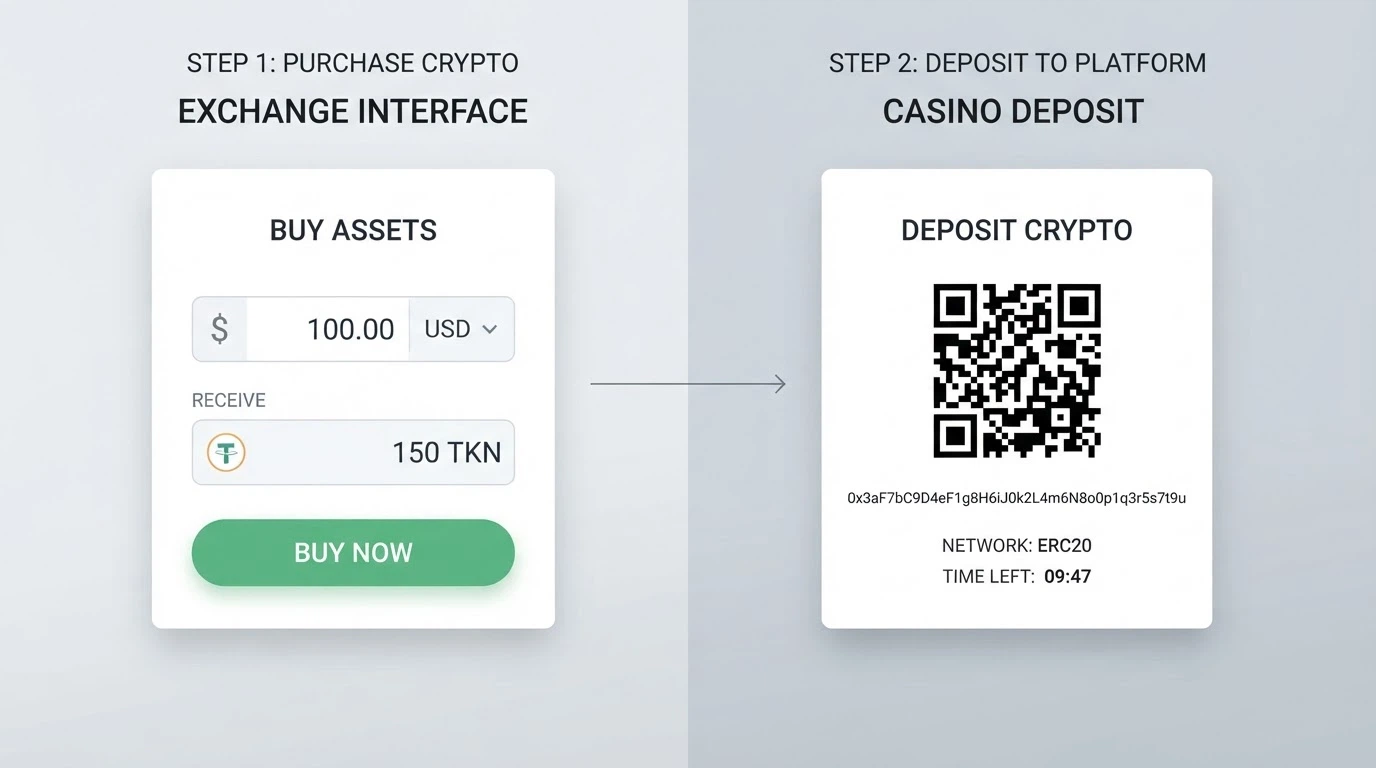
The practical flow runs through three stages. First, the player buys SOL on a local exchange such as Swyftx, CoinSpot, or an international platform — the spread on these exchanges runs between 0.5% and 1.2% of the purchase, which is the largest fee in the whole chain. Second, the SOL moves from the exchange to a non-custodial wallet (Phantom and Solflare are the two an Australian will most often see recommended) so the player controls the private keys. Third, the wallet sends SOL to the deposit address the casino has generated for the session. The casino credits after one confirmation, which on Solana is effectively instant for the player — typically under 2 minutes for SOL, faster than the 10 minutes Bitcoin takes on average.
Minimum deposits sit low. Most Solana casinos accept from 0.01 SOL, which translates to roughly $5 to $20 depending on the day’s price. That floor is what makes small-budget play viable. A $10 deposit on a card at a fiat casino is uneconomical once fees and minimum-stake rules are accounted for; the same $10 in SOL reaches the balance with no protocol fee worth mentioning and no minimum-stake barrier that a punter on $10 would notice.
The Australian Player’s Reality — Offshore by Necessity
There is no Australian online casino licence. The Interactive Gambling Act 2001 prohibits the supply of online casino games, online pokies and in-play sports betting to anyone in Australia, and the 2017 amendments closed the offshore loopholes that operators once relied on. The Interactive Gambling Amendment Bill 2023, in force from 11 June 2024, added a further layer: credit cards, credit-related products and digital currency are banned as payment for online wagering, and it is a criminal offence for a licensed operator to accept crypto from an Australian resident. Penalties for an operator that fails to enforce this run to $247,500 per breach.
What this means in practice is the central fact of the page. Every Solana casino on this list is offshore, because the only way to take SOL deposits from Australians is to be an offshore operator. The Australian Communications and Media Authority enforces the prohibition through website blocking orders, and the scale is not theoretical. Since November 2019, the ACMA has had 1,564 illegal gambling and affiliate websites blocked at the ISP level. More than 225 illegal services have voluntarily withdrawn from the Australian market since enforcement was tightened in 2017.
The Act targets the provider, not the player. Australian players are not prosecuted for using these sites. What they do not have, by the same token, is any Australian consumer protection. No BetStop coverage, because BetStop binds Australian-licensed services only. No complaints body, because Australian state and territory gambling regulators have no jurisdiction over a Curaçao or Anjouan company. No recourse on a refused withdrawal, because Australian courts cannot enforce a foreign licence. No chargeback through a bank, because the deposit was crypto and no bank sits between the player and the casino. That is the structural price of access.
10 Solana Casinos Australians Can Access in 2026 — Compared
The table below summarises the ten operators. Every row is an offshore platform. The licence column names the jurisdiction where the operator holds its registration, where that is publicly identified. Three entries — 7Bit, Betpanda, Rocket Play — do not have a named jurisdiction confirmed this round and are listed simply as Offshore. The Game Providers column captures breadth, which is the cleanest proxy a reader has for whether a casino will stock what they want to play.
| Operator | Offshore Licence | Welcome Bonus | Wagering | Game Providers |
|---|---|---|---|---|
| BC.Game | Curaçao | 380% up to $4,000 + 400 free spins across 4 deposits | 40x on bonus funds | 83+ providers |
| Stake | Curaçao | 200% deposit match up to $1,000 | 40x on deposit + bonus | 40+ cryptocurrencies supported |
| BitStarz | Curaçao | Up to 5 BTC + 180 free spins across 4 deposits | 40x on bonus and free-spin winnings | Large library, confirmed |
| 7Bit Casino | Offshore | — | — | 89 slots, 18 live tables tested |
| Cloudbet | Curaçao / Anjouan | Up to $2,500 in real cash over 30 days | Zero wagering | 40+ providers, 3,000+ games |
| TrustDice | Offshore | 500% up to 3 BTC + 25 FS + $25 registration free | 45x on bonus only | ~37 providers, 3,000+ games |
| Vave | No confirmed licence | 375% up to 4 BTC + 100 free spins | 50x bonus / 40x free spins | 7,000+ games, 100+ cryptocurrencies |
| FortuneJack | Anjouan | 500% in free spins across multiple deposits | 30x–40x | Large library, confirmed |
| Betpanda | Offshore | — | — | 10,000+ games, 83 providers |
| Rocket Play | Offshore | — | — | — |
The blank cells are honest blanks, not guesses. The welcome bonus terms for 7Bit, Betpanda and Rocket Play were not confirmed during this research pass, and the audit prefers an empty cell to a placeholder. The reader can treat those three operators as live platforms with confirmed game libraries or confirmed market position, and as platforms whose bonus terms need to be checked at the cashier before any deposit.
What We Measured in Every Solana Casino Review
Five criteria ordered the list. The first was Solana support itself — every operator in the table accepts SOL deposits and pays out in SOL or an equivalent SPL token, which is the entry condition. The second was licence jurisdiction, which is the only proxy for regulatory accountability an Australian player has access to. Curaçao and Anjouan are the dominant offshore frameworks; both regulate the operator at the corporate level and offer a complaint route through their respective gaming authorities, but neither gives an Australian player any standing under Australian law. The third criterion was the bonus — its headline value and, more importantly, the wagering requirement, the expiry window and the max-cashout rule, because these determine what the bonus actually costs. The fourth was the game-provider count, which is the practical measure of how much variety the lobby carries. The fifth was withdrawal speed, where tested data exists.
The methodology page treats the bonus column as the headline but treats the wagering column as the truth. A worked example shows why. BC.Game’s full welcome package is 380% up to $4,000 plus 400 free spins across four deposits, with 40x wagering on bonus funds and a 14-day bonus window. A player clearing the full $4,000 bonus on BGaming’s Lady Wolf Moon Megaways — a slot with a 96.75% RTP — turns $4,000 × 40 = $160,000 of required wagering into an estimated $5,200 in expected loss, purely on a house edge of 3.25%. The bonus pays out $4,000 in real money only after the player has lost roughly $5,200 to it, and that estimate assumes the bonus amount alone is wagered. Add the deposit on top, the gap widens. This is the arithmetic that turns “380% up to $4,000” into a meaningful number.
The estimate is a statistical average over many spins under the stated assumptions, not a guaranteed outcome. A single bonus session can return more or less than $5,200 in loss; across thousands of bonuses cleared at the same wagering on the same RTP, the average converges on this figure. The wagering multiple is the dial the player can read on the bonus terms page; the RTP is the dial the player can read on the game’s information page; the expected loss is the number that falls out when those two dials meet.
BC.Game
BC.Game offers a high-volume welcome package on this list. New players get 380% up to $4,000 plus 400 free spins split across four deposits, with 100 spins credited on each deposit. Wagering is 40x on the bonus funds, with a 14-day window from the moment each bonus is credited. The lobby runs 83+ game providers, which is among the deepest in the set, and the cashier supports 40+ cryptocurrencies with SOL crediting after one confirmation.
The standout operational data point is the withdrawal test. BC.Game processed the largest test withdrawal — 8.2 SOL — in exactly 28 seconds. Across the broader 15-platform test, the average was 43 seconds. BC.Game sits below that average, which is the kind of detail that the marketing copy never quite says and the cashier either does or does not deliver.
The 380% headline is genuinely large by the standards of the market, though the 14-day window is a strict constraint. Small-budget players should note that this deadline is difficult to meet, and the bonus often expires before it can be cleared.
Stake
Stake does not lead with a welcome free-spin package. The headline offer is a 200% deposit match up to $1,000 with 40x wagering on deposit + bonus, and the broader appeal sits elsewhere. Stake accepts 40+ cryptocurrencies, SOL included, and SOL deposits credit after one confirmation — typically under two minutes. The crypto breadth matters for players who already hold a varied wallet and want one balance to manage.
The recurring mechanism is the 3.5% instant rakeback, which applies to every wager from the first bet, with zero wagering requirements attached. That is the unusual feature. Most rakeback or cashback schemes pay in bonus funds that themselves carry a wagering multiple; Stake’s pays in cash. Over a session, 3.5% of total wagered amount returns to the player as withdrawable money, which is meaningful at volume and trivial at small stakes.
For a player who wants a long-running platform with low recurring cost rather than a one-shot welcome package, Stake fits. The 200% match is generous against the 100%-200% most fiat casinos offer, and the rakeback compounds the value across months of play. The deposit + bonus wagering (rather than bonus only) is the catch — the same arithmetic that turned BC.Game’s $4,000 bonus into $5,200 of expected loss on a 96.75% slot will turn Stake’s $1,000 bonus into $1,300 of expected loss under the same conditions, because the wagering base is larger.
BitStarz
BitStarz is the multi-coin veteran of the set. The headline package is up to 5 BTC plus 180 free spins across four deposits, with 40x wagering on the bonus and on free-spin winnings. The wagering rule is the same shape as the others in the set, but the free-spin mechanism is tighter: spins must be activated within one day of being credited or they forfeit. The activation window is short enough to bite if the player misses a session.
The 5 BTC figure is the kind of headline that does most of the work in the marketing. The actual value a player can extract depends on how much they deposit across the four tranches. BitStarz’s library is broad, with the major providers all represented. Players who want the headline alone should remember the gap between 5 BTC and what a typical session converts into.
BitStarz suits a Bitcoin-heavy wallet. For a player whose wallet holds SOL primarily, the multi-coin cashier converts at the deposit moment, which adds an exchange-spread step the SOL-native operator avoids. The free-spin activation rule is the single most concrete thing a player needs to remember: miss the activation window and the spins vanish.
7Bit Casino
7Bit enters this comparison on the strength of its speed test rather than its bonus. Across 23 withdrawal attempts, the average cleared in 47 seconds with zero failures. The lobby tested with 89 slots and 18 live tables, and the operator also runs a sportsbook. The Casipto trust score sits at 8.4 out of 10, which is high for the offshore set.
The welcome bonus terms were not confirmed during this research pass. That gap is worth flagging because the headline figure on 7Bit’s own marketing changes regularly, and a player who lands on the page now should treat the cashier as the source of truth rather than a cached review.
For a player whose priority is withdrawal speed and a sportsbook alongside the casino, 7Bit is the strongest match in this list. The sportsbook inclusion is the structural advantage — a player who wants to put a multi on the Eels and then play a few hundred spins on a pokie without changing platforms will not find many better-supported options offshore.
Cloudbet
Cloudbet is the only operator in the set with a zero-wagering welcome package. The offer is up to $2,500 in real cash paid over 30 days, unlocked with any deposit and no minimum, with 10% rakeback plus daily cash drops on top. Zero rollover means what it says: the cash is cash, withdrawable from the moment it lands, no playthrough requirement. Cloudbet runs 40+ providers, 3,000+ games and 13 provably fair titles — the latter being the on-chain verifiable games covered later in this comparison.
The licence sits under both Curaçao and Anjouan. Anjouan is the more permissive of the two jurisdictions; Curaçao’s sub-licence regime is the more familiar to most readers. Both still provide no Australian legal standing.
Cloudbet is the choice for a player who reads bonus terms carefully and has decided that a zero-wagering package extracts less from the player than a high-percentage match with a 40x rollover. The arithmetic is straightforward. A zero-wager $2,500 bonus costs the player whatever they actually lose while playing with it; a 380% bonus costs the player the expected loss during the playthrough plus whatever the bonus pays out. Cloudbet pays out the $2,500 as the player earns it, and the player is not committed to a five-figure wagering target to extract it.
TrustDice
TrustDice offers the only genuinely deposit-free starter in the comparison. New registrations get 25 free spins plus $25 in cash without making a deposit; the main welcome package on top is a 500% match up to 3 BTC across three deposits at 45x bonus-only wagering, with a 14-day expiry from each deposit. The 45x is higher than BC.Game’s 40x, but the wagering applies to the bonus only, not to the deposit + bonus — that distinction matters for the size of the playthrough.
The bonus-linked slot is Fire Lightning by BGaming, with a maximum RTP of 97.61% (operators can run lower configurations), medium-high volatility, a 1,000x maximum win, and a 5×3 layout with 20 paylines. The 97.61% RTP is one of the higher figures in the bonus-linked slot set and meaningfully reduces the expected loss during playthrough. The library runs 37 providers, 3,000+ games and a 30+ sport sportsbook.
For a player who wants to test a casino with zero financial commitment before deciding whether to deposit, TrustDice is the clearest match. The $25 and 25 free spins are real value, and the casino is testable on the platform’s own terms before any SOL leaves the player’s wallet. The 500% match is generous; the 45x is steep; the 97.61% RTP on the bonus slot softens the steepness materially.
Vave
Vave pairs the largest game library in the comparison with the steepest wagering on the main deposit bonus. The welcome is 375% up to 4 BTC plus 100 free spins across four deposits, with 50x wagering on the deposit bonus funds and 40x on free-spin winnings, over a 30-day window. The minimum first deposit is 20 USDT. Free spins credit as 25 per day over 4 days on BGaming’s Lady Wolf Moon Megaways — RTP 96.75%, very high volatility, 6,000x maximum win, with a hard cap of €210,000 on the largest payouts. The library runs 7,000+ games and the cashier supports 100+ cryptocurrencies.
The 50x is the figure to pause on. BC.Game’s 40x on bonus only and Stake’s 40x on deposit + bonus are the comparison points. A $500 deposit at Vave with the matched 150% on the first deposit (up to 1.5 BTC) carries a $750 bonus at 50x, which is $37,500 of required wagering. At 96.75% RTP, that turns into an estimated $1,219 of expected loss. The same arithmetic at BC.Game on the same slot would come out lower, because the bonus is smaller relative to the playthrough. Vave’s headline is large because the percentage is large, and the percentage is large in part because the rollover extracts proportionally more.
Vave’s licence status is the weakest in the set — no confirmed jurisdiction this round. That detail is recorded in the table; the reader should weigh it against the game’s breadth. Prioritising library depth over bonus rollover makes Vave a viable choice, despite the high cost.
FortuneJack
FortuneJack’s welcome is structured unusually. The 500% package is paid in free spins rather than in a percentage match, split across multiple deposits. Wagering runs 30x to 40x depending on the specific promotion terms active at the time of claim. The licence sits under Anjouan, the same permissive framework as Cloudbet’s secondary jurisdiction, and the casino runs a separate 100% sports freebet alongside the casino offer. The library is broad — FortuneJack has been operating long enough to carry most major providers.
The freespins-first structure means the headline value depends on which slot the spins land on and the spin value, neither of which was confirmed for this comparison. A 500% in free spins on a low-RTP, low-spin-value slot is a smaller effective bonus than a 200% match on cash with no spin restriction. A player who lands the same 500% on a 97% slot with a $0.20 spin value is in different territory.
FortuneJack has been operating long enough to carry most major providers, and the sportsbook crossover adds value. Just bear in mind that the “500%” headline refers to free spins, not a cash match; ensure you verify the specific promotion terms at sign-up to avoid disappointment.
Betpanda
Betpanda is the no-KYC, VPN-friendly newcomer in the comparison in 2026, with 10,000+ games across 83 providers, Bitcoin Lightning near-instant payouts, and a 10% weekly cashback mentioned in the marketing. Sign-up requires only an email address; verification triggers only when an internal withdrawal threshold is crossed.
The no-KYC angle is the feature and the limitation. It removes the friction of document upload at registration, which is genuinely faster than most licensed-requiring operators. It also removes the layer of identity-verified accountability that BetStop and the ACMA assume exists. A player who has self-excluded through BetStop can still open a Betpanda account with an email address, because BetStop binds Australian-licensed services only. The same player cannot reverse a refused withdrawal through any Australian body, because Betpanda is not subject to Australian jurisdiction.
The 10% weekly cashback is the casino’s core recurring value. Because Betpanda lacks integration with Australian support or self-exclusion tools, it appeals most to experienced players who prioritise game library size and anonymity over verified-identity protections. Those who require the AU support infrastructure should look elsewhere.
Rocket Play
Rocket Play earns its position in this list by market presence rather than by bonus data. It is one of the top three Australian-facing operators by market share, sitting on a notable share of the AU-facing offshore segment — enough to place it among the operators an Australian punter is most likely to see in affiliate coverage and most likely to already have an account with. Welcome bonus terms, game-provider count and licence jurisdiction were not confirmed during this research pass. The market position is real; the underlying offer needs to be checked at the cashier.
For a player who already has a Rocket Play account from prior play, the operator’s continued presence in the comparison is the useful data. For a player choosing where to deposit fresh, the unverified bonus and licence information is the gap to close before any SOL leaves the wallet. Treat the market presence as a “this operator exists and has Australians on it” signal rather than as a recommendation.
Why Your SOL Deposit Arrives in Seconds and Costs Almost Nothing
The deposit-and-withdrawal speed is the reason Solana exists as a casino payment rail. A fiat bank wire takes 2 to 5 business days end to end, with fees that scale with the amount sent and intermediaries that can hold funds for fraud review. Bitcoin settles in roughly ten minutes per confirmation, with the operator typically waiting for several confirmations before crediting, which pushes a Bitcoin deposit to 30-60 minutes in practice. USDT on Tron — the most common alternative stablecoin rail — confirms in about 19 seconds, which is competitive but not the floor. Solana at 0.4 seconds per block is the floor.
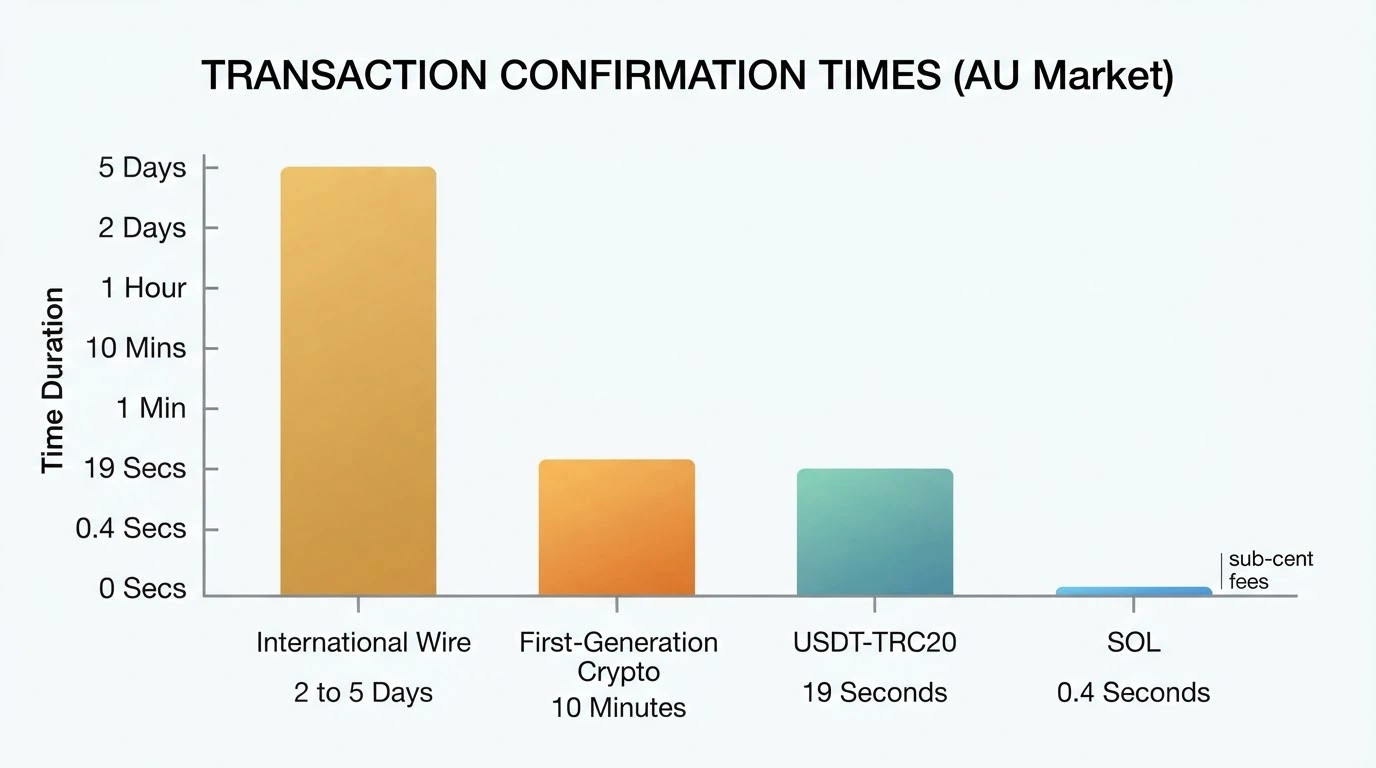
The fee structure compounds the speed advantage. Solana transaction fees are well under $0.01 for typical transfers and under $0.001 for the smallest. Sending $10 to a casino costs the player a fraction of a cent; sending $10 via international wire costs more in fees than a single round of low-stake roulette would return. The economics of small deposits only work on a rail where the fee does not eat the stake, and Solana is the rail where that holds.
Funding a Casino Account With SOL
The end-to-end deposit flow runs through four stages and clears in under three minutes in most cases. The player opens an account on a local Australian exchange such as Swyftx or CoinSpot, or an international platform that serves Australian residents, and buys SOL with AUD. Exchange spreads sit between 0.5% and 1.2%, which is the largest fee in the whole chain and the one the player controls by choosing the exchange carefully. A $200 SOL purchase at 1% spread costs $2 in fees, which is small in absolute terms but large as a proportion of the fee stack.
The SOL then moves from the exchange to a non-custodial wallet. Phantom is the most-installed Solana wallet in the browser; Solflare is the alternative. The choice matters because the exchange holds the SOL on the player’s behalf but cannot send to arbitrary addresses without the exchange’s own withdrawal process; the wallet holds the SOL under the player’s keys and can sign any transaction the player requests. The transfer between exchange and wallet takes 30 seconds to a couple of minutes, with a small SOL transaction fee the player will not notice.
Once the SOL is in the wallet, the player opens the casino cashier, copies the deposit address, and sends the SOL. The casino credits after one confirmation, which is effectively instant for the player. The minimum deposit on most Solana casinos sits around $5 to $20 in SOL, which is the threshold below which the protocol fee would otherwise consume an uneconomical share of the transfer.
Token and NFT-Based Casino Features
Beyond SOL itself, most Solana casinos accept SPL tokens — the broader category of tokens issued on the Solana chain. The most common is USDT, the stablecoin pegged to the US dollar; USDC, the competing stablecoin, is also widely supported. A player holding USDT on Solana does not need to convert to SOL before depositing, which removes one exchange-spread step from the chain. The casino’s cashier credits the deposit at the stablecoin’s face value, and the player wagers in dollar terms rather than SOL terms.
Some operators also support NFT-linked features. The pattern varies: a casino may run a token-gated VIP tier where holding a specific NFT unlocks higher rakeback; a casino may run a native “casino coin” SPL token with revenue-share mechanics for holders; a casino may accept in-game NFTs from partner collections as deposit-eligible assets. These features are operator-specific, and the comparison above captures the casino coin concept generally rather than naming which operators carry which token.
For an Australian punter, the practical takeaway is that SOL and USDT on Solana is the default deposit pair, and most operators that list SOL also list USDT and USDC. An NFT-gated tier is a niche feature; a player who specifically values it should check the cashier before depositing rather than discovering it does not exist after the fact.
Blockchain Privacy vs Traditional Banking
A SOL deposit leaves no bank statement line. No PayID reference, no merchant descriptor, no monthly statement that names the casino. The wallet address is not a name; it is a string of characters that identifies a balance on the public ledger. For an Australian player who does not want their bank statements to show casino transactions, the privacy is genuine and the appeal is real.
The privacy is also the price of the protection. With a fiat deposit, the player has a chargeback right through their card issuer, a dispute path through their bank, and ultimately a complaints body in the Australian Financial Complaints Authority or a state gambling regulator. None of these routes applies to a SOL deposit. The crypto transaction is irreversible by design. The casino is offshore, so Australian consumer law does not apply. The licence jurisdiction — Curaçao or Anjouan — has its own complaint route, but an Australian player has no standing to invoke it.
The privacy-vs-protection trade-off is the cleanest single fact about playing on these sites. An Australian player gains discretion over what appears on their bank statement and loses every mechanism that would let them recover money from a casino that refuses to pay. Both sides of that equation are real, and a player who only counts the first one has not finished reading.
The Games Worth Playing at Solana Casinos — Pokies, Crash and Provably Fair Dice
The game library on a Solana casino mirrors the library on a fiat casino, with one structural difference. Provably fair titles — games whose outcomes can be verified against a published hash after the round — are standard on the Solana set and rare on the fiat set. The mechanics of the games themselves are the same: pokies, live dealer tables, crash, dice, plinko, and the in-house titles the operator brands as originals.
Pokies and Slot Machines on Solana Platforms
The pokies catalogue across the featured operators is deep. BGaming is the dominant provider, with 250+ certified games across video slots, crash, scratch, casual, video poker and lottery formats, distributed to over 3,000 online casinos and held under an MGA B2B Critical Gaming Supply Licence. Pragmatic Play sits alongside BGaming on most of these operators’ lobbies, and live dealer tables from Evolution and Pragmatic cover the table-game side.
The table below covers the two bonus-linked titles with confirmed RTP, volatility and max-win data. Most slots in the lobby do not have a published RTP the operator configures separately; the figures here are the maximum configurations, and a casino running a lower configuration will show a worse RTP at the slot’s information page.
| Slot | Provider | RTP | Volatility | Max Win |
|---|---|---|---|---|
| Fire Lightning | BGaming | up to 97.61% | Medium-high | 1,000x |
| Lady Wolf Moon Megaways | BGaming | 96.75% | Very high | 6,000x (hard cap €210,000) |
Fire Lightning is the older of the two, released in July 2018 with a 5×3 layout and 20 paylines. The 97.61% RTP is at the high end of the bonus-linked slot range, and the medium-high volatility with a 1,000x max win suits a player who wants session-level play rather than single-spin volatility. Lady Wolf Moon Megaways is the more volatile title, released 7 July 2022, with six reels and up to 200,704 ways to win, a 96.75% RTP and a 6,000x maximum win capped at €210,000. The very high volatility means longer dry stretches between payouts and a higher variance across the wagering requirement.
The RTP figures are statistical averages, not guarantees. A 96.75% RTP slot returns $96.75 for every $100 wagered across millions of spins; in any individual session of a few hundred spins, the return can range from a small win to a complete loss. The figure matters because the bonus-cost arithmetic reads off it, and the figure is not what a single session delivers.
Provably Fair Dice, Crash and Flip Games
Provably fair is the term for games whose outcome can be mathematically verified after the round. The mechanism is straightforward. Before each round, the operator publishes a hash of a server seed it has generated; the player’s browser generates a client seed; the round’s outcome is computed from both seeds plus a nonce. After the round ends, the operator reveals the unhashed server seed, and the player can re-run the calculation to confirm the outcome was not changed mid-round.
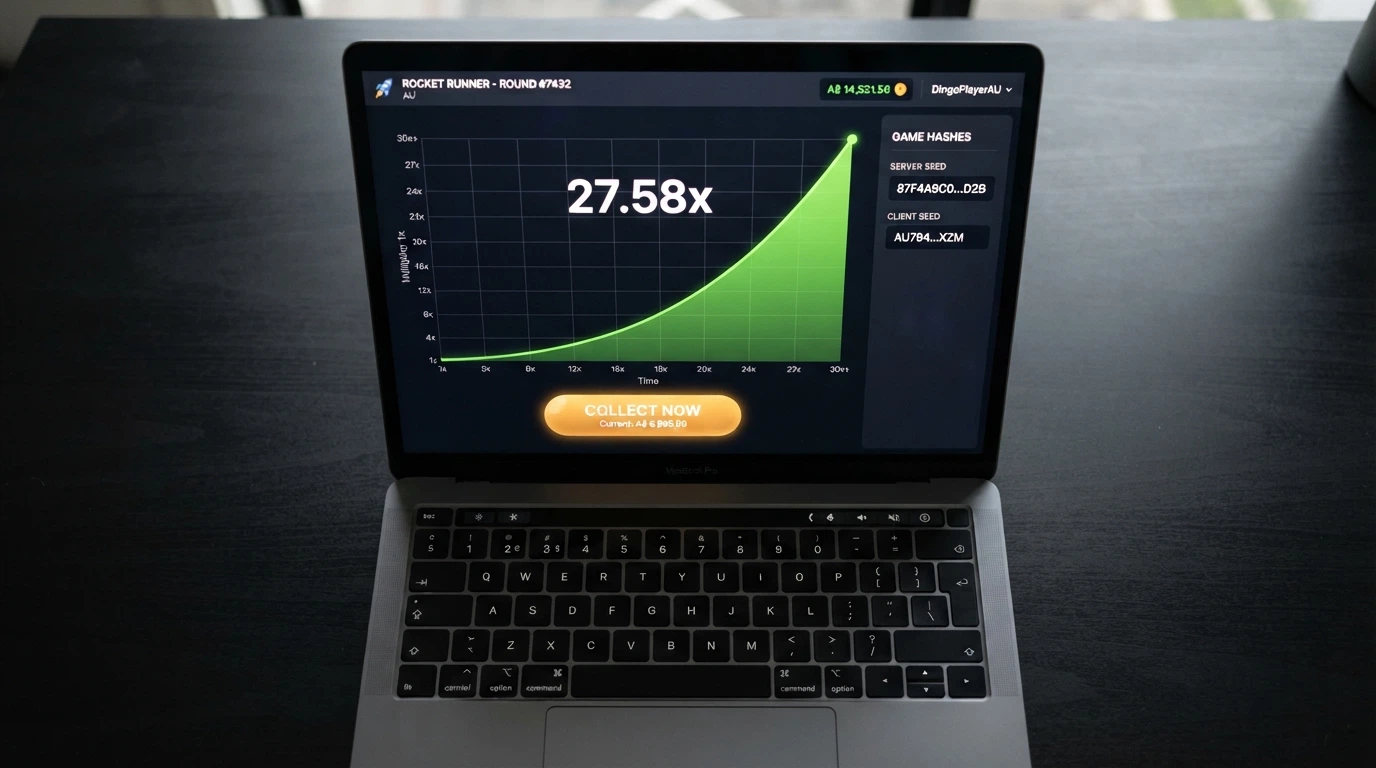
SLM.Games, a Solana-native studio, builds its original games on SHA-256 hashing with a transparent house edge across the catalogue: 1% on Dice, 4% on Wheel segments, with the exact figure displayed at the game. JacksClub’s in-house Crash title runs at 98% RTP with a 2% house edge and a 1,000,000x cap on the multiplier. Moonbet’s Crash is built directly on Solana with VRF-generated outcomes — Verifiable Random Function, a chain-native primitive — verified on-chain after each round, with a 0.1% house edge.
The 1% to 4% house edge range is the structural point. A traditional online pokie runs at a 3-5% house edge, and the player cannot verify any individual round. A provably fair dice game runs at 1% and shows its working for every round. The two numbers are statistical equivalents over millions of rounds; the difference is what the player can confirm. Cloudbet, among the operators in this comparison, runs 13 provably fair titles in its library, which is the cleanest count of any operator featured here.
Solana-Native Games and the Providers Behind Them
The studios building directly on Solana sit in two clusters. The first is the BGaming tier — established providers who have integrated Solana as one of several payment rails alongside fiat and other cryptocurrencies. BGaming’s MGA B2B licence and 3,000+ casino distribution give it the broadest reach of any studio in the comparison. Pragmatic Play sits in the same tier.
The second cluster is the Solana-native tier — studios whose games run on-chain, whose house edges are displayed in the game interface, and whose verification is published round by round. SLM.Games, JacksClub, and Moonbet all sit here. The on-chain verification is the structural innovation; the games themselves are recognisable — dice, crash, wheel, coinflip — and the player experience is familiar.
A player who values verification above game variety should weight the Solana-native tier. A player who values game variety above verification will find more depth in the BGaming tier. The two are not mutually exclusive — most operators carry both — but the centre of gravity of each casino’s library differs. Pragmatic Play and Evolution handle the live dealer presence across the featured set, and the live dealer games do not carry provably fair verification because they are hosted by a human dealer rather than computed from a seed.
Australia’s Online Casino Prohibition — What the Law Means for Your SOL
The Australian prohibition is the structural frame for the entire page. The Interactive Gambling Act 2001 prohibits the supply of online casino games, online pokies and in-play sports betting to anyone physically in Australia. There is no licence for these products anywhere in the country — not federally, not in any state or territory. A page that promises an Australian-licensed Solana casino is describing something that does not exist.
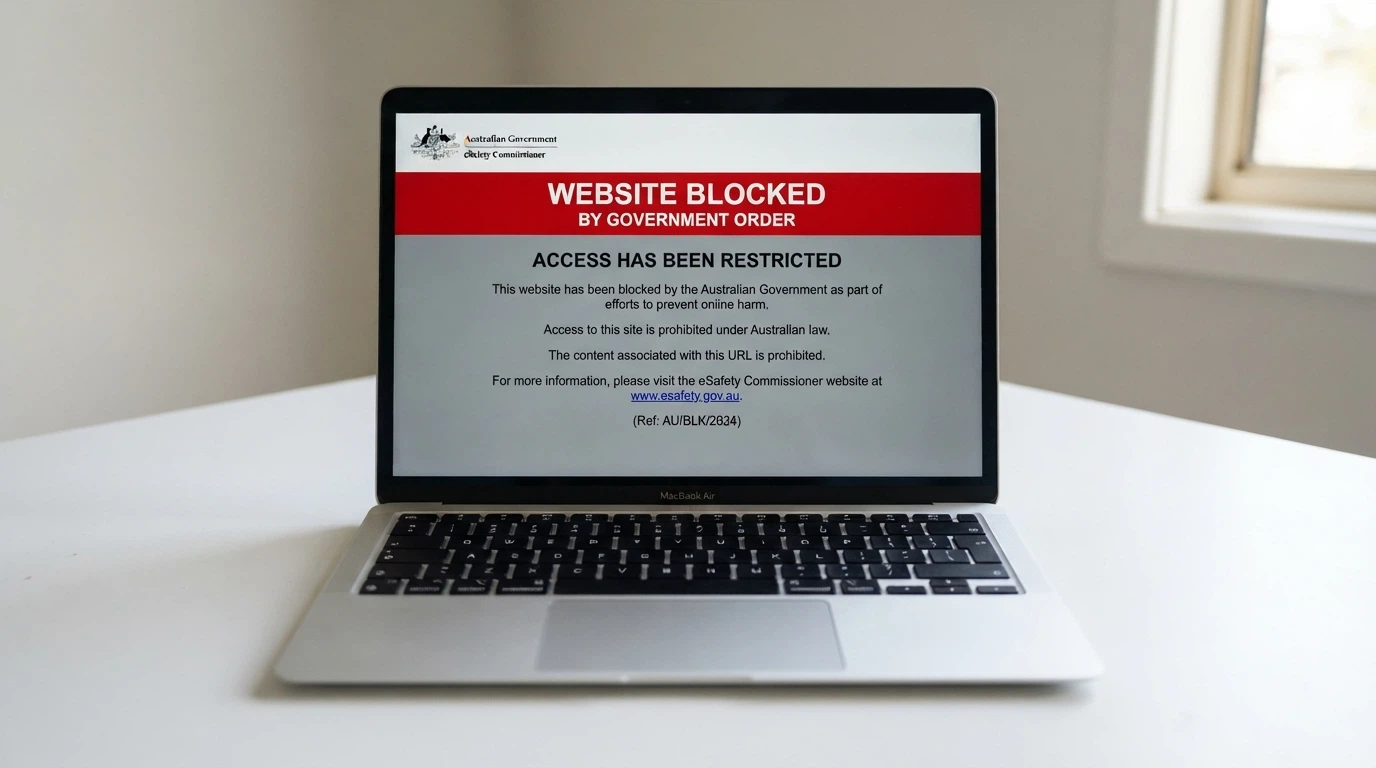
The 2017 amendments to the IGA closed the offshore loopholes operators once relied on. The ACMA gained formal enforcement powers, including the authority to direct Australian internet service providers to block illegal gambling sites at the network level. Since the first blocking request in November 2019, the ACMA has had 1,564 illegal gambling and affiliate websites blocked, and more than 225 illegal services have voluntarily withdrawn from the Australian market.
The 2024 amendments added the payments layer. From 11 June 2024, under the Interactive Gambling Amendment (Credit and Other Measures) Act 2023, credit cards, credit-related products and digital currency are banned as payment for online wagering. It is a criminal offence for an operator to offer crypto gambling to Australian residents, and the penalty for breach is up to $247,500. An Australian player who is offered a SOL deposit address by any casino is being served by an operator outside the Australian rules.
The Interactive Gambling Act and What It Actually Bans
The Act prohibits online casino games, online pokies and in-play sports betting. Wagering on races and sport placed before the event begins is licensed, as are lotteries and keno. The Northern Territory Racing and Wagering Commission — Licensing NT — is the de facto national wagering licensor, and state and territory regulators handle the land-based casino licences (Crown Melbourne, The Star Sydney). The minimum age across the country is 18.
The Act targets the provider, not the player. Australians who place bets on offshore sites are not prosecuted. The enforcement focus is on the operator side: blocking the site, fining the operator where jurisdiction permits, and removing the affiliate infrastructure that drives traffic to the illegal service. The 1,564 blocked sites and 225 withdrawn services are the visible product of that focus.
What is legal matters for the comparison. A licensed Australian wagering operator can take debit card, bank transfer, PayID/Osko and BPAY — and must verify the customer’s identity before accepting a deposit. An unlicensed Solana casino cannot do any of these things in Australia, because it is not licensed in Australia. The deposit routes the comparison above describes — crypto to an offshore address — exist because the operator chose the offshore route; the alternative route is not available to it.
What Offshore Licences Do (and Don’t) Give Australian Players
Curaçao and Anjouan are the dominant offshore licensing jurisdictions in the comparison. Curaçao’s sub-licence regime regulates the operator at the corporate level: the operator must hold a corporate entity, maintain segregated player funds, and submit to the Curaçao Gaming Authority’s complaint process. Anjouan’s framework is more permissive, with lower ongoing compliance costs. Both jurisdictions publish licensee lists, and an operator claiming a Curaçao or Anjouan licence can be cross-checked.
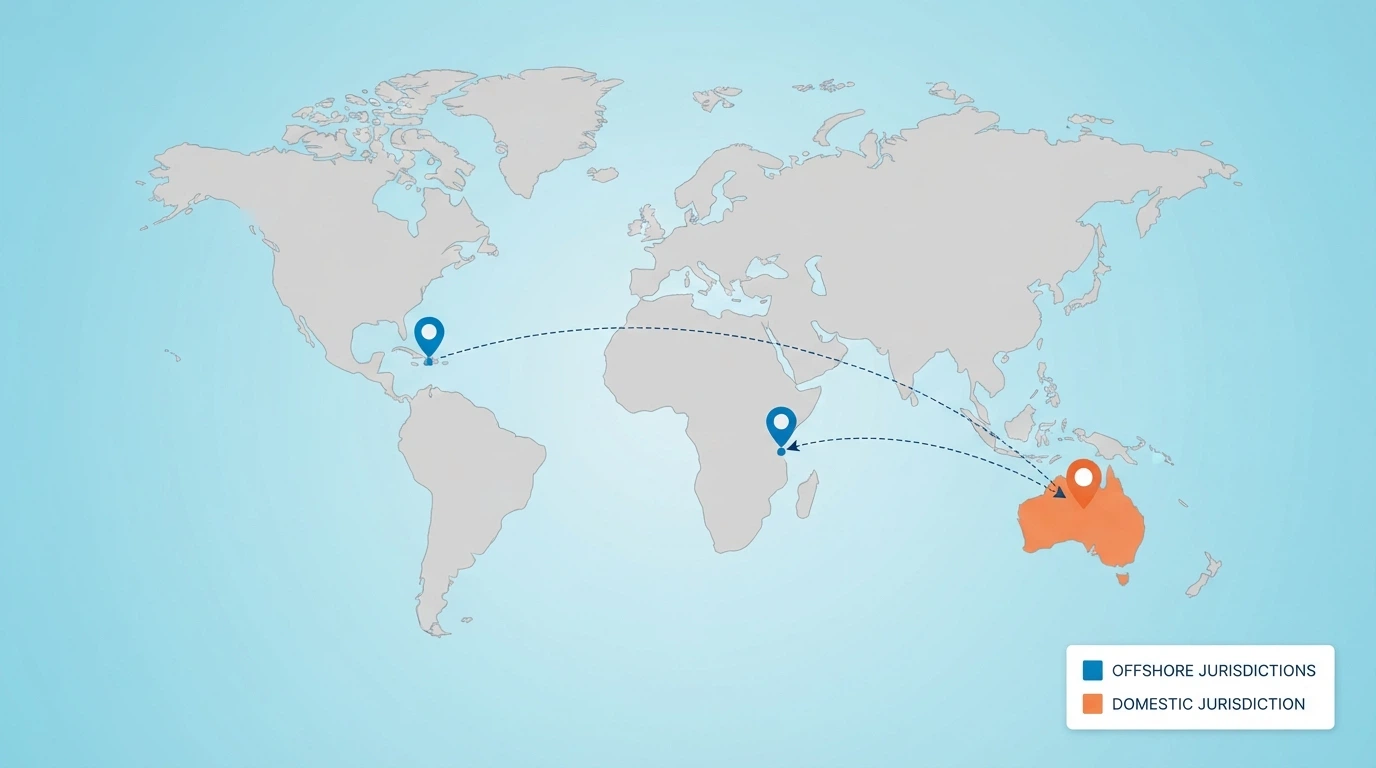
What these licences do not give an Australian player is any standing under Australian law. A Curaçao-licensed operator that refuses a withdrawal cannot be pursued through the ACMA, through a state gambling regulator, or through an Australian court. The Curaçao Gaming Authority has its own complaint process, but the player must invoke it from outside Australia and accept whatever decision the Authority issues. The ACMA’s enforcement tools — blocking orders, civil penalty proceedings — are aimed at the operator, not at the player’s recovery.
The asymmetry is the structural cost of access. An Australian player who deposits SOL with an offshore casino has the same legal standing as a player in any other country where the casino is also unlicensed. The operator’s licence tells the player where the operator is registered and what the operator’s regulator requires of it. It does not tell the player anything about their rights as an Australian.
What You Give Up When a Casino Skips Identity Checks
The no-KYC model is a feature on the marketing pages and a gap in the protections. A casino that requires only an email address at signup has removed the friction of document upload, which is genuinely faster than the verified-signup flow at a licensed Australian operator. The same removal also takes the player outside every protection a verified signup brings.
BetStop is the National Self-Exclusion Register, live since August 2023, and binds Australian-licensed wagering services only. An Australian player who has self-excluded through BetStop can still open an account at a no-KYC offshore casino, deposit SOL, and play without the casino asking whether the same player has registered a self-exclusion. The casino is not connected to BetStop and has no obligation to check. The 67,480 registrations and 41,290 active exclusions recorded as at 31 July 2026 cover licensed wagering, not the offshore set.
The same gap applies to deposit-limit enforcement, to activity statements, and to any complaints body an Australian player might otherwise contact. The operator runs on its own terms, and the player’s recourse if the operator fails to honour those terms is whatever the operator’s own customer support or its licence jurisdiction’s regulator provides. The ACMA’s blocking power is a separate instrument: it can order the site blocked at the ISP level, but the order does not return the player’s balance. The site can vanish with the player’s money on it.
The 2027 Reforms — What Changes in January
The Interactive Gambling Amendment (Gambling Reform) Bill 2026 passed Parliament on 19 August 2026, with most of its measures commencing on 1 January 2027. The reforms extend the existing prohibition into the payment and advertising layers.
The payments layer gives banks and payment providers express authority to block transactions to illegal gambling operators. From 1 January 2027, an Australian bank can refuse a transaction it identifies as bound for an illegal gambling service. For an Australian player funding a Solana casino through a domestic bank account, the new authority means the bank itself becomes a filter. Crypto purchases on a local exchange remain the cleanest route, but the exchange’s own bank rails may face the same filtering obligation. The result for offshore casinos is a narrowing of the practical deposit paths from Australia, even where the legal prohibition remains unchanged.
The advertising layer introduces a series of caps. No more than three wagering advertisements per hour between 6:00 am and 8:30 pm on broadcast media, plus a live-sport blackout from 15 minutes before a live event until five minutes after. Radio advertisements during school drop-off and pick-up windows are barred. Broadcasting sporting odds is banned outright. Online wagering advertisements can only be served to logged-in, age-verified users who have not opted out. No wagering advertisements inside sports venues or on player or official uniforms. Athletes, celebrities and influencers are barred from promoting wagering brands.
The inducement restrictions land on the bonus structure. From 1 January 2027, direct marketing of inducements is prohibited for 14 days after a customer signs up, for three months after a person deregisters from BetStop, and indefinitely for customers identified as at risk. These rules apply to licensed Australian wagering operators. Offshore casinos do not fall under the same restrictions, but the practical effect is to narrow the legitimate marketing channels for wagering in Australia further.
Playing Safely When the Register Cannot Reach Offshore
Australian responsible-gambling infrastructure is built for licensed wagering. BetStop, the National Self-Exclusion Register, covers Australian-licensed online and phone wagering services. The National Gambling Helpline — 1800 858 858 — is a 24/7, free and confidential service staffed around the country. Gambling Help Online runs the chat and email counselling at gamblinghelponline.org.au. The National Debt Helpline on 1800 007 007 handles the financial side. Lifeline on 13 11 14 covers crisis support. These services are the safety net that an Australian player can reach regardless of where the casino is licensed.
The Register That Cannot Reach Offshore
BetStop has recorded 67,480 registrations since launching in August 2023, with 41,290 exclusions still active as at 31 July 2026. Seventy-eight percent of registrants were under 40, and 38% chose lifetime exclusion. The exclusion periods run from a minimum of three months up to a lifetime, and the registration binds every Australian-licensed wagering service the operator runs.
The register does not bind offshore casinos. An Australian player who has registered with BetStop can still open an account at a Solana casino with an email address and deposit SOL. The casino is not connected to the register, the casino has no obligation to check it, and the casino’s own self-exclusion tools are the only mechanism that can stop play on that specific site.
For a player who has self-excluded, the gap between BetStop coverage and offshore access is the single most important fact about the responsible-gambling framework. Self-exclusion through BetStop protects against the licensed route; the offshore route is a separate path that requires separate protection. The casino-level self-exclusion is operator-specific — it stops play at the one casino where it is activated — and the player’s own discipline is the only cross-operator mechanism.
Deposit Limits, Cooling-Off and the Tools You Do Have
The platform-level tools vary across the operators in this comparison. Most offshore casinos offer some combination of deposit caps, session timers, and cooling-off periods at the player’s account settings. The availability and the strength of these tools were not confirmed uniformly during this research pass, but the pattern is that the larger operators in the set — BC.Game, Stake, Cloudbet, BitStarz — all carry some form of each.
The tools an Australian player can use regardless of the casino’s licensing situation sit outside the platform. The National Gambling Helpline on 1800 858 858 is free, confidential and staffed 24 hours a day, seven days a week. Gambling Help Online at gamblinghelponline.org.au runs the same service over chat and email. The National Debt Helpline on 1800 007 007 covers the financial consequences of problem gambling. Lifeline on 13 11 14 covers crisis support more broadly. These services are reachable from Australia, work regardless of where the casino is licensed, and do not require the player to disclose which casino they are using.
For a player who wants to set a hard limit that the casino cannot override, the realistic options are external. A bank-imposed transaction block on gambling-related merchants is one route, though Australian banks have historically been inconsistent in applying this. A pre-committed deposit cap on the exchange that funds the SOL purchases is another — the player can set a weekly purchase limit on the exchange itself, and the casino’s deposit limit is then irrelevant. None of these is as strong as BetStop’s blanket enforcement across licensed wagering; all of them are available without depending on the casino to cooperate.
How Big Is the Harm — The Numbers Worth Knowing
The prevalence data is the concrete beat that turns “responsible gambling” from an abstract warning into a number. The Australian Institute of Health and Welfare put problem gambling at 2.1% of adults in 2022, which is roughly 430,000 people. High-risk gambling sat at 1.8% in the same dataset. These are the figures behind the helpline’s call volume, behind the BetStop registration count, and behind the regulatory architecture that runs from the IGA through to the ACMA’s enforcement.
The demographic split matters. 78% of BetStop registrants were under 40. The youngest adults carry the largest share of the registrations, and the offshore accessibility compounds the risk for that cohort. A 25-year-old Australian with a smartphone and a SOL wallet can reach a no-KYC offshore casino in under five minutes, and BetStop does not see the deposit. The harm prevalence figure is the population-level expression of that access.
The offshore accessibility does not create the harm. The accessibility of any gambling product to a vulnerable person creates the risk, and the licensed market’s protections — BetStop, deposit limits, advertising restrictions, activity statements — exist to narrow that risk for the licensed segment. The offshore segment sits outside those protections, and a player who is in or near the 2.1% should treat the offshore accessibility as a reason to use the external support services, not a reason to use them harder.
How We Selected and Scored Every Casino on This List
The ten operators in the comparison were drawn from the Australian-facing Solana casino coverage that exists in the affiliate and review ecosystem. The selection criteria combined what the major Solana-casino comparison sites had ranked — Casipto’s speed-test rankings, Casinozoid’s deposit guides, CryptoSlate’s payout-speed comparisons, Solcodes’ native-Solana focus, CoinCasinoHub’s per-operator reviews, and the operator pages themselves — with the ACMA’s blocking record and the IGA’s prohibition framework. Operators confirmed to be blocking targets were weighted the same as operators not on the list, because the comparison is about access, not about a recommendation to use any of them.
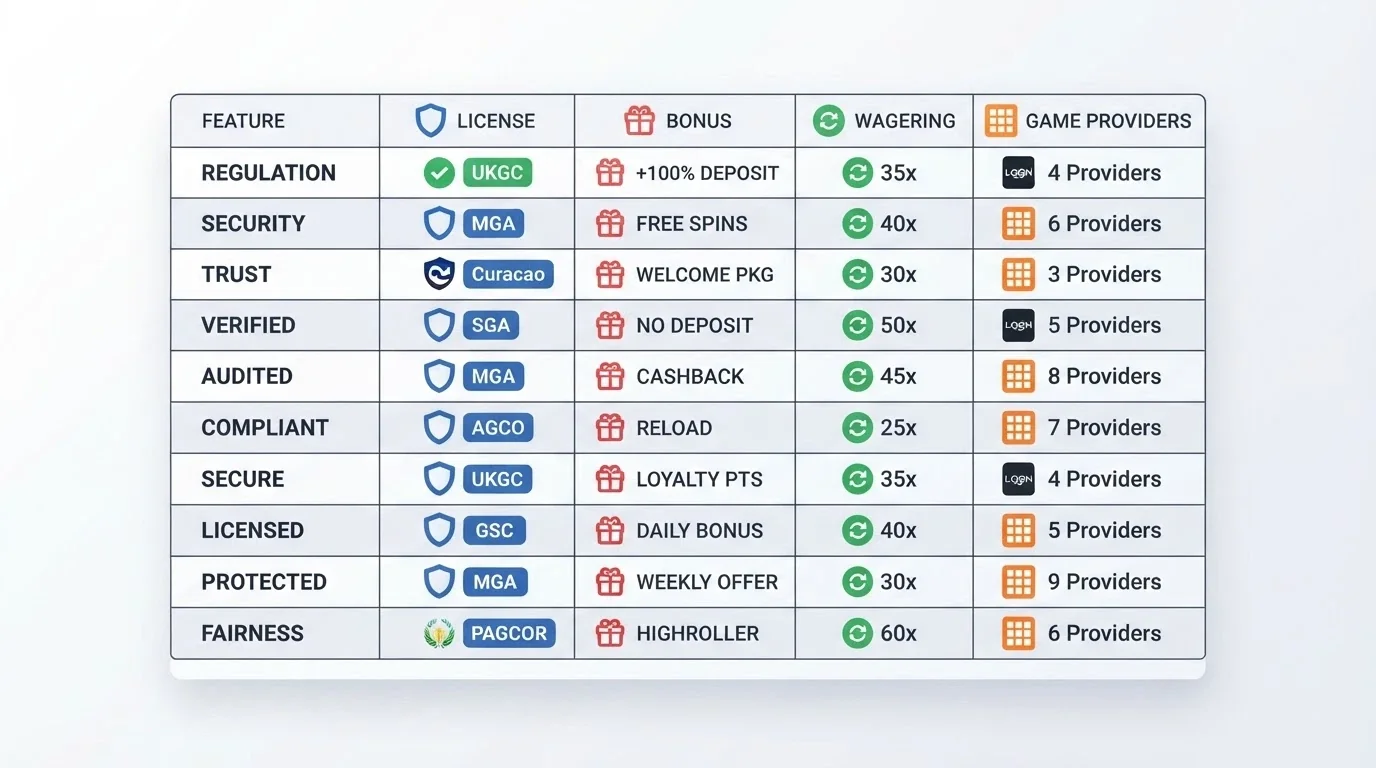
The ranking order is informed by a combination of factors. SOL support is the entry condition, and every operator in the set accepts it. Licence jurisdiction is the trust signal, with Curaçao and Anjouan the named jurisdictions and offshore-only the unnamed tier. Bonus value is read off the headline percentage and the wagering requirement, with the wagering requirement weighted more heavily because it is the harder constraint. Game-provider count is the breadth signal. Withdrawal speed, where tested data exists, is the operational signal. The market-share data for Rocket Play places it in the comparison for completeness, even though its specific bonus terms were not confirmed this pass.
No invented weighting sits behind this. The five criteria are stated in the methodology section above, and the comparison rows reflect what each operator publishes about itself and what tested data confirms. Where a field is empty in the table, the value is not known this run — not guessed.
Your SOL, Your Risk, Your Call — What This Comparison Actually Means
The comparison above surfaces real differences. BC.Game’s 380% package, Cloudbet’s zero-wagering structure, Stake’s instant rakeback, TrustDice’s deposit-free starter, Vave’s 7,000-game library, Betpanda’s no-KYC onboarding — these are not interchangeable products, and a player who reads the table carefully will land on a different operator depending on whether they prioritise bonus value, rollover fairness, game depth or anonymity. The differences are real and the comparison is useful for that reason.
What the comparison cannot surface is the structural cost that applies to every operator in the set. None is licensed in Australia. None has any obligation under Australian consumer law. None is connected to BetStop. None is reachable through an Australian complaints body. The ACMA can block any of them at the ISP level, and the ACMA has done so at scale. From 1 January 2027, Australian banks and payment providers gain express authority to block transactions to illegal gambling operators, and the practical deposit paths from Australia narrow further. The crypto payment ban from 11 June 2024 already makes every SOL deposit an offence for the operator on the receiving end, even if the player is not the one being prosecuted.
The reader’s course of action runs through what the comparison cannot change. Treat every SOL deposit as money that may not come back. Use the smallest viable amount rather than the largest the welcome bonus rewards. Read the bonus terms page at the cashier before claiming, not after. Set a deposit limit on the exchange that funds the SOL purchases, where the casino’s own limit does not reach. Use the external support services — 1800 858 858, gamblinghelponline.org.au, 1800 007 007 — the moment play stops being recreational. The comparison helps a reader pick between ten offshore products; the structural risk is the same across all of them, and the comparison does not make it smaller.
Frequently Asked Questions
Are Solana casino withdrawals really faster than Bitcoin or bank transfers?
Yes, by a wide margin. SOL withdrawals average 43 seconds across 15 platforms tested in January 2026. Bitcoin transactions settle in roughly ten minutes, and an international wire transfer takes 2 to 5 business days. The gap is the entire reason Solana deposits have become the default for offshore casino players in Australia.
What happens if an offshore Solana casino blocks my withdrawal?
Nothing Australian can force payment. The operator is licensed in Curaçao or Anjouan, both outside Australian jurisdiction, and the ACMA cannot compel a payout. Your bank cannot reverse a crypto transaction. Australian consumer law does not apply to an offshore service. The ACMA can also add the site to its blocking list while your balance remains inside it.
Are gambling winnings from Solana casinos taxable in Australia?
No, not for casual players. Gambling winnings are not assessable income under section 6-5 of the ITAA 1997, and losses are not deductible under section 8-1. The Australian Taxation Office treats occasional gambling as a non-commercial activity, though a gambling operation that meets the IT 2655 criteria for carrying on a business would change that calculus.
How do I know if a Solana casino is provably fair?
Every round on a verified provably fair title publishes a hash generated from a client seed, a server seed and a nonce. After the round ends, you can verify that hash against the result, which proves the operator could not have changed the outcome. Reputable operators expose a verification page where any past round can be checked.
Can I use BetStop to self-exclude from Solana casinos?
No. BetStop, the National Self-Exclusion Register, binds Australian-licensed wagering services only. Offshore casinos are not connected to the register and will keep accepting deposits and play from a self-excluded Australian. You must use each operator’s own self-exclusion tool, and apply Australian harm-minimisation support separately.
Do Solana casinos require KYC verification for Australian players?
Most do not, at least not at signup. The typical Solana casino requires only an email address before the first deposit, and many add verification only when a withdrawal crosses an internal threshold. The same anonymity that makes signup fast also removes every protection a licensed Australian wagering service must provide, including BetStop coverage and activity statements.