
Fast Withdrawals at Australian-Facing Online Casinos: What Actually Happens After You Hit Cash Out
“Instant” is the most elastic word in online casino marketing, and the gap between the word and the cash arriving in your bank account is what this whole page is about. Every casino an Australian can actually use sits offshore, so the speed question is not “which site pays fastest” but “which payment rail turns the casino’s release into your money in the fewest minutes, and which casino holds your withdrawal the longest before releasing it at all”. The fastest legal fiat transfer in Australia is the New Payments Platform — PayID uses it and arrives in under five minutes once the casino approves. Crypto on a Bitcoin wallet settles in five to thirty minutes. E-wallets like MiFinity take an hour or two. A bank transfer, the option most readers default to, can stretch to seven business days, and at one operator on this page, fifteen. The page below ranks ten offshore casinos on those rails, names the conditions that turn a fast payout into a slow one, and lays out what the offshore status and the 2026 reform mean for anyone using them.
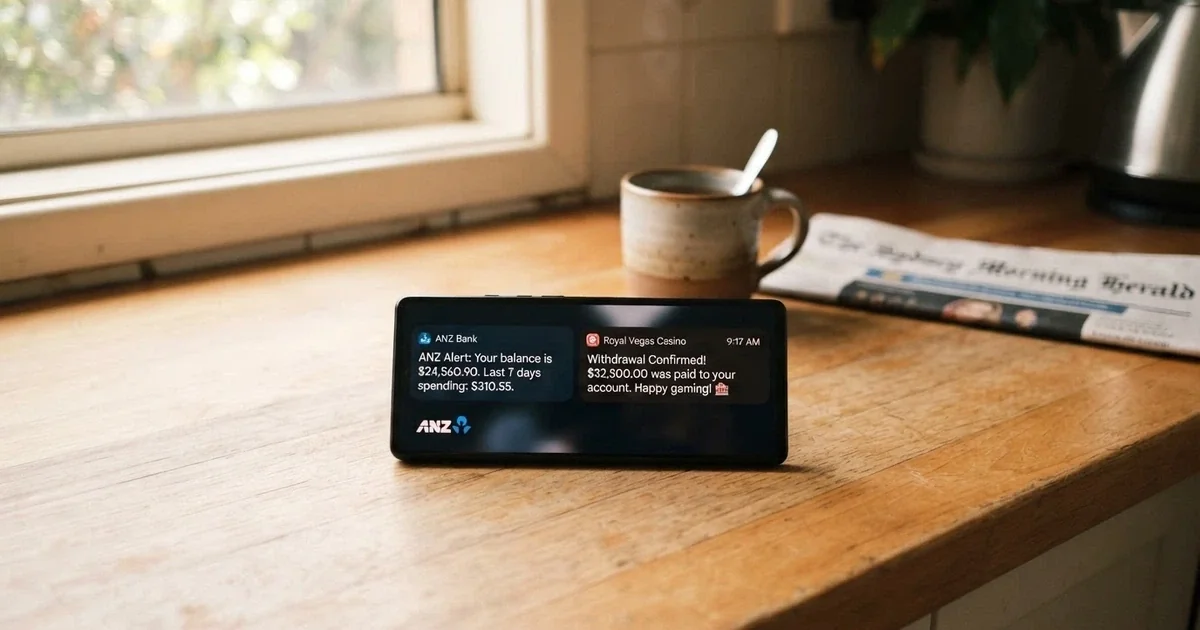
Currency stamp: data current as of 11 November 2026; licence and ACMA enforcement claims verified against the ACMA register and the Australian Communications and Media Authority’s published blocking records.
Table of Contents
- What “Instant Withdrawal” Actually Means at an Australian Online Casino in 2026
- The Fastest-Paying Offshore Casinos for Australian Players — Ranked
- The Hidden Conditions Behind No-Deposit Cashouts at Australian-Facing Casinos
- No-KYC Casinos Promise Friction-Free Payouts — Here Is What They Do Not Tell You
- PayID, Crypto or E-Wallet — Which Withdrawal Method Puts Your Dollar in Hand Fastest
- Bitcoin Casinos and the Australian Payment Ban — Crypto Speed Meets a Legal Wall
- Pokies and Slots That Pay Out Fast — What the Provider Actually Means for Your Withdrawal
- The Offshore Reality — Australian Law and the Casinos That Operate Outside It
- Staying in Control When the Withdrawal Button Moves Faster Than Your Limits
- How We Evaluated and Ranked These Instant Withdrawal Casinos
- What Australian Players Should Actually Do About Fast Payouts in 2026
- Frequently Asked Questions
What “Instant Withdrawal” Actually Means at an Australian Online Casino in 2026
The word “instant” lives in three places at an online casino, and only one of them is the payment rail. First, the casino’s internal pending period, which most operators run from a few hours to two days and which sits before any money moves. Second, the payment rail itself — the network that carries the funds once the casino releases them. Third, any bank-side processing after the rail delivers. Of those three, the casino’s pending period is the variable that moves the most, and on most withdrawals it moves the slowest. A PayID payout the casino releases at 11 am on a Tuesday lands before lunch; the same payout the casino holds until Friday afternoon is a weekend-old promise by the time it goes anywhere.
PayID is the fastest fiat route. It runs on the New Payments Platform, and NPP transfers settle between Australian banks in under sixty seconds. Layer in the casino’s approval step and PayID deposits arrive in your account in under five minutes. Crypto is in the same minute range: Bitcoin, Ethereum and USDT settle on-chain in five to thirty minutes once the operator releases them. E-wallets like MiFinity and Skrill run one to two hours from release to wallet. A bank transfer, the default for most readers, runs one to three business days. Cards sit at three to five. The hierarchy is clean; the gap between the top and the bottom is hours versus days, and the gap between the top two rails is barely measurable.
KYC — the verification step where the casino checks your identity — is what shifts a five-minute PayID payout into a forty-eight-hour wait. Incomplete verification is the single most common cause of withdrawal delay at fast-payout casinos, and it is the reason a “no verification” pitch deserves more scepticism than it gets.
How the Withdrawal Pipeline Works — Approval, Processing and Transfer
Every payout at every casino on this page travels the same three-stage road, and the time each stage takes depends on a different actor. Stage one is the casino’s pending period: the gap between you hitting withdraw and the operator’s payments team actually picking up the request. At fast-payout operators this is minutes to hours; at slower operators it stretches into the next business day. Stage two is the operator’s internal processing — KYC review if it has not been completed, fraud checks, bonus-wagering verification, source-of-funds checks at higher amounts. Stage three is the payment rail itself — PayID, crypto, e-wallet, bank transfer, card.
The hold-up lives in stage one and stage two, not stage three. A PayID transfer, once released, is genuinely under five minutes. A Bitcoin transfer, once released, is five to thirty minutes. Those numbers are settled by the rails, not by the casino. What changes from operator to operator is how long the casino sits on the request before releasing it. The site that publishes a zero-hour pending window and the site that publishes a forty-eight-hour pending window can both call their payout “instant” — and only one of them has earned the word.
KYC is the bottleneck that turns a fast rail into a slow payout. A first withdrawal at any offshore casino will, in practice, trigger a verification check even if the casino advertised no upfront KYC at sign-up. The documents the casino asks for are routine — a photo ID, a proof of address, sometimes a payment-method screenshot — but the review takes time, and the review queue at a busy operator is longer than the review queue at a quiet one. The reader who has those documents scanned and ready before requesting a withdrawal removes the queue from their own timeline.
The Australian Instant-Withdrawal Landscape — Offshore, Unlicensed and High-Traffic
There is no such thing as an Australian-licensed online casino. Online casino, online pokies and in-play betting are prohibited under the Interactive Gambling Act 2001, and the prohibition is enforced on the provider, not the player. No state or territory issues an online casino licence because the federal law does not permit one. The ACMA, the Australian Communications and Media Authority, has had 1,788 illegal gambling and affiliate websites blocked by Australian ISPs as of August 2026, and over 230 services have withdrawn from the Australian market since 2017.
Every casino on this page is therefore an offshore brand — a Curaçao-licensed operator with significant Australian traffic but no Australian licence, because none exists. They are legal to access from inside Australia in the practical sense that the IGA’s enforcement targets the provider, not the punter; they are not licensed to operate here, and the consumer-protection gap that follows from that is real. The licensed Australian wagering operators — Sportsbet, bet365, Ladbrokes, TAB, PointsBet and the rest — are bookmakers. They take bets on races and sport before the event starts. They do not run online casinos or pokies. If a site offers slots, table games or live dealer, it is offshore.
The 2026 reform, which passed Parliament on 19 August 2026 and commences on 1 January 2027, gives Australian banks and payment providers legal backing to restrict payments to illegal gambling sites. That authority does not close offshore casinos — they operate in currencies and rails the banks cannot always reach — but it does narrow the on-ramps. The casinos that survive it will be the ones whose payment methods are already outside the Australian banking perimeter, and that is part of why crypto and MiFinity dominate the speed ranking on this page.
The Fastest-Paying Offshore Casinos for Australian Players — Ranked
The ten operators below are ranked by withdrawal method coverage and speed where research confirms it, and by what is publicly known about each brand where it does not. Every one of them holds a Curaçao licence and a significant Australian traffic base. None of them is connected to BetStop, because BetStop covers approximately 150 licensed Australian wagering providers and offshore casinos are not licensed. The legal reality runs through every write-up below: each operator is offshore, each is illegal to provide to Australians under the IGA, and each is one ACMA blocking action away from becoming unreachable with a balance still on it.

| Operator | Curaçao Licence | BetStop Coverage |
|---|---|---|
| RocketPlay | Yes | No |
| SkyCrown | Yes | No |
| Royal Reels | Yes | No |
| FairGO | Yes (CGA) | No |
| Stake | Yes | No |
| WinSpirit | Yes | No |
| Rainbet | Yes | No |
| Scream Casino | Yes | No |
| Bizzo Casino | Yes | No |
| Rocket Casino | Yes | No |
RocketPlay — Crypto and MiFinity Instant, A$2,000 Welcome Package
RocketPlay runs the broadest instant-withdrawal method mix in this set. Crypto — Bitcoin, Ethereum, Litecoin, Dogecoin, Bitcoin Cash and USDT — processes instantly. MiFinity processes instantly. A bank transfer takes three to seven business days, which is the slow end of the rail but still inside the range where a player can plan around it. The minimum withdrawal via MiFinity is A$30, and crypto minimums vary by coin. Welcome package is up to A$2,000 plus 100 free spins across two deposits: first deposit 100% up to A$1,000 plus 100 free spins on a A$30 minimum; second deposit 200% up to A$1,000 on a A$75 minimum. Wagering sits at x30 to x40 on bonus funds and free spin winnings, which is ordinary for this market rather than punishing.
RocketPlay suits the player who already holds crypto or has set up a MiFinity wallet and who wants the option to move money in and out without touching a bank. The pending window is short enough that a PayID or e-wallet payout from a verified account lands inside a working day. A bank-transfer player is the slowest service on this operator.
SkyCrown — Five-Deposit Package, PayID Same-Day and Crypto Instant
SkyCrown carries the highest-volume welcome package in the set: up to A$8,000 plus 400 free spins across five deposits, with the first deposit running 120% up to A$1,200 plus 125 free spins on a A$30 minimum, all at 40x wagering. Crypto processes instantly, PayID settles same-day, MiFinity takes 24 to 48 hours, and card withdrawals run three to five business days. The withdrawal limits are published as A$5,000 daily, A$10,000 weekly and A$15,000 monthly, with a A$30 minimum. A separate no-deposit “Meet & Spin” promo runs 20 free spins on Aztec Clusters (BGaming) at 25x wagering for profile completion, with a A$300 max win on those spins.
SkyCrown suits the player with a larger bankroll who wants both PayID and crypto as withdrawal options and who can use the multi-deposit welcome structure rather than a single-bonus sign-up. The published limits are conservative enough that a high-volume player will hit the ceiling before they hit the end of the offer; the low-volume player is comfortably inside them.
Royal Reels — A$9,000 Daily Withdrawal Cap With No Win Limit
Royal Reels is the operator in this set with the highest single-day withdrawal ceiling among those with confirmed data: A$9,000 per day, with no win cap applied to winnings. The brand is a Curaçao-licensed offshore operator with Australian traffic, but the bulk of its specific bonus and method terms were not confirmed in this research pass, so the operator write-up sits on what is published — the daily limit, the no-win-limit, the offshore status, the lack of an Australian licence — rather than on specifics that the research did not turn up. A player comparing withdrawal ceilings should treat Royal Reels as the high end of the range and should verify the rest of the terms before depositing.
FairGO — Bitcoin in 15–45 Minutes, Curaçao CGA Licence
FairGO is the longest-established brand in this set and the one with the fastest confirmed Bitcoin window. Bitcoin withdrawals process in 15 to 45 minutes during business hours. Bank transfer, by contrast, takes up to 15 business days, which is the slowest confirmed rail on this page. The pending period runs up to 48 hours. Minimum withdrawal is A$100, and the weekly limit is A$7,500, though some sources report A$2,500. The licence is Curaçao CGA. A no-deposit 20 free spins offer on Elemental Adventures runs with a A$180 max cashout, which is tighter than SkyCrown’s A$300 cap and signals the kind of low-value, high-conditions promo the offshore market tends to use as a sign-up lure.
FairGO suits the crypto-first player with patience for a longer pending window. A bank-transfer player at FairGO is choosing the slowest rail on this page against the longest pending window — a combination that turns a one-day payout into a multi-week one.
Stake — Crypto-Native Platform With No Welcome Bonus
Stake is an offshore Curaçao casino with significant Australian traffic and a crypto-native platform. The brand’s public positioning — community-driven, sports-and-casino under one roof, original games alongside third-party studios — is widely known. What is not confirmed in this research pass is the current welcome bonus structure or the exact withdrawal-method list as it applies to Australian players. The honest position is that Stake is a major crypto-first brand with the traffic to justify its ranking, that its welcome offers have historically been lean compared to the multi-thousand-dollar packages at the multi-deposit operators above, and that the specifics of any current offer should be checked on the operator’s own terms page before a deposit is made. Stake is a credible choice for a player who knows the brand already and is choosing on track record rather than on bonus size.
WinSpirit — Offshore Operator With Australian Traffic
WinSpirit is a Curaçao-licensed brand serving Australian customers. Specific welcome bonus, withdrawal-method and limit detail were not confirmed in this research pass, so the operator write-up sits on what is publicly known: the offshore status, the Curaçao licence, the absence of an Australian licence, the absence of BetStop coverage. A player evaluating WinSpirit should treat the operator write-up as a position in the ranking — a real brand with real Australian traffic — and should check the current terms on the operator’s payments and bonus pages before committing. The ranking reflects the operator’s place in the Australian-facing market, not a verdict on terms that the research did not confirm.
Rainbet — Offshore Operator With Australian Traffic
Rainbet is a Curaçao-licensed brand serving Australian customers. As with WinSpirit, specific welcome bonus, withdrawal-method and limit detail were not confirmed in this research pass. The operator’s place in the ranking reflects its position in the Australian-facing offshore market rather than terms the research could verify. Rainbet is one of several operators in this set whose ranking is built on presence and traffic rather than on confirmed payout specifics, and the reader should confirm the current terms on the operator’s own pages before treating the ranking as a comparison of withdrawal speed.
Scream Casino — Offshore Operator With Australian Traffic
Scream Casino is an offshore Curaçao casino catering to Australian players. Specific welcome bonus, withdrawal-method and limit data were not independently verified in our research. The operator’s slot-heavy positioning and brand profile are publicly visible, but the research did not pin down the payout-method list, the pending window, or the bonus terms that would let a withdrawal-speed ranking be honest. Scream Casino’s place in the ranking reflects its position in the Australian-facing offshore market; a player comparing specifics should check the operator’s own payments and terms pages before making a deposit.
Bizzo Casino — Offshore Operator With Australian Traffic
Bizzo Casino is an offshore Curaçao casino serving the Australian market. Specific welcome bonus, withdrawal-method and limit data were not independently verified in our research. The operator is established enough to hold a consistent place in the Australian-facing affiliate rankings, and the brand profile is publicly visible, but the terms that would let this write-up rank it on withdrawal speed were not turned up in the research. Bizzo Casino is positioned in the ranking on presence and traffic, and a reader should verify the current withdrawal terms on the operator’s own pages before treating the ranking as a like-for-like comparison.
Rocket Casino — Offshore Operator With Australian Traffic
Rocket Casino is an offshore Curaçao casino that holds Australian traffic. Specific welcome bonus, withdrawal-method and limit detail were not confirmed in this research pass. Like the operators above it, the ranking reflects its position in the Australian-facing offshore market rather than confirmed payout specifics. A player evaluating Rocket Casino on withdrawal speed should check the operator’s own payments and terms pages for the current method list, pending window and withdrawal limits before committing.
The Hidden Conditions Behind No-Deposit Cashouts at Australian-Facing Casinos
“No deposit instant withdrawal” sounds like the cleanest possible offer: free money, cashable immediately, no strings. The reality at offshore casinos is closer to a three-stage filter that most players do not see until they have already tried to cash out. A no-deposit bonus at this kind of operator is typically a small credit — 20 free spins, a A$10 chip — attached to a wagering requirement that turns the credit into hundreds in turnover before any of it becomes withdrawable, and a max-cashout cap that limits how much of the resulting winnings can ever leave the site. The combination is not a scam; it is a promotional mechanic, and the player who understands the mechanics gets more out of it than the player who treats “no deposit” as “free cash”.

The wagering requirement is the first gate. A 25x playthrough on a A$5 free-spin win is A$125 in turnover; a 60x playthrough on the same win is A$300. At a slot with a 96% return, that turnover costs roughly A$5 to A$12 in expected value before it completes — a real cost, even though the player never deposited. The max-cashout cap is the second gate: a A$300 max win means that even if the player turns the A$5 free spin into A$400 through a lucky streak, only A$300 of it is withdrawable, and the rest is voided at cashout. The third gate is the verification step itself, which triggers on the first withdrawal regardless of whether a deposit was made.
No-Deposit Bonuses That Actually Exist at the Featured Casinos
Two of the featured operators run confirmed no-deposit offers. SkyCrown’s “Meet & Spin” promo gives 20 free spins on Aztec Clusters (BGaming) at 25x wagering on completion of the player profile, with a A$300 max win on the free spins. FairGO runs 20 free spins on Elemental Adventures with a A$180 max cashout. The SkyCrown cap is twice the FairGO cap, and the SkyCrown wagering is lower than the 60x to 70x that some offshore casinos apply to free-spin winnings. The two offers are small in absolute terms and large in turnover terms: a 25x playthrough on the SkyCrown free-spin win means that whatever the player wins from the 20 spins has to be wagered 25 times before any of it becomes withdrawable cash, and the A$300 max-win cap is the ceiling the playthrough is clearing against.
Why the Wagering Requirement Decides Whether a No-Deposit Bonus Is Worth Claiming
The math behind a no-deposit bonus is brutal. A 25x wagering multiple applied to a A$5 free-spin win asks for A$125 in turnover. A 60x multiple applied to the same win asks for A$300. Some operators apply 60x to 70x to free-spin winnings specifically, on the theory that free-spin money is more bonus-like than deposit-bonus money and should carry a heavier playthrough. At ordinary slot RTP — around 96% — the expected loss on A$125 of turnover is roughly A$5, and the expected loss on A$300 of turnover is roughly A$12. That is the cost of clearing the bonus, and it sits on top of any max-cashout cap that limits how much of the post-turnover balance is actually withdrawable.
A max-cashout cap of A$500 means that even a player who beats the wagering requirement and grows the bonus into a four-figure balance keeps only A$500 of it. The combination — high wagering plus low cap — is the standard shape of an offshore no-deposit offer, and it is why “no deposit instant withdrawal” is closer to “no deposit, conditional withdrawal” in practice. The reader who treats the wagering multiple as the deciding number — not the headline “A$300 max win” — is the reader who knows what the offer is worth.
No-KYC Casinos Promise Friction-Free Payouts — Here Is What They Do Not Tell You
“No verification” is the second marketing word on this page that the reader should treat with care. The pitch is that the player deposits, plays, and cashes out without ever sending a passport scan. The reality is that “no verification” at an offshore casino usually means “no upfront KYC at sign-up”, not “no KYC at any point”. A first withdrawal at any offshore operator — no-KYC-pitch or not — will, in practice, trigger an identity check. The documents are routine: a photo ID, a proof of address, sometimes a payment-method screenshot. The review takes time, and the review queue is longer at a busy operator.
The other half of the pitch is what the player gives up. Verification at a licensed Australian operator exists for a reason: it ties the player’s identity to a complaints body, a self-exclusion register, and a regulator that can compel the operator to pay a legitimate withdrawal. At an offshore casino, the player has none of those. If the operator declines a withdrawal, voids a win, or closes the account, the player has no Australian complaints body to escalate to and no BetStop coverage. The speed the player gains from skipping the upfront check is real; the protections the player loses by being on an unlicensed site are also real, and they sit on the same page.
What “No Verification” Actually Means at an Offshore Casino
“Delayed verification” is the more accurate phrase. The casino collects deposits and play history without checking the player’s identity at sign-up, and runs the verification check at the first withdrawal — or at a threshold like a cumulative withdrawal amount. The documents requested are standard: a government-issued photo ID, a recent utility bill or bank statement for proof of address, sometimes a screenshot of the payment method used to deposit. The review is run by the operator’s payments or compliance team, and the queue time depends on the operator’s volume and staffing.
The player who has those documents scanned and ready before requesting the first withdrawal is the player who turns “delayed verification” into the closest thing this market offers to instant payout. The player who has not prepared them is the player who finds the pending window stretch into days while the documents are produced and re-produced.
KYC as the Real Bottleneck — Why Verification Delays Your Withdrawal More Than the Payment Rail
The payment rail is fast. PayID is under five minutes once released. Crypto is five to thirty minutes. The rail itself is rarely the bottleneck; the casino’s internal processing is. FairGO publishes a pending window of up to 48 hours; most of the featured operators run shorter windows, but none of them publish zero. The pending window is where KYC review happens, and the KYC queue is where a first withdrawal slows down. Incomplete KYC is the number one cause of withdrawal delay at fast-payout casinos.
The reader who treats KYC as preparation rather than as friction is the reader who moves through the queue fastest. The documents scanned and uploaded before the first withdrawal request; the payment-method screenshot ready to attach; the proof-of-address file in the right format and under the file-size limit. None of this changes the review time, but it removes the back-and-forth between the player and the compliance team that turns a one-day review into a three-day one.
PayID, Crypto or E-Wallet — Which Withdrawal Method Puts Your Dollar in Hand Fastest
| Withdrawal Method | Typical Speed | Which Featured Operators Offer It | Notes |
|---|---|---|---|
| PayID | Under 5 minutes once approved | SkyCrown (same day) | Runs on the NPP rail; under-60-second bank-to-bank settlement once released |
| Crypto (BTC, ETH, USDT, etc.) | 5–30 minutes | RocketPlay (instant), SkyCrown (instant), FairGO (15–45 min BTC) | Operator approval still applies; on-chain settlement once released |
| eWallets (MiFinity, Skrill) | 1–2 hours; up to 24–48 hours at some operators | RocketPlay (instant MiFinity), SkyCrown (24–48 hours MiFinity) | Speed depends heavily on operator approval |
| Card (Visa, Mastercard) | 3–5 business days | SkyCrown | Slowest of the in-house methods; some operators decline card withdrawals entirely |
| Bank transfer | 1–15 business days | RocketPlay (3–7 days), FairGO (up to 15 days) | Default for most players; by far the slowest rail on this page |
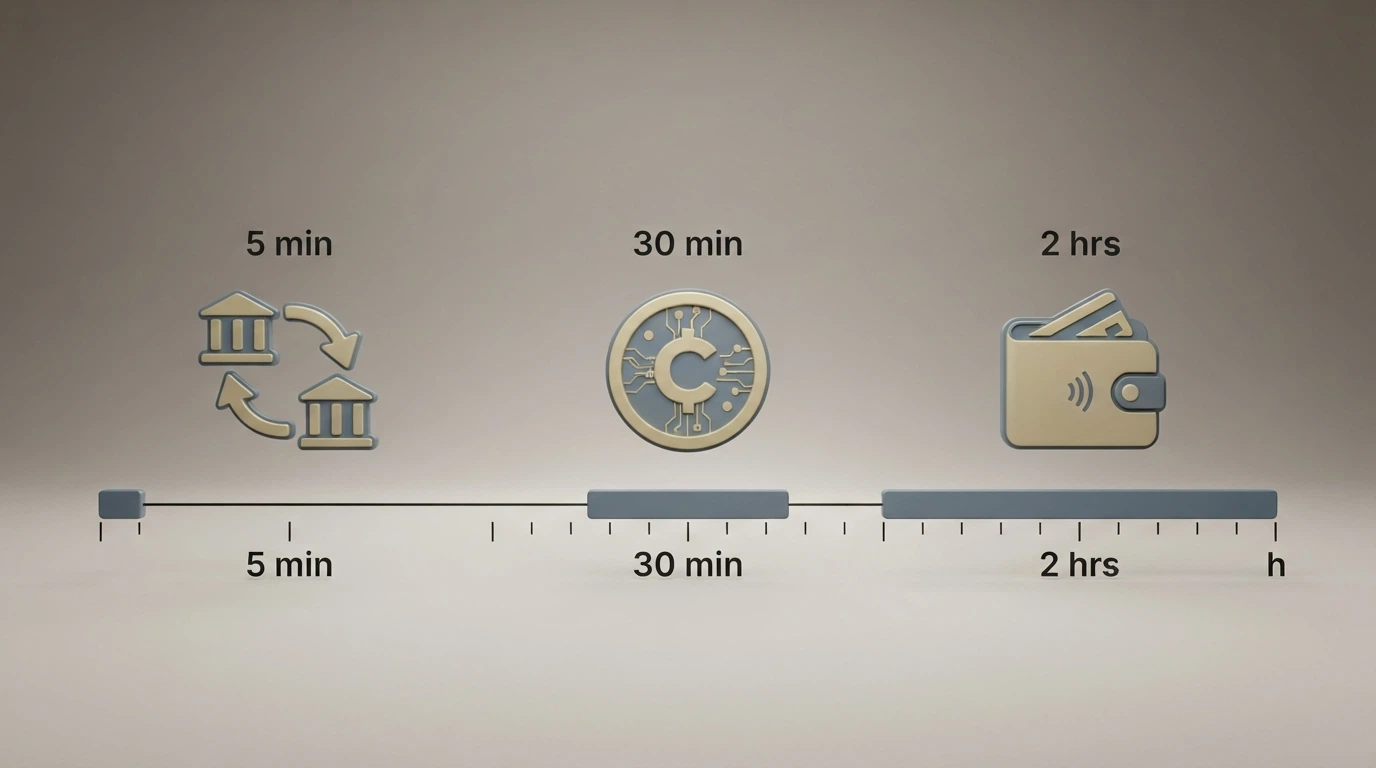
The ranking above holds across the featured operators with one consistent gap: PayID and crypto are tied at the top, e-wallets sit an hour or two behind, and bank transfer and card trail by days. The gap between first and third is hours. The gap between first and last is days. The reader who can move money on PayID or crypto is the reader who gets a same-day payout; the reader who defaults to bank transfer is the reader who waits out a business week.
PayID — The Fastest Fiat Route From Casino to Australian Bank Account
PayID runs on the New Payments Platform, and NPP transfers settle between Australian banks in under sixty seconds. Layer in the casino’s approval step and PayID deposits arrive in your account in under five minutes. SkyCrown is the only featured operator with PayID confirmed in this research pass, and SkyCrown’s own payment page describes PayID as “same day” — a description that is generous compared to the under-five-minute ceiling the rail supports. The gap between PayID’s ceiling and the casino’s pending window is the variable that decides the real PayID timeline. A PayID payout released inside the pending window lands in minutes; a PayID payout held until the end of the pending window lands whenever the casino chooses to release it.
The reader who wants PayID should check that the operator supports it before depositing, because PayID coverage in this set is narrower than crypto coverage. A PayID-only reader has fewer operators to choose from than a crypto reader, and that constraint is worth knowing before the deposit goes in.
E-Wallets — MiFinity and the 1–2 Hour Payout Window
MiFinity is the dominant e-wallet at Australian-facing offshore casinos, and the speed range across the featured operators is wide: instant at RocketPlay, 24 to 48 hours at SkyCrown. Skrill and Neteller appear at offshore casinos in this market but were not confirmed on the featured operators’ payment pages in this research pass. The 1–2 hour window is the industry norm for e-wallet payouts; the 24–48 hour figure at SkyCrown is the slow end of MiFinity, and it tells the reader that operator-specific processing matters more than the e-wallet brand.
An e-wallet reader who wants the fastest payout should match the e-wallet to the operator, not the other way around. A MiFinity player at RocketPlay is inside the instant tier; the same MiFinity player at SkyCrown is inside the 24–48 hour tier. The wallet brand is the constant; the operator is the variable that decides whether the payout is fast or slow.
Bank Transfer and Card — Why They Are Still the Slowest Way Out
Bank transfer is the default withdrawal method for most Australian players, and it is the slowest rail on this page. At RocketPlay, bank transfer takes three to seven business days. At FairGO, bank transfer takes up to fifteen business days. Card withdrawals run three to five business days at SkyCrown. The spread inside the “bank transfer” rail is wide enough that the choice of operator matters as much as the choice of method — a player who defaults to bank transfer is choosing both a rail and a pending-window risk.
Bank transfer is sometimes the only option a player has. A player withdrawing a large balance from an operator that caps e-wallet and crypto withdrawals at a daily ceiling may have to split the withdrawal across rails, and the bank-transfer portion of that split is the part that takes the longest. The reader who can choose PayID or crypto for the bulk of the withdrawal, and bank transfer only for the remainder, is the reader who gets the fastest total payout.
Bitcoin Casinos and the Australian Payment Ban — Crypto Speed Meets a Legal Wall
Crypto is the fastest withdrawal rail on this page, and accepting it is also the clearest signal that the operator sits outside Australian rules. Bitcoin, Ethereum and USDT settle on-chain in five to thirty minutes once the casino releases the funds. The rail is genuinely faster than PayID for some operators, comparable for others, and faster than every other rail on the slowest end of the comparison. But the same June 2024 reform that banned credit cards for online wagering also banned digital currency, and a casino that accepts crypto is by definition outside the Australian licensed regime, because the licensed regime cannot accept it.

The penalty for a licensed Australian operator that takes a crypto deposit is up to A$247,500. The penalty is on the provider, not the player. The player is not prosecuted for using crypto at an offshore casino, but the player is using a casino that no Australian regulator can compel to pay a disputed withdrawal, and that is the trade-off crypto speed buys.
Bitcoin Withdrawals — 5 to 30 Minutes From Request to Wallet
Bitcoin, Ethereum, Litecoin, Dogecoin, Bitcoin Cash and USDT are the crypto coins confirmed at the featured operators. RocketPlay supports all six and processes them instantly. SkyCrown supports crypto and processes it instantly. FairGO runs Bitcoin in a 15 to 45 minute window during business hours. The blockchain confirmation threshold operators enforce is the variable inside the “5 to 30 minutes” range — a casino that requires one confirmation is faster than a casino that requires three, and a casino that releases the withdrawal only during business hours is slower than one that releases twenty-four seven.
A crypto player who treats the operator’s pending window as the variable and the blockchain as the constant is the player who understands the timeline. The blockchain is fast. The operator is the part that decides whether the payout goes out in minutes or in hours.
The Australian Crypto Ban for Wagering — What It Means for Casino Players
The ban targets licensed operators. Credit cards, credit-related products and digital currency are banned as payment for online wagering in Australia since 11 June 2024, with penalties up to A$247,500 for the provider. The ban is enforced against the licensed wagering market — bookmakers licensed in the Northern Territory or a state. Offshore casinos are not in that market, which is why they accept crypto, which is why their use of crypto is also the proof that they are outside the regime.
From 1 January 2027, banks and payment providers gain legal backing to restrict payments to illegal gambling sites. That authority will narrow the on-ramps Australian banks can reach. Crypto on-ramps that go through an Australian bank — fiat-to-crypto exchanges with Australian banking ties — are the part of the crypto rail that the new authority can touch. Crypto already held in a self-custody wallet is outside the banks’ reach. The reader who understands the distinction is the reader who understands where the 2027 reform bites and where it does not.
Pokies and Slots That Pay Out Fast — What the Provider Actually Means for Your Withdrawal
The pokie you play does not speed up the cashout. The provider, the RTP, the volatility, the bonus features inside the game — none of those variables changes the time between the casino receiving a withdrawal request and the money landing in your account. What the game choice does change is how fast you clear a bonus. Pokies contribute 100% toward wagering requirements; table games contribute 10% or less. A player clearing a 40x wagering requirement on a A$200 bonus is doing A$8,000 in turnover; at pokies, that is a few hours of play; at table games, it is forty times that.

The game choice is a bonus-clearing decision, not a payout-speed decision. A player who wants the fastest path to a withdrawable balance plays pokies; a player who wants the slowest path plays table games. Neither player changes the time the casino takes to release the withdrawal once the bonus is cleared.
Australian Online Pokies With Instant Withdrawal — What the Operator, Not the Game, Controls
“PayID pokies” is a search term that mixes two different decisions. The pokies side is about the games the casino offers; the PayID side is about the withdrawal method. A casino that offers both pokies and PayID is what the searcher actually wants — a casino with the games and the payout rail combined. No pokie title can bypass the operator’s pending period, and no pokie provider can move the PayID timeline. The pokie is the content; the operator is the cashout.
The reader who searches for “instant withdrawal pokies Australia” is searching for an operator that combines a deep pokies lobby with a fast withdrawal rail. The answer on this page is SkyCrown (pokies plus PayID plus crypto) and RocketPlay (pokies plus crypto plus MiFinity instant). The game title inside those lobbies is a separate decision.
Online Slots and Payout Speed — Separating the Game From the Cashout
RTP is a long-run return metric that has nothing to do with withdrawal speed. A 96% RTP slot returns 96 cents per dollar over millions of spins; it does not return a withdrawal faster than a 94% RTP slot. Volatility is a session-length factor: a high-volatility slot has longer dry stretches and bigger individual wins, which means a player runs out of bankroll faster or wins a meaningful amount slower; it does not change the time the casino takes to release the withdrawal.
The slot-vs-pokies terminology distinction is a regional one. “Pokies” is the Australian and New Zealand term for slot machines; “slots” is the international term. Both refer to the same kind of game. The reader who treats “pokies” as a synonym for “slots” and the game as a content choice rather than a cashout choice is the reader whose decisions about what to play and how to get paid do not get confused with each other.
The Offshore Reality — Australian Law and the Casinos That Operate Outside It
Every instant withdrawal casino an Australian can actually use is offshore and unlicensed, because the Interactive Gambling Act 2001 prohibits online casino, online pokies and in-play sports betting for persons in Australia, and no Australian licence for online casino exists. The ACMA, the Australian Communications and Media Authority, is the regulator that enforces the prohibition. It has had 1,788 illegal gambling and affiliate websites blocked by Australian ISPs since November 2019, and over 230 illegal services have pulled out of the Australian market since enforcement was strengthened in 2017. The ACMA’s quarterly enforcement activity is public — 483 enquiries, 23 investigations, 69 breaches, 10 warnings and 133 sites referred for blocking in Q4 2025 alone.
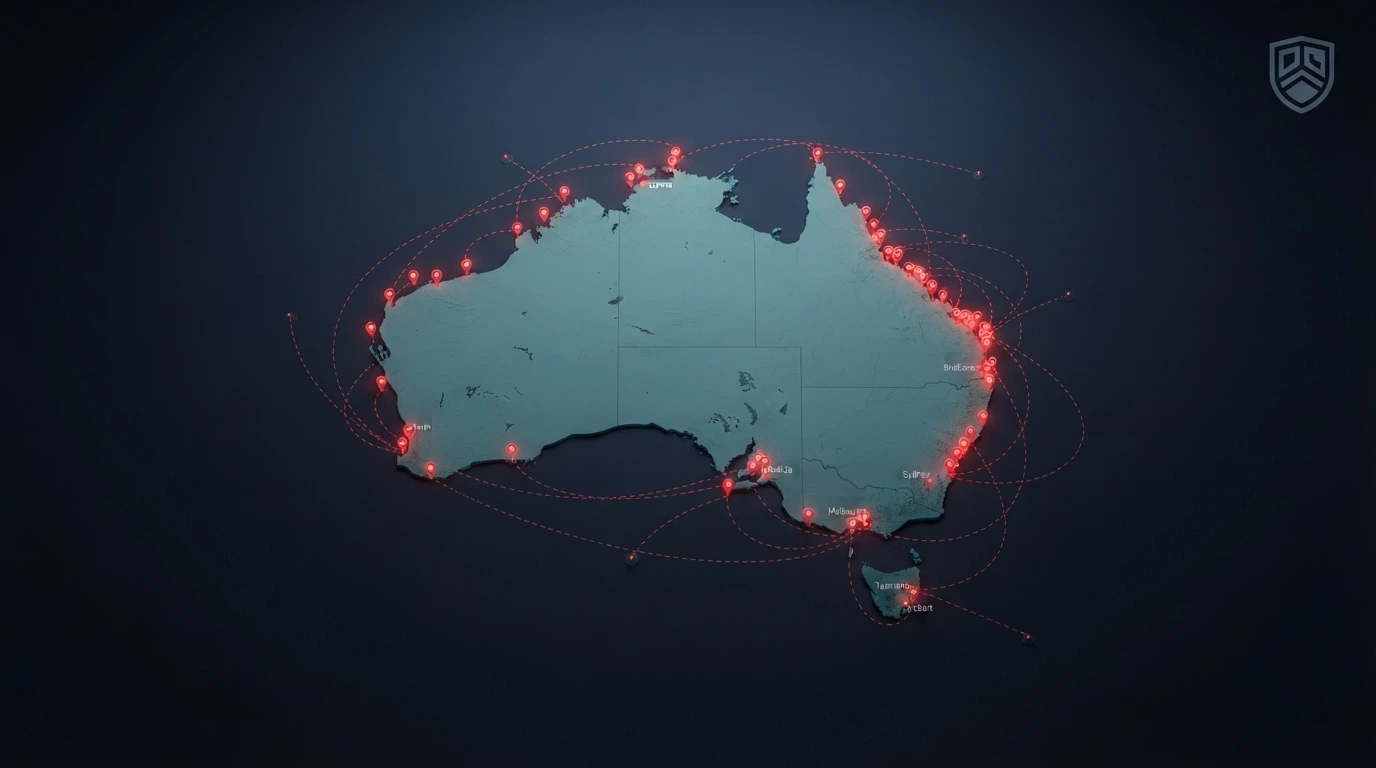
The player is not prosecuted under the IGA. The enforcement target is the provider — the offshore casino that offers the service to Australians. But the player is the one who loses access if the site gets blocked, and the player is the one with no Australian complaints body if the operator declines a withdrawal. The 2026 reform, which commences on 1 January 2027, gives banks and payment providers express authority to block transactions to illegal gambling operators, and that authority will narrow the Australian-facing payment perimeter in ways the offshore casinos will have to work around.
The Interactive Gambling Act and the Offshore Casino Model
The IGA 2001, strengthened by the 2017 amendment, makes it an offence to provide an online casino, online pokies or in-play sports betting to a person in Australia. The prohibition is on the provider, not the player. Wagering on races and sport placed before the event begins is permitted and licensable through state and territory regulators; lotteries and keno are permitted through state lotteries commissions. Online casino and pokies are not. There is no federal or state-issued licence for online casino because the law does not permit one to be issued.
The licensed Australian wagering operators — Sportsbet, bet365, Ladbrokes, TAB, TABtouch, PointsBet, Neds, Betr, Picklebet, Betfair — are bookmakers. They are licensed by the Northern Territory Racing and Wagering Commission or a state regulator, typically for pre-event wagering on sport and racing. They do not offer online casino games. A player who sees an Australian-facing brand offering slots, table games or live dealer is seeing an offshore operator; the brand may use Australian imagery and Australian-dollar banking, but the licence is Curaçao and the regulator is not Australian.
ACMA Enforcement by the Numbers — 1,788 Sites Blocked and Counting
The ACMA’s blocking record is the public measure of how aggressively the regulator is enforcing the prohibition. Since November 2019, the ACMA has had 1,788 illegal gambling and affiliate websites blocked by Australian ISPs, and over 230 illegal services have withdrawn from the Australian market since 2017. In Q4 2025 alone, the ACMA looked into 483 enquiries and complaints, completed 23 investigations into 45 gambling sites, found 69 breaches of the IGA, issued 10 formal warnings, and referred 133 websites to ISPs for blocking. In Q2 2025, the figures were 330 enquiries, 20 investigations into 24 sites, 30 breaches, and 73 sites referred.
A blocked site is one a player can no longer reach from inside Australia. A balance on deposit with a blocked site is a balance the player has no easy way to recover, because the operator is offshore and the regulator that did the blocking is Australian and has no jurisdiction over the operator’s bank account. The Q4 2025 and Q2 2025 figures together describe an enforcement regime that is active, quarterly and escalating.
What the 2026 Reform Changes — Bank Blocks, Ad Caps and Enhanced BetStop
The Interactive Gambling Amendment (Gambling Reform) Bill 2026 passed Parliament on 19 August 2026; its measures commence on 1 January 2027. The reform’s four schedules cover advertising restrictions, measures to disrupt illegal gambling services, enhanced BetStop protections, and prohibition of foreign matched lotteries and online keno. The provisions that matter most to a casino player are Schedule 2 and Schedule 3.
Schedule 2 gives banks and payment providers express authority to block transactions to illegal gambling operators. That authority is the one that will change the on-ramp landscape for offshore casinos — not by closing them, but by closing the Australian-banked on-ramps to them. Schedule 3 enhances BetStop protections and extends the marketing-inducement ban: 14 days after a customer signs up, 3 months after a person deregisters from BetStop, and indefinitely for customers identified as at risk of gambling-related harm. The reform also caps wagering ads on TV and online at three per hour between 6 am and 8:30 pm, with a live-sport blackout from 15 minutes before kick-off until five minutes after. Athletes, celebrities and influencers are barred from promoting wagering.
The reform narrows the legal perimeter around Australian gambling. It does not legalise offshore casinos; it makes them harder to reach and easier to block. The casino player who understands the reform understands that the operator they are using today may have a harder time taking their deposit tomorrow.
Staying in Control When the Withdrawal Button Moves Faster Than Your Limits
Fast payouts feel good, and the harm data is severe enough that feeling good about speed is not the same as feeling in control. Approximately 3.29 million Australians are affected annually by their own or another person’s gambling. Fifteen per cent of Australian adults experienced gambling harm in the past 12 months, up from eleven per cent in 2019. About 430,000 Australian adults are problem gamblers, and high-risk gambling sits at 1.8%. Among regular monthly gamblers, 7.7% are considered high risk. The annual health loss associated with gambling-related harm is estimated at over 400,000 Years Lived with Disability. These figures are not background colour; they are the reason the responsible-gambling infrastructure exists, and they are the reason a fast-payout page that omits the help line is incomplete.

The National Gambling Helpline is 1800 858 858 — free, confidential, staffed 24/7. Gambling Help Online (gamblinghelponline.org.au) offers live chat, email support, self-help tools and online counselling. BetStop, the National Self-Exclusion Register, runs a single registration that excludes a person from every licensed Australian wagering service, with exclusion periods from three months to lifetime. As of 31 March 2026, 59,830 people had registered with BetStop and 37,247 had active exclusions — a meaningful number, and a small one compared to the 400,000 high-risk gamblers in the population.
Deposit Limits, Session Caps and the Tools Offshore Casinos Actually Offer
Licensed Australian wagering operators are required to offer deposit limits, session time caps, loss limits and reality checks. Offshore casinos are not under the same requirement. The standard RG tools at a Curaçao-licensed offshore casino are deposit limits, session timers, take-a-break options and self-exclusion at the brand level — but the level of tooling, the speed of the support team’s response, and the degree to which the limits are enforced vary operator to operator, and the research on this page did not confirm per-operator RG tooling detail.
The 2027 marketing-inducement ban — which runs 14 days after a customer signs up, 3 months after a BetStop deregistration, and indefinitely for at-risk customers — applies to licensed operators. Offshore casinos are outside the regime. The reader who wants marketing silence, deposit caps enforced by the regulator, and the full Australian responsible-gambling stack should be using a licensed wagering operator. The reader using an offshore casino has the operator’s own tools, and should know that those tools are the operator’s choice to offer rather than a regulatory requirement.
BetStop, Self-Exclusion and Why Offshore Casinos Are Not on the Register
BetStop launched on 21 August 2023. It is the National Self-Exclusion Register: one registration excludes a person from every licensed Australian online and phone wagering service. Exclusion periods range from three months to lifetime. As of 31 March 2026, 59,830 people had registered and 37,247 had active exclusions — 22,583 had completed their exclusion or cancelled it early. BetStop covers approximately 150 licensed wagering providers in Australia. It does not cover offshore casinos, because offshore casinos are not licensed.
The gap matters because it is the gap between the strongest player-protection tool Australia offers and the casinos most Australians actually use for online casino games. A player who self-excludes through BetStop is excluded from every Sportsbet, bet365, Ladbrokes and TAB account in Australia, and from none of the offshore casinos on this page. The awareness gap compounds the coverage gap: only 33.5% of wagerers and 26.5% of Australian adults know BetStop exists. An estimated 30,000 active exclusions sit against an estimated 400,000 high-risk gamblers, which is roughly 7.5% — a small fraction of the population that the tool is built to reach.
How We Evaluated and Ranked These Instant Withdrawal Casinos
The ranking above is built on what is publicly stated by each operator’s payments and terms pages, on Australian-facing affiliate data, and on the ACMA’s public register and enforcement records. The criteria that ordered the ranking are withdrawal method coverage, withdrawal speed by method where confirmed, withdrawal limits where published, and licence transparency. The ranking does not reflect field tests of payout speed; the numbers for PayID, crypto, e-wallet, bank transfer and card come from the operators’ own published terms and from Australian-facing affiliate reviews of those terms, not from a controlled speed test by this page.
Operators are tracked by Australian traffic and by their published withdrawal terms. Operators whose Australian traffic is real but whose published terms are thin are ranked on presence rather than on confirmed specifics, and that distinction is visible in the write-ups above. The six operators at the bottom of the ranking — Stake, WinSpirit, Rainbet, Scream Casino, Bizzo Casino and Rocket Casino — are positioned on presence and traffic rather than on confirmed payout terms, and a reader who wants to compare specifics should check the operators’ own payments pages.
The ranking does not measure consumer protection, dispute resolution, payout reliability under stress, or game-fairness auditing. It measures what the operators say they do, not what they have been observed to do over time. The reader who wants the consumer-protection measurement should read the offshore-reality section above and should treat the gap between offshore status and Australian consumer law as a known unknown rather than as a closed question.
What Australian Players Should Actually Do About Fast Payouts in 2026
Pick your method first and your operator second. PayID and crypto are the two fastest rails on this page, with PayID at under five minutes once approved and crypto at five to thirty. E-wallets sit an hour or two behind; bank transfer trails by days. The reader who can choose between PayID and crypto should choose PayID for fiat bankrolls and crypto for crypto bankrolls, and should not assume the casino they land on supports the rail they prefer — SkyCrown runs PayID; not every operator on this page does. The fastest payout comes from matching the method to the operator, not from picking the operator first and adapting the method.
Have KYC ready before you request the first withdrawal. Incomplete KYC is the number one cause of withdrawal delay at fast-payout casinos, and the delay is not on the rail — it is in the review queue. A photo ID, a proof of address and a payment-method screenshot, all scanned and ready, remove the back-and-forth that turns a one-day review into a three-day one.
Know that BetStop does not cover any of the casinos on this page. The strongest player-protection tool Australia offers is excluded from every operator above, because none of them is a licensed wagering provider. The National Gambling Helpline is 1800 858 858, free, confidential and staffed 24/7. Gambling Help Online is gamblinghelponline.org.au. The 15% of Australian adults who experienced gambling harm in the past 12 months are not a marginal group, and the speed of a payout is not the only thing that matters when a casino button is one tap away.
Understand that the 2027 bank-block authority changes the on-ramps but not the offshore status. From 1 January 2027, banks and payment providers gain express authority to block transactions to illegal gambling operators. The authority will narrow the Australian-banked rails; it will not legalise the offshore casinos or close them. The reader who is using an offshore casino today will still be using an offshore casino in 2027, with a slightly harder deposit path and the same lack of Australian consumer protection.
The ranking above is a starting point, not a verdict. The reader who treats the operator comparison as the comparison of withdrawal speed by method, and who reads the offshore-reality and player-protection sections as the comparison of risk, has the comparison the page is built to support. The reader who treats the ranking as a list of recommended places to play has read past the page’s own subject.
Frequently Asked Questions
Is it legal to play at instant withdrawal online casinos in Australia?
Online casino, online pokies and in-play betting are prohibited under the Interactive Gambling Act 2001, and the prohibition is enforced on the provider, not the player. No Australian licence for online casino exists. Every casino on this page is an offshore brand — Curaçao-licensed — and is illegal to provide to Australians, though players are not prosecuted. The ACMA has blocked 1,788 illegal sites since November 2019.
Do instant withdrawal casinos in Australia require ID verification before your first payout?
Yes, in practice. “No verification” pitches at offshore casinos usually mean no upfront KYC at sign-up, with verification triggered at the first withdrawal. Documents requested are standard: photo ID, proof of address, sometimes a payment-method screenshot. Incomplete KYC is the single most common cause of withdrawal delay. Having the documents ready before requesting the first payout removes the back-and-forth from the timeline.
What wagering requirements do fast-payout Australian casinos attach to their bonuses?
Typical wagering requirements at Australian-facing fast-payout casinos range from 30x to 60x on the bonus amount. Free-spin winnings can carry 60x to 70x wagering at some operators. Max-cashout caps on bonuses can be as low as A$500, and the max bet during wagering is typically A$5 to A$10, with the bonus voided if exceeded.
Are there withdrawal limits or caps at instant withdrawal casinos in Australia?
Yes. SkyCrown publishes A$5,000 daily, A$10,000 weekly and A$15,000 monthly limits. FairGO publishes a A$7,500 weekly limit (some sources say A$2,500). Royal Reels publishes a A$9,000 daily limit with no win cap. RocketPlay’s minimum is A$30 via MiFinity. The limits are operator-specific, and a player withdrawing a large balance should split across the published ceilings rather than assuming a single request will go through.
What happens to my money if an offshore casino gets blocked by the ACMA?
The ACMA has blocked 1,788 illegal gambling and affiliate websites since November 2019, and over 230 services have withdrawn from the Australian market since 2017. A blocked site is one a player can no longer reach from inside Australia. A balance on deposit with a blocked site is a balance the player has no easy way to recover through Australian channels, because the operator is offshore and the regulator that did the blocking is Australian and has no jurisdiction over the operator’s bank account. This is the consumer-protection cost of using an unlicensed operator.
Mobile vs Desktop — Does the Platform Change Your Payout Speed?
The platform does not change the structural speed of a payout. A PayID transfer settles in under five minutes whether you triggered it from a phone or a desktop browser; a Bitcoin transfer settles in the same five-to-thirty-minute window. The casino’s pending period does not move based on the device you used to log in. What the device does change is the friction around the verification step. Mobile KYC upload — a photo of your ID from the phone camera, a photo of a utility bill from the phone camera — is faster than the same process on a desktop where you scan, transfer and upload. The verification itself still takes the same review time, but the time the player spends producing the documents is shorter on mobile.
Casino apps, where the featured operators offer them, do not unlock faster payouts either. The app routes the withdrawal request to the same payments team through the same processing pipeline. The reader who plays on a phone and the reader who plays on a laptop are waiting on the same queue. The variable that moves the timeline is the casino’s pending window and the player’s KYC readiness, not the screen size.