
Online Pokies Instant Withdrawal in Australia
“Instant withdrawal” is the phrase every offshore pokies site prints above the fold. It sits on the home page, the cashier page, and most affiliate reviews of the brand. None of those places own what the phrase actually means, because the phrase belongs to a payment rail, not to a casino’s promise. The gap between the two is the subject of this page.
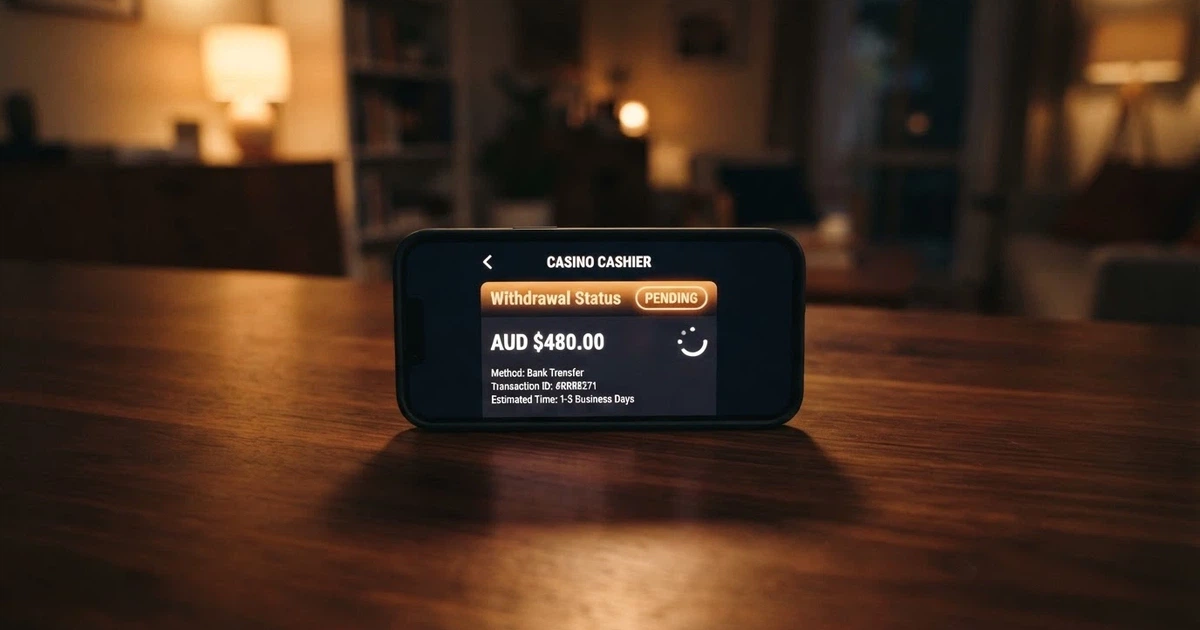
Drawn from operator terms and ACMA public records, current as of 22 November 2026.
Table of Contents
- What “Instant Withdrawal” Actually Means on Pokies Sites
- Why PayID Changed the Payout Game for Australian Players
- The Pokies Sites Australians Are Using — And What Their Payouts Really Look Like
- The Legal Reality: Why Every Pokies Site You Visit Is Offshore
- Staying in Control — Limits, Self-Exclusion and Where to Get Help
- Frequently Asked Questions
- How We Evaluated These Pokies Sites
- What Australian Players Should Actually Do About Pokies Withdrawals in 2026
What “Instant Withdrawal” Actually Means on Pokies Sites
The word “instant” describes a banking outcome. PayID, run through the New Payments Platform and branded Osko by most retail banks, settles between participating banks in under 60 seconds. A casino offering PayID withdrawals inherits that outcome — but only at the moment it releases the funds. Everything before that moment belongs to the casino, and that is where the hours stack up.
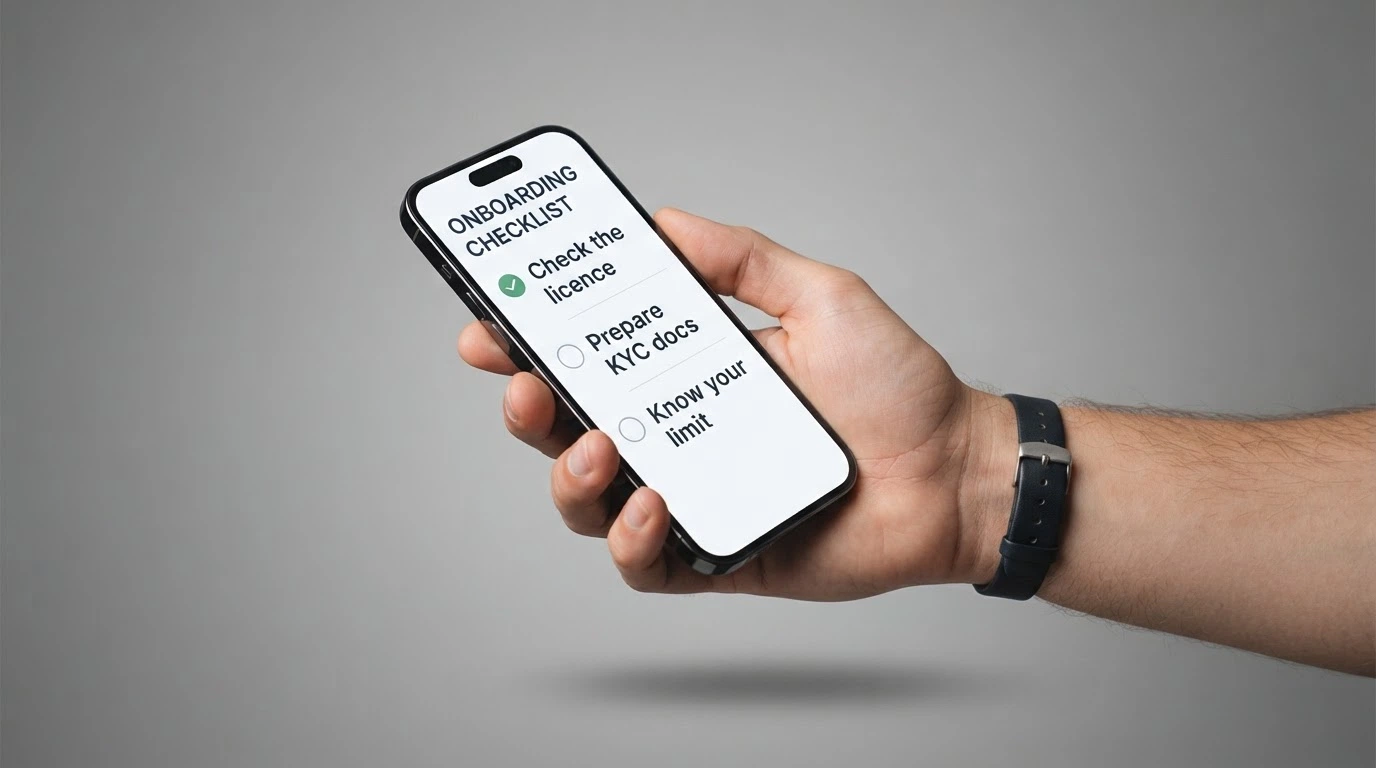
Three stages sit between hitting “withdraw” and the money arriving. There is the pending window, during which the casino reserves the right to let the player reverse the cashout. There is identity verification, which the AML obligations under Australian and international law force on every operator processing real-money withdrawals. And there is the payment rail itself, which determines how fast the released funds travel.
A claim that conflates the three is a claim worth reading carefully.
What “Pokies Withdrawal” Actually Covers in 2026
A withdrawal at an online pokies site is the act of moving real-money winnings from the casino’s balance to a payment method the player controls. It is not the same thing as reversing a deposit. A reversed deposit returns to the same instrument that funded it, often automatically and within minutes, and most processors treat it as a correction. A withdrawal, by contrast, moves winnings that the player has risked and won, and the casino is entitled to verify both the win and the player before releasing the funds.
That distinction matters at the cashier. A player who has never deposited with a given method, or who has deposited and lost the winnings through other channels, is asking the casino to make a payment — and a payment is what the operator’s compliance and anti-fraud checks sit on top of.
In 2026, the same three stages apply at every offshore casino an Australian player can reach: pending window, verification, and the rail. What differs between operators is the length of the first two, and whether the third is fast or slow.
Real-Money Pokies and the Withdrawal Step
Real-money play raises the weight of the withdrawal step. A demo session is disposable; losses and wins alike do not travel anywhere. A real-money session has a payoff moment, and the moment is the withdrawal. The player’s judgement of an operator sits mostly on that moment: did the money arrive, how long did it take, was anything demanded of them they did not expect.
The psychological weight of waiting is not a marketing point. It is the entire experience of having won, and an operator that takes a week to send the funds is an operator that takes a week of the player’s attention with it. That is why “instant” became the promise in the first place — the market is read enough to know that the waiting is what players complain about.
What is sold as the solution is a banking technology, not a casino behaviour. PayID does solve a part of the problem. It does not solve the casino half, which is the part under the casino’s own control.
Mobile and App-Based Pokies Withdrawals
Most Australians reach an online pokies site through a phone, not a desktop. The withdrawal flow on mobile is, in practice, the withdrawal flow most players actually use.
Browser-based mobile play is the default in Australia. Offshore casinos do not appear in the Australian Google Play or Apple App stores, and any “app” bearing one of these brands is a web wrapper or a sideloaded APK. Inside the browser the cashier is the same cashier a desktop player sees, scaled to the screen.
What changes on mobile is the network and the patience of the player. A PayID transfer that takes seconds at the banking layer is still a transfer the player is watching on a small screen; a 24-48 hour pending window feels longer in the palm of a hand than it does at a desk. There is no researched mobile-specific withdrawal data to point to, but the qualitative observation holds: the smaller the screen, the more the wait reads as the casino’s fault.
Why PayID Changed the Payout Game for Australian Players
PayID turned a week-long process into a one-minute one. The change is not at the casino level — it is in the plumbing underneath every Australian bank account. Most Australians now have a PayID: a mobile number, an email, or an ABN, mapped to a bank account through the New Payments Platform. Send money to that handle and it lands, almost always, in under a minute.
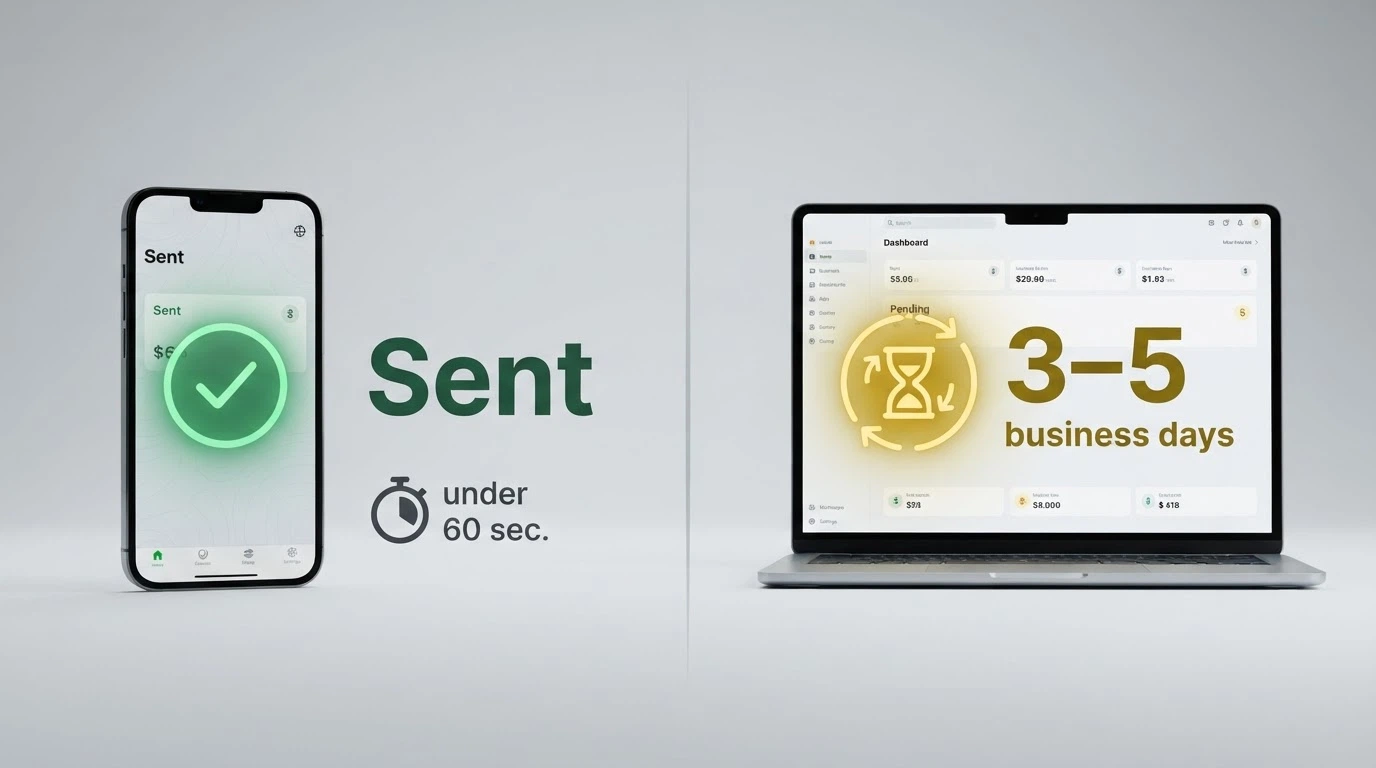
For pokies withdrawals, the technology does two things. It shrinks the bank-transfer leg from days to seconds. And it lets a casino that is willing to release funds quickly deliver them quickly, because the only thing standing between “approved” and “in the player’s account” is the rail. Operators that adopt PayID are betting that players will read the difference.
Before PayID, an Australian player who wanted their pokies winnings had three options: a bank transfer that took three to five business days, an international wire that took longer and charged fees, or a cheque in the mail. After PayID, the same player has a near-instant domestic transfer, free at the banking layer. That is the before-and-after this section is about.
The three payment rails an Australian player will actually meet at an offshore pokies site compare as follows.
| Withdrawal method | Settlement speed | KYC impact | Availability at featured sites |
|---|---|---|---|
| PayID / Osko | Under 60 seconds between participating banks | 24-72 hours on first withdrawal | 8 of 10 operators |
| Crypto (BTC, ETH, USDT, etc.) | Instant once confirmed on the blockchain | Minimal on crypto-native sites | 10 of 10 operators (2 crypto-only) |
| Bank transfer (EFT) | 3-5 business days | 24-72 hours on first withdrawal | 8 of 10 operators |
Instant Withdrawal via PayID — How the Tech Actually Works
PayID is the addressing layer on top of the New Payments Platform. The NPP is a real-time gross settlement system the major Australian banks built through NPPA, the industry body that runs it. When a payment moves through NPP, it clears between participating banks in seconds rather than the day-or-more cycle of the older BECS direct-debit system.
Osko is the consumer brand most retail banks use to expose NPP to their customers. When a bank advertises “Osko deposits” or “PayID via Osko,” it is exposing the same plumbing under a friendlier name. A transfer initiated to a PayID handle is routed through NPP and confirmed on both ends — sender and recipient — within a window the industry standard measures at under 60 seconds.
The plumbing matters because it shifts what a casino can promise. An offshore operator running on older EFT rails is constrained by banking hours, batch windows, and weekend cuts. An operator running on PayID inherits the rail’s speed. The casino’s own processing still sits in front of that speed, which is where the wait actually accumulates.
What happens when the casino’s bank is not on NPP is a different story. Smaller or international banking partners may not support Osko send, in which case a PayID transfer can revert to a slower EFT clearing. Research does not pin down which operator sits behind which bank, and the difference is invisible to the player until it is not.
Fast, Quick and Same-Day Payouts — What the Speed Labels Really Mean
Affiliate sites stack three near-synonyms in their headlines. “Instant withdrawal,” “fast payout,” “same-day cashout” all sit on the same row, but the claims underneath them are not the same.
“Instant” belongs to a payment rail. PayID settles in under a minute; crypto clears once the blockchain confirms. Used honestly, the word describes the rail, not the total experience.
“Fast” is a casino-side processing claim. A casino that processes withdrawals within a few hours of request is making a different promise — that they will not sit on the cashout. It says nothing about the rail that follows.
“Same-day” combines both. A same-day payout means the casino commits to releasing the funds during its business hours, and a PayID or crypto rail then delivers them in minutes. It is the most honest label of the three, because it requires both halves of the chain to do their job.
The pending window complicates all three. Most offshore casinos reserve the right to hold a withdrawal for 24 to 48 hours after request, during which the player can reverse the cashout. A same-day label quietly assumes the player has not, and an instant label quietly assumes the pending window is zero.
PayID as Your Withdrawal Method — Setup, Limits and Which Banks Support It
Setting up PayID inside a casino cashier is usually a short process. The player enters a mobile number, email, or ABN that they have already registered with an Australian bank. The casino links the handle to the account and verifies ownership through a small test deposit or a one-time code. From that point, withdrawals to PayID are selected from the cashier dropdown like any other method.
Per-transaction limits vary across operators and across banks. Research does not pin them down and neither does the operator disclosure on most sites. What is universally true is that PayID inherits the same daily transfer caps the player’s bank applies to all Osko payments, and that very large cashouts may need to be split or routed through an alternative method.
Bank coverage is broad. Every major Australian retail bank supports PayID send and receive through Osko, including the big four and most of the regional and online-only banks. A player who has set up PayID through any of them can use it as a withdrawal destination at any operator that offers it. The smaller risk is on the casino’s side: if the operator’s banking partner is not on the NPP rail, a PayID transfer can fail to clear as an instant payment and fall back to a slower clearing. The player sees this as a delay, not as a rail failure.
The Withdrawal Timeline — From Hitting “Request” to Money in Your Account
Every withdrawal passes through the same three gates, and the order matters. Each stage has its own delay, and a player trying to read the total wait has to add them.
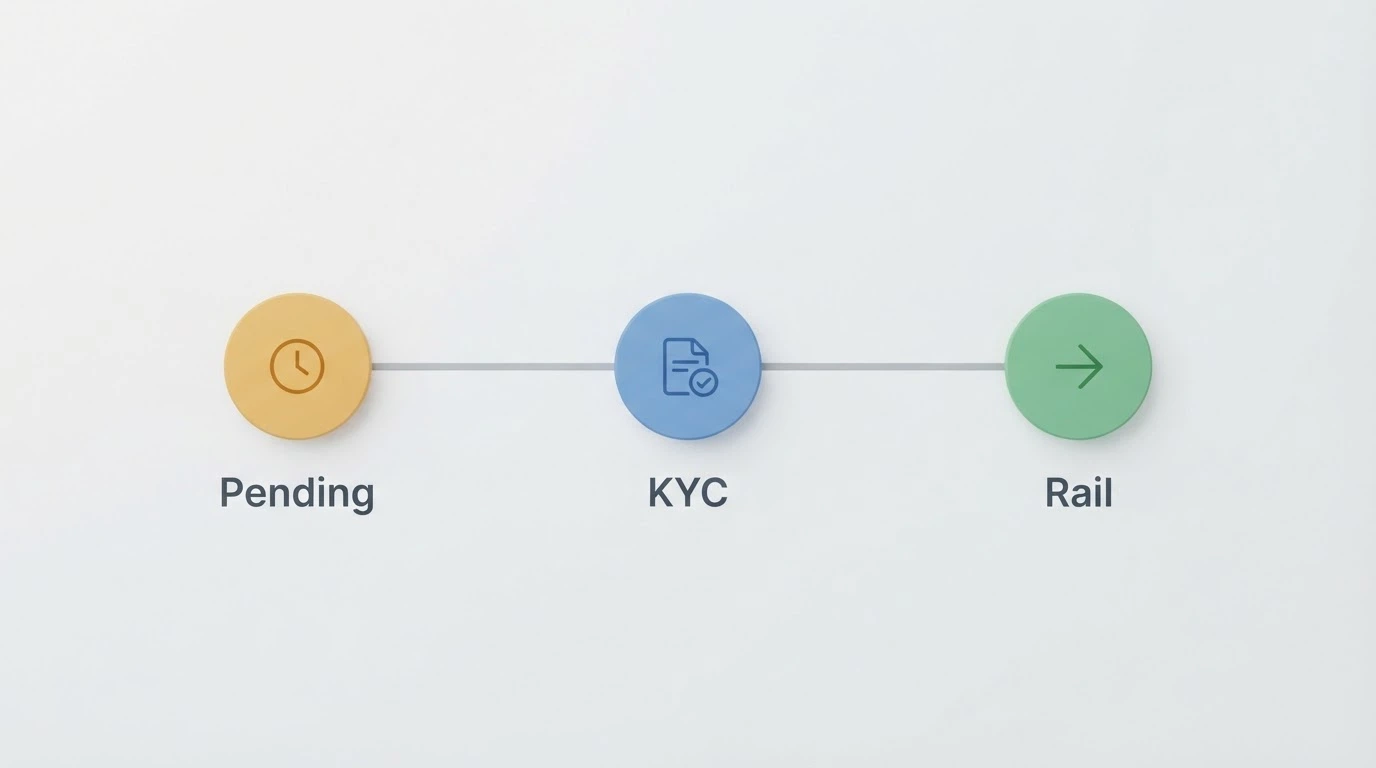
The first stage is the pending window. Most offshore casinos publish a 24 to 48 hour hold during which the withdrawal can be reversed. The hold exists for a reason — it lets a player change their mind without burning a deposit-fee charge — and it is the first gate a payout has to clear.
The second stage is identity verification. First-time withdrawals almost always trigger a KYC check, and the check takes 24 to 72 hours. The casino wants proof of identity, proof of address, and sometimes proof of the payment method itself. A player who has these documents ready on day one shortens this stage considerably.
The third stage is the payment rail. Once the casino releases the funds, PayID delivers them in under a minute. Crypto delivers them once the network confirms. A bank EFT takes 3 to 5 business days.
The realistic worst case, for a first withdrawal via PayID at a casino with a 48 hour pending window and a 72 hour KYC review, runs about five days end to end. The realistic best case, for a returning player via PayID with no KYC outstanding, runs about a minute after the pending window closes.
Real-Money Withdrawals — What Changes When Cash Is on the Line
Real-money withdrawals attract scrutiny demo play does not. The minimum amount is set higher, the verification checks are deeper, and the documentation demands grow with the size of the cashout. A player withdrawing fifty dollars will rarely be asked for source-of-funds documentation; a player withdrawing five thousand will.
Minimum withdrawal thresholds are set by each operator. Research does not pin them down across the set. What is consistent is that thresholds are higher than at any Australian-licensed bookmaker — typically in the order of tens of dollars rather than single-digit amounts — because the operational cost of a small PayID transfer does not scale down to nothing.
What changes most for the player is the recourse available when a withdrawal stalls. An Australian-licensed bookmaker sits inside a dispute framework: ACMA oversight, a state regulator, an avenue of complaint. An offshore casino does not. The legal section below covers that gap in detail. The relevant point here is that the player who prepared KYC documents in advance, who chose PayID as the rail, and who verified the casino’s licence before depositing is the player most likely to see the money arrive without escalation.
The Pokies Sites Australians Are Using — And What Their Payouts Really Look Like
Ten operators dominate Australian search results for online pokies. All of them are offshore. All of them carry a Curaçao eGaming licence, which provides no Australian consumer protection. The table below compares them on what actually determines payout speed: PayID support, the payment mix, and the KYC burden before the first cashout.

| Operator | Licence | PayID available | PayID payout speed | Key game providers | First-withdrawal KYC |
|---|---|---|---|---|---|
| Rocket Play | Curaçao | Yes | Instant after processing | Pragmatic Play, BGaming, Betsoft, Evoplay | Required |
| Skycrown | Curaçao | Yes | Instant after processing | Pragmatic Play, BGaming, Betsoft, Yggdrasil | Required |
| Royal Reels | Curaçao | Yes | Instant after processing | Pragmatic Play, BGaming, Betsoft, Evolution | Required |
| WinSpirit | Curaçao | Yes | Instant after processing | Pragmatic Play, BGaming, Betsoft, Evoplay | Required |
| FairGO | Curaçao | Yes | Instant after processing | RealTime Gaming (RTG) | Required |
| Scream Casino | Curaçao | Yes | Instant after processing | Pragmatic Play, BGaming, Betsoft, Evolution | Required |
| Bizzo Casino | Curaçao | Yes | Instant after processing | Pragmatic Play, BGaming, Betsoft, Evolution | Required |
| Rocket Casino | Curaçao | Yes | Instant after processing | Pragmatic Play, BGaming, Betsoft, Evolution | Required |
| Stake | Curaçao | No | — | Pragmatic Play, Evolution, Hacksaw Gaming, Push Gaming | Minimal (crypto-native) |
| Rainbet | Curaçao | No | — | Pragmatic Play, BGaming, Evolution, Push Gaming | Minimal (crypto-native) |
The headline finding across the set is the PayID split. Eight of the ten operators offer it; two do not. The two that do not are the same two that are crypto-only. The pattern is not accidental — crypto-native operators have no reason to add a domestic Australian rail they cannot settle through their own banking partners. The KYC burden across the eight fiat-supporting operators is identical on paper: required for first withdrawal. The crypto-native pair asks for less because their rail already separates sender and recipient through pseudonymity.
How These Pokies Sites Compare on Payout Speed — At a Glance
Eight of the ten operators settle fiat withdrawals through PayID. For an Australian player holding AUD in a domestic bank account, that is the fastest rail on the table. The same eight fall back to bank transfer for larger or PayID-incompatible withdrawals, and bank transfer runs three to five business days. The two operators without PayID — Stake and Rainbet — are also the two without a fiat option at all. Their product is crypto, and their KYC burden is correspondingly lighter.
The provider mix across the set is mostly variations on a theme. Pragmatic Play, BGaming, Betsoft and Evolution appear across most operators. Yggdrasil shows up at Skycrown; Hacksaw Gaming and Push Gaming at Stake; Evoplay at Rocket Play and WinSpirit. FairGO is the outlier — RTG only, which means a different game catalogue and a smaller library than the rest.
The KYC line in the comparison table is uniform for a reason. AML obligations apply to every operator processing real-money transactions, regardless of jurisdiction. The difference is in how strictly each operator enforces them, and that difference is not visible in a footer disclosure.
Rocket Play — Curaçao-Licensed With PayID and Crypto Rails
Rocket Play is one of two “Rocket”-branded operators on this page and the broader of the two. The provider mix — Pragmatic Play, BGaming, Betsoft, Evoplay — covers most of the catalogue a casual Australian pokies player would expect to see. The payment mix matches: PayID, bank transfer, and three crypto coins (BTC, ETH, USDT).
PayID withdrawals are instant after processing. Crypto withdrawals are instant after processing. Bank transfer takes three to five business days. First-withdrawal KYC is required, and runs the same 24 to 72 hours the rest of the set runs.
Rocket Play covers the AUD bank balance through PayID and the larger win through crypto. That is the whole fit for a player who wants both rails at one operator.
Skycrown — Four-Provider Lineup, Instant PayID Cashouts
Skycrown’s differentiator is Yggdrasil — a provider none of the other operators in this set carries. Pragmatic Play, BGaming and Betsoft fill out the rest of the catalogue. The payment mix is PayID, bank transfer, and three coins (BTC, ETH, LTC).
Payout speeds match the rest of the PayID set: instant after processing on PayID and crypto, three to five days on bank, KYC required for the first cashout.
The case for Skycrown is the Yggdrasil seat, and only Yggdrasil. Players who already know which Yggdrasil titles they want pick it; everyone else can take any of the eight interchangeably.
Royal Reels — Evolution Live-Dealer Suite Alongside PayID Withdrawals
Royal Reels is the only operator in the set carrying Evolution alongside the standard Pragmatic Play / BGaming / Betsoft trio. Evolution’s live-dealer games are the differentiator, and they pull in players who want a table-game experience as well as pokies.
The payment mix is the same PayID / bank / crypto (BTC, ETH) pattern as the rest, with the same speed profile and the same KYC requirement.
For a player who wants both pokies and a live-dealer suite under one roof, Royal Reels is the only fit on this page.
WinSpirit — Broad Payment Mix Including PayID
WinSpirit matches Rocket Play’s provider set — Pragmatic Play, BGaming, Betsoft, Evoplay — and its payment mix. Three coins on the crypto side (BTC, ETH, USDT), PayID and bank transfer on the fiat side, with the same speeds and the same KYC burden.
On payout profile, WinSpirit and Rocket Play read as the same operator in different wrappers. The difference lives in the bonus, the interface, and the T&Cs.
FairGO — RTG-Exclusive, PayID-Supported
FairGO is the set’s outlier on game library. RealTime Gaming (RTG) is the only provider on the platform, which means a smaller catalogue and a different style of pokies — RTG’s catalogue is older and more volatile on average than the Pragmatic-Play-led libraries elsewhere on this page.
The payment mix is the narrowest of the eight PayID operators: PayID, bank transfer, and one coin (BTC). Crypto coverage is one coin rather than three or five. First-withdrawal KYC is required, same as the rest.
FairGO suits a player who already knows RTG’s catalogue and prefers it. For anyone walking in fresh, the library and crypto mix read as thin.
Scream Casino — PayID and Crypto, Standard KYC
Scream Casino’s provider mix is the Pragmatic-Play-led quartet — Pragmatic Play, BGaming, Betsoft, Evolution — and its payment mix is the same PayID / bank / three-coin (BTC, ETH, LTC) pattern as Skycrown. Speeds and KYC requirements match the rest of the PayID set.
Scream is interchangeable with the seven other PayID operators on payout profile. The reason to pick it lives in the bonus or the interface, not the rail.
Bizzo Casino — Full Payment Suite With PayID
Bizzo Casino carries the same Pragmatic-Play-led provider mix and the same PayID / bank / three-coin (BTC, ETH, LTC) payment mix as Scream Casino. Speeds and KYC are identical.
Bizzo reads the same as Scream on the payout profile. A player at one is functionally a player at the other for withdrawal purposes.
Rocket Casino — PayID and Bank Transfer Options
Rocket Casino is the second “Rocket”-branded operator on this page and the narrower of the two. The provider mix matches Royal Reels: Pragmatic Play, BGaming, Betsoft, Evolution. The payment mix matches the rest of the PayID set: PayID, bank, three coins (BTC, ETH, LTC). Speeds and KYC match.
Rocket Casino is a separate corporate identity from Rocket Play despite the brand name, with a payout profile that is identical. The choice between the two is in the bonus and the T&Cs, not the rail. A player at one is not automatically a player at the other.
Stake — Crypto-Native, No PayID, Minimal KYC
Stake is the largest crypto-native brand in this set. The provider mix is different: Pragmatic Play, Evolution, Hacksaw Gaming, Push Gaming. Hacksaw and Push are the two names that distinguish Stake from the rest of the comparison table. The payment mix is crypto only — BTC, ETH, LTC, DOGE, USDT — and there is no PayID, no bank transfer, no fiat option at all.
Crypto withdrawals are instant after processing. The KYC burden is the lightest in the set because Stake is crypto-native and the rail itself provides much of the identity separation AML obligations otherwise demand.
Stake suits a player who already holds crypto and is comfortable with the volatility of holding coins between cashout and conversion. For an AUD bank balance, it is the wrong shape.
Rainbet — Crypto-Only Instant Withdrawals
Rainbet is the second crypto-only operator on the page, smaller in scale than Stake but with a similar pitch. Pragmatic Play, BGaming, Evolution and Push Gaming make up the provider mix. Four coins are accepted (BTC, ETH, LTC, USDT); no fiat rails.
Crypto withdrawals are instant after processing. KYC is minimal for the same reason as Stake — the rail carries the identity check.
Rainbet sits beside Stake on the crypto-only side of the table. Smaller in scale, similar KYC stance, separate on bonus and interface. A player choosing between the two is not choosing on payout speed, where both are identical.
What the Withdrawal Experience Actually Looks Like Across These Sites
The named speeds describe what the operator’s T&Cs say. The lived experience is shaped by three things those T&Cs do not pin down: the actual length of the pending window, the depth of the KYC review, and the patience of the casino’s payments team.
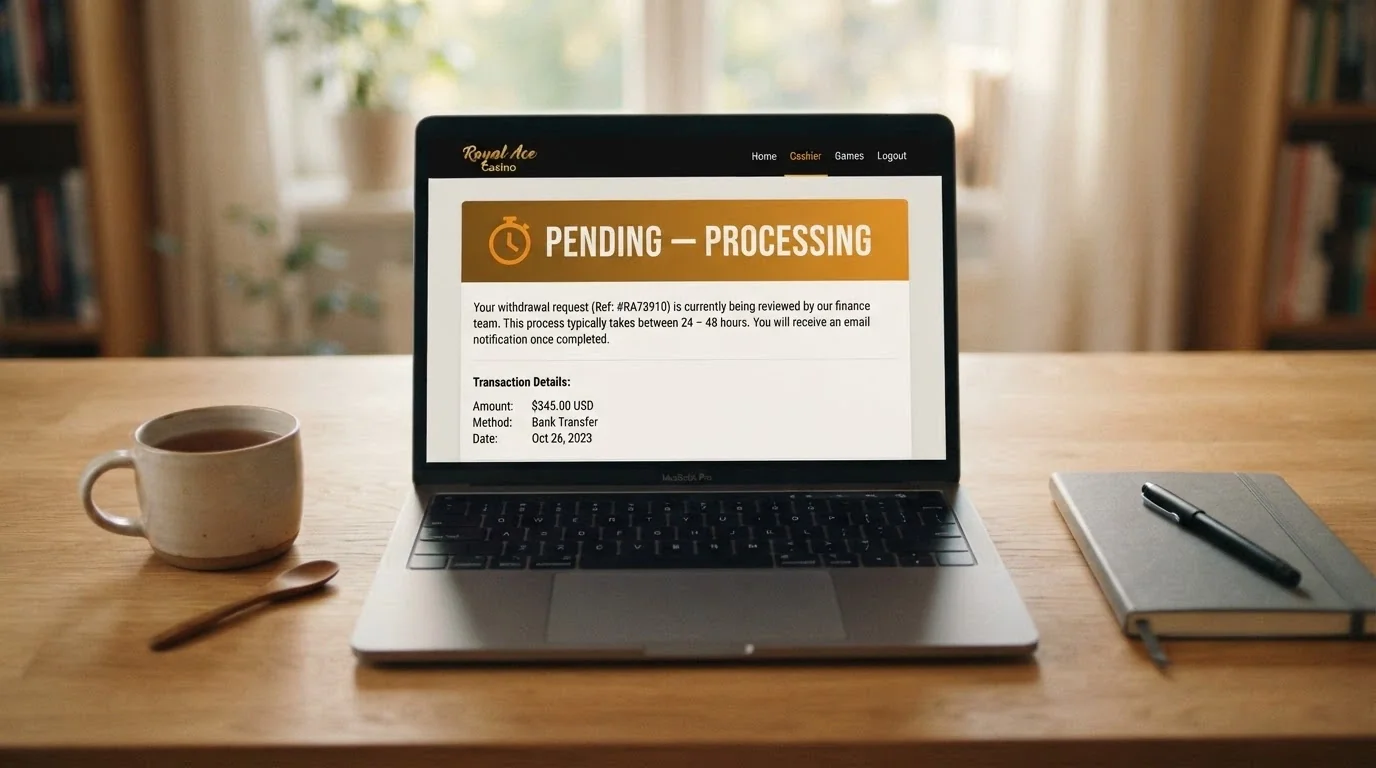
A player on a forum will report a first withdrawal that took nine days for reasons no operator will own in print. A second withdrawal at the same casino, with KYC already cleared, can land in minutes. The variance is real and it is the reason “instant” reads as a marketing line: it describes the best case, not the median.
The pattern that holds across complaints is documentation requests. A casino that approves a withdrawal on day one and then asks for a fresh proof of address on day three is using documentation to extend the timeline without formally delaying anything. A player who prepares KYC documents in advance — current utility bill, current bank statement, photo ID — shortens this game considerably.
What no operator will tell a player in advance is how often documentation requests get repeated. The honest summary: a player who has read the KYC terms, prepared documents before depositing, and chosen PayID or crypto as the rail is the player most likely to see the named speed.
The Legal Reality: Why Every Pokies Site You Visit Is Offshore
Online pokies are a prohibited service in Australia. Every operator an Australian player can reach sits outside the country, holds no Australian licence, and answers to no Australian regulator. The Interactive Gambling Act 2001 makes it an offence to provide online casino games — pokies, table games, in-play betting — to a person physically in Australia. There is no licence for it anywhere in the country, federally or in any state or territory.

The legal exposure sits with the operator, not the player. The IGA targets the provider of the service. Australian players are not prosecuted for placing bets at an offshore casino. But the consequence of offshore status is the absence of every protection a domestic licence would normally carry, and that absence is what this section covers.
The Interactive Gambling Act and Why Pokies Sites Are Prohibited
The Interactive Gambling Act 2001 prohibits the supply of online casino games, online pokies, and in-play sports betting to customers in Australia. The 2017 amendment gave the regulator — the Australian Communications and Media Authority, ACMA — the power to issue formal warnings, levy civil penalties, and refer matters for prosecution. More than 225 illegal services have withdrawn from the Australian market since those enforcement powers were strengthened.
What remains permitted under Australian law is narrower than the offshore market suggests. Wagering on a race or sporting event before it begins, lotteries, and keno through state and territory-licensed operators are allowed. Online casino games and pokies are not. The 2026 Gambling Reform Bill, passed on 19 August 2026 with measures commencing on 1 January 2027, tightens advertising rules around licensed wagering without changing the prohibition on online pokies.
The clean summary for an Australian player is that online pokies do not have a licensed path in this country. Any site reaching an Australian player is doing so without an Australian licence, and that fact is the starting point for everything that follows on player protection.
Player Protection and Self-Exclusion — What BetStop Does and Doesn’t Cover
BetStop is the National Self-Exclusion Register, live since August 2023, and it is the most powerful consumer-protection tool in Australian wagering. One registration excludes a person from every Australian-licensed online and phone wagering service simultaneously. As of 31 July 2026, BetStop had recorded 67,480 registrations, with 41,290 of those exclusions still active. Seventy-eight per cent of registrants were under 40, and thirty-eight per cent chose a lifetime exclusion.
The tool’s reach is exactly the set of Australian-licensed operators. BetStop does not cover offshore casinos. A player who has registered with BetStop can still open an account at any of the ten operators on this page, deposit, play, and lose. The exclusion is real and meaningful for the licensed wagering market — pre-event race and sport betting, keno, lotteries — and it is silent for the offshore casino market.
This is the gap that a player reading the offshore comparison above needs to know about. The same protection that follows an Australian punter across every licensed bookmaker in the country stops at the border. Offshore casinos sit outside the system entirely.
Licensed Versus Offshore — What the Difference Means for Your Money
An Australian-licensed bookmaker operates under a state or territory licence — most online bookmakers under Northern Territory Racing and Wagering Commission oversight — and inherits a suite of obligations: ACMA oversight, mandatory responsible-gambling tools, BetStop coverage, an internal dispute process, and access to an external complaint body. The protections are not perfect, but they exist.
A Curaçao-licensed casino operates under a different regime. The Curaçao eGaming licence is a real licence, and the operator holding it is subject to Curaçao jurisdiction. For an Australian player, the practical reach of that jurisdiction is effectively zero. A player who has been refused a payout at a Curaçao-licensed casino cannot escalate the complaint to ACMA, cannot register with BetStop to exclude themselves retroactively from the operator, and cannot access any Australian complaint or dispute-resolution body.
Since November 2019, ACMA has blocked more than 1,564 illegal gambling and affiliate websites. A block is a thing that can happen at any time, and a player holding a balance at an offshore casino when the block lands faces the question of how to recover funds from an operator that has just been cut off from the Australian internet. The answer, in most cases, is that the player does not.
The legal reality is the framing decision for everything else on this page. The faster rails, the lighter KYC at crypto-native sites, the broader game catalogues — every advantage an offshore casino offers sits on top of a legal status that provides no Australian protection.
Staying in Control — Limits, Self-Exclusion and Where to Get Help
Problem gambling affects approximately 2.1 per cent of Australian adults — around 430,000 people, by the most recent Australian Institute of Health and Welfare survey. High-risk gambling affects a further 1.8 per cent. These are not small numbers, and they describe the population the responsible-gambling tools exist to serve.
What follows is what those tools are and what they cover. The section closes with the help services that exist for any Australian whose pokies play has stopped being recreational.
Setting Play Limits and Using Self-Exclusion Tools
Australian-licensed wagering operators are required to provide a standard suite of responsible-gambling tools. Deposit limits cap how much can be loaded into an account in a given period. Loss limits cap how much can be lost in a session or a day. Session timers log a player out after a set duration. Time-outs suspend an account for a chosen period. Self-exclusion, the strongest of the tools, locks an account for a minimum of three months and, in some cases, for life.
The same tools may appear at offshore casinos. Most carry deposit limits and session timers in the cashier; some offer self-exclusion through customer support. What the offshore version lacks is regulatory enforcement. An Australian-licensed operator that refuses to honour a self-exclusion request is answerable to ACMA and a state regulator. An offshore operator that ignores a self-exclusion request is answerable to no one the player can reach.
BetStop is the only self-exclusion tool that reaches across the entire licensed Australian wagering market, and it does not reach offshore casinos. A player using both licensed and offshore products needs both layers: BetStop for the licensed side, and individual self-exclusion requests sent in writing to each offshore operator’s support team, with copies retained.
Help and Support Resources for Problem Gambling in Australia
Free, confidential help is available 24 hours a day, seven days a week. The services below answer to no operator and have no commercial relationship with the brands reviewed on this page.
- National Gambling Helpline: 1800 858 858 — free, confidential, available 24/7 from anywhere in Australia.
- Gambling Help Online: gamblinghelponline.org.au — online chat, email counselling and self-help resources.
- BetStop — the National Self-Exclusion Register for Australian-licensed wagering, not offshore.
- Financial counselling — free, independent money advice is available through the National Debt Helpline on 1800 007 007.
A player who feels their pokies play has stopped being recreational can use any of the above without cost and without being identified to an operator. The first call is the one that matters most.
Frequently Asked Questions
Which online pokies have the fastest withdrawals in Australia?
The eight PayID-supporting casinos on this page — Rocket Play, Skycrown, Royal Reels, WinSpirit, FairGO, Scream Casino, Bizzo Casino and Rocket Casino — deliver the fastest fiat payouts. Stake and Rainbet are faster on the rail but crypto-only. PayID settles in under 60 seconds once the casino releases the funds.
How long do instant withdrawals actually take with PayID?
PayID settles between participating Australian banks in under 60 seconds. The full timeline includes the casino’s pending window (often 24 to 48 hours), KYC verification on first withdrawal (24 to 72 hours), and the PayID transfer. A returning player can see the money within minutes of the pending window closing.
Are instant-withdrawal pokies sites in Australia safe and legal?
No. Online pokies are prohibited under the Interactive Gambling Act 2001. No operator an Australian player can reach holds an Australian licence. ACMA has blocked more than 1,564 illegal gambling websites since November 2019. The player is not prosecuted, but there is no Australian consumer protection and no recourse for a refused payout.
Do I need to verify my identity for a fast payout?
Yes. First-time withdrawals almost always require KYC, which adds 24 to 72 hours regardless of the payment method. Documents requested are typically photo ID, proof of address, and proof of the payment method. Stake and Rainbet ask for less because their crypto rail provides most of the identity separation.
Why do some casinos delay withdrawals even if they say “instant”?
The “instant” label describes the payment rail, not the total experience. Three gates sit between request and receipt: the pending window during which the casino can let a player reverse the cashout, KYC review on first withdrawal, and the rail itself. A casino can hit every gate and still take days.
How We Evaluated These Pokies Sites
The ten operators were assessed against a consistent set of withdrawal-relevant criteria. The criteria were licence jurisdiction, PayID availability, crypto availability, KYC burden, and provider mix. Sources were the operators’ own Terms and Conditions pages and footer licence disclosures, cross-referenced against ACMA’s public data on blocked services and BetStop registrations.
The comparison is not a ranking. The ten operators are too similar on the payout-relevant dimensions for ordering to carry meaning. Eight of the ten offer PayID with the same speed profile and the same KYC burden; the two crypto-native operators are faster on the rail but require crypto on the player’s side. The provider mix differs but does not change the withdrawal timeline.
What the evaluation does not measure is also worth naming. Game quality, bonus value, customer service responsiveness, and the terms around maximum bet sizes during bonus play are all outside the scope of this guide. A player who wants to compare on those dimensions should look at sites that specialise in them. This guide focuses on payout speed, as that is the dimension readers most often ask about.
What Australian Players Should Actually Do About Pokies Withdrawals in 2026
The starting point is the legal one. Online pokies are not licensed in Australia, and no operator an Australian player can reach carries Australian consumer protection. That fact does not require a player to stop, but it does require a player to know what they are doing: depositing at an offshore casino is depositing at an operator the Australian regulator can block from the internet at any time, with the player’s funds potentially inside.
For a player who proceeds anyway, the pragmatic rail is PayID. It is the fastest domestic transfer available, the most familiar to Australian banks, and free at the banking layer. Crypto is faster still on the rail but requires the player to hold and convert coins; for an AUD bank balance, PayID is the cleaner choice.
The KYC preparation step is the one most likely to shorten the wait. A player who has their photo ID, current proof of address, and proof of payment method ready before the first withdrawal can shave the 24 to 72 hour KYC window down to its lower end. A player who has not prepared can expect to provide those documents on request, on the operator’s timeline rather than theirs.
The self-check question every player should ask before depositing is straightforward: is the play recreational, and is it staying that way? The BetStop registrations show how often the answer changes — 67,480 Australians have asked the regulator to lock them out, and 78 per cent of them are under 40. The free, confidential help services exist for anyone whose answer is no.
The page is not a recommendation to play. It is a description of what an Australian player meets if they do.