
No Minimum Deposit Casino Australia: The Floor, the Bonus and the Fine Print
22 November 2026 · Verified against the ACMA register, the Interactive Gambling Act 2001, and operator terms current to 2026.
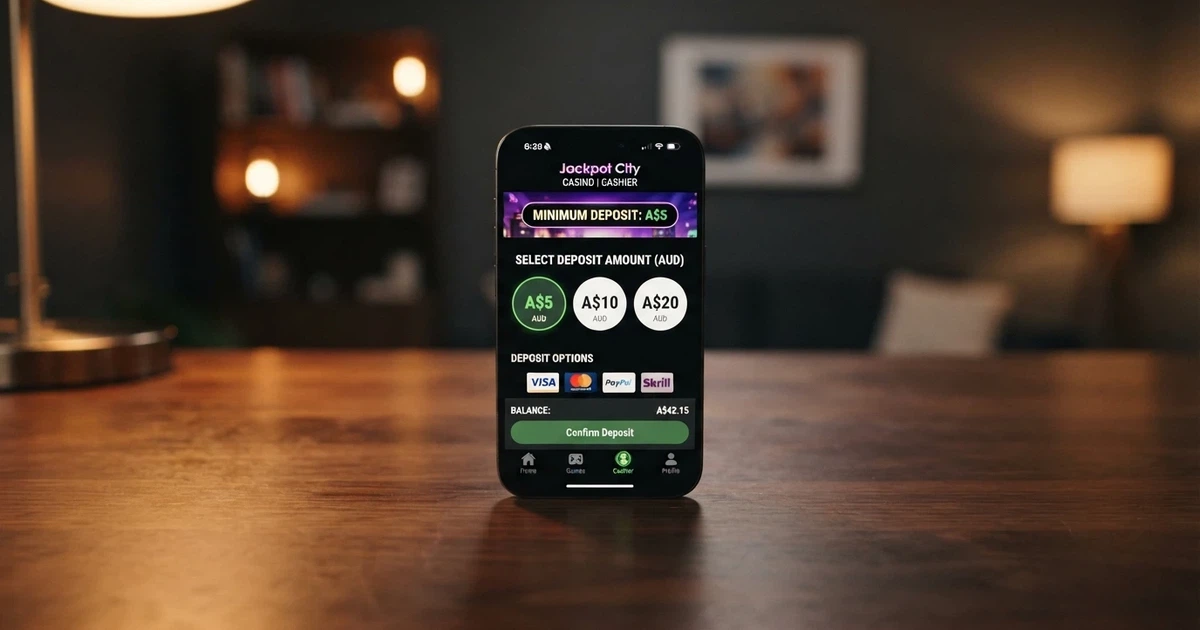
Every “no minimum deposit” casino pitched to an Australian player in 2026 runs offshore, none of them hold an Australian licence for online casino games, and not one of them accepts a literal A$0 deposit. The phrase survives because it points at a real and recognisable market — players who want to try a real-money pokie with as little skin in the game as possible. The cashier, however, has its own arithmetic, and the headline number is rarely the one a player pays.
The realistic floor most Aussie players encounter is A$5–A$10, paid through PayID or a bank rail. A literal A$1 deposit is a narrow edge case: it appears on certain crypto and e-wallet segments, not on the mainstream methods Australian players actually use. An A$10 deposit typically buys about 100 spins at the A$0.10 per-spin value most low-deposit welcome offers now default to. The wagering commitment required to clear the bonus sits behind that, and the math is unforgiving. An A$5 deposit that triggers nothing is worse than an A$10 deposit that unlocks a welcome match with terms a player can actually meet.
This page is a working guide to that market as it stands at the time of writing: which offshore brands have confirmed low-deposit data, which are data-thin and need their terms verified before a dollar moves, what the cashier minimum and the bonus-qualifying minimum really are, and what a player loses in Australian consumer protection by playing offshore at all. The legal position has not changed: the Interactive Gambling Act 2001 still prohibits the supply of online casino games to anyone in Australia. There is no Australian online casino licence and there has never been one. The reform that passed Parliament on 19 August 2026, commencing 1 January 2027, tightens the screws further on inducements, advertising and bank-blocking authority. What is on the page is what an Australian player is signing up for when they fund an offshore account in 2026.
Table of Contents
- Why Your “No Minimum Deposit” Casino Starts at A$5–A$10, Not Zero
- Which Offshore Casinos Actually Deliver on Low Deposits — and Which Don’t
- Why Pokies Are the Only Game Worth Playing on a Minimum Deposit
- The Real Payment Method Floors No Casino Advertises
- Crypto Low Deposits: Privacy at the Price of Protection
- Your Low-Deposit Casino Is Illegal in Australia — Here Is What That Means
- Keeping a Low-Deposit Habit From Becoming a Problem
- How We Picked and Ranked These Casinos
- What a Low-Deposit Punter Should Actually Do
- Frequently Asked Questions
Why Your “No Minimum Deposit” Casino Starts at A$5–A$10, Not Zero
The marketing head is “no minimum deposit.” The cashier screen is something else. Every offshore casino accepting Australian players sets a method-by-method minimum, and almost none of them run a single global floor at A$0. The reason the phrase keeps working is that it gestures at the lowest tier of an existing market — players depositing in the A$5–A$20 range — without committing to a literal number. A player who clicks through on the promise and lands on the cashier sees the real entry price before they fund an account.
What “No Minimum Deposit” Actually Means at an Offshore Casino
The term is a marketing label, not a contract. Behind it sits a floor that varies by payment method, sometimes within the same operator. PayID, the rail most Australian players actually use, carries a typical minimum of A$5–A$10. Neosurf and debit cards run higher: A$10–A$20+. Crypto deposits start around A$15–A$30 equivalent once the network fee is paid. The phrase survives because it points at a real entry tier — the A$5–A$10 cluster — even though the literal claim of zero is rarely true for any single method.
A “no minimum” PayID casino still has a PayID floor of roughly A$10; the headline is a marketing head, not a literal zero. The honest read of these offers is “low minimum,” not “no minimum.” A player who arrives expecting to drop a dollar and pull a trigger is going to be looking at A$5 or A$10 as the cashier screen paints the real entry price. The cashier menu, not the homepage banner, is where the actual decision gets made.
Playing Real-Money Pokies With No Minimum Entry Barrier
The A$5–A$10 deposit attracts first-time players because it feels risk-free. A tenner is a meal, not a bankroll commitment. What it buys, though, is a specific quantity of pokies play that runs out faster than the marketing suggests. Free spins at A$0.10 per spin mean 50 spins equal A$5 of play; 100 spins at the same stake burn A$10. A welcome offer that hands the player “150 free spins” is, at the standard stake, A$15 of spins against a bonus commitment that the wagering multiple then multiplies.
Wagering requirements on low-deposit bonuses typically run x30–x40 of the bonus amount. An A$10 deposit triggering a 100% match at x40 wagering requires A$400 of turnover before any withdrawal is possible. The math of clearing the bonus at A$0.10 per spin is 4,000 spins — somewhere between 33 and 40 hours of continuous play at a five-second spin cadence. The tiny deposit and the much larger turnover commitment are the two halves of the same offer, and only one of them fits on a banner.
Mobile Casino Access for Low-Deposit Players
Low-deposit players are overwhelmingly mobile players. The same person depositing A$10 through PayID on a Tuesday evening is doing it on a phone, and the cashier experience at every offshore operator is built for that screen. Mobile browser play is universal across the brands on this page; native apps are less common and, where they exist, are usually Android-only or web-app wrappers rather than downloadable iOS builds. The cash flow on a phone is fast: tap, deposit, play. The friction tends to land later.

KYC is where mobile-first players feel the slowdown. Verification — ID, address, sometimes source-of-funds — is typically triggered at the first withdrawal rather than at sign-up, and even a PayID payout can be held for 24–72 hours while the operator checks documents. The deposit screen is frictionless; the withdrawal screen is not. That asymmetry is built into the offshore model.
Which Offshore Casinos Actually Deliver on Low Deposits — and Which Don’t
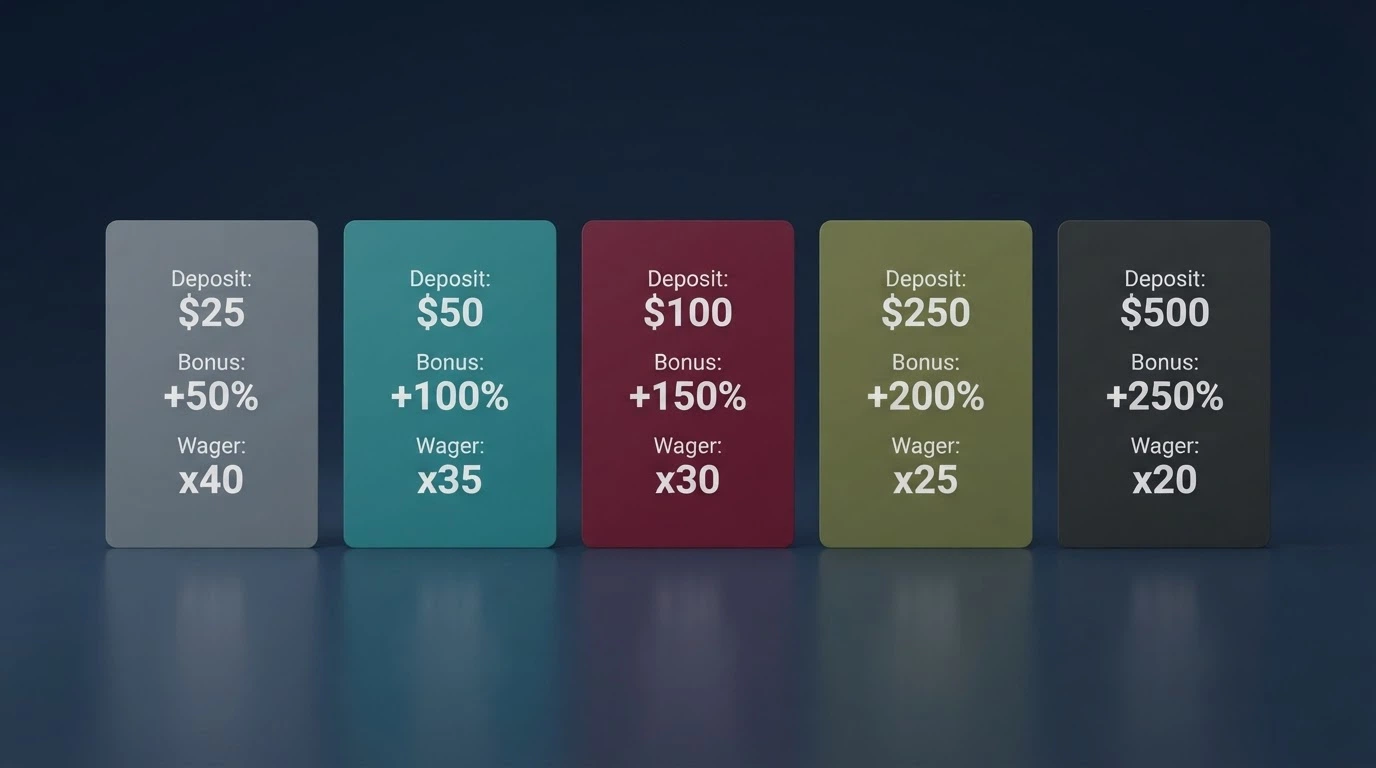
Ten offshore brands surface in Australian search for low-deposit casino play. They split cleanly into two groups. The first two — Rocket Play and SkyCrown — have published welcome terms in enough detail to be evaluated against each other and against the floor this page is built around. Royal Reels has a single confirmed specification worth recording: a A$10 no-deposit bonus with a 35x wager and a A$100 cashout cap. The remaining seven — Stake, WinSpirit, Scream Casino, FairGO, Bizzo Casino, Rocket Casino and Rainbet — are AU-facing offshore brands whose bonus, wagering, validity and provider data is not confirmed in public snippets at the time of review. That absence is itself the story: a brand that surfaces in Australian search but does not publish its terms clearly is a brand a player must verify before funding.
| Operator | Legal Status in Australia | Australian Consumer Protection |
|---|---|---|
| Rocket Play | Offshore — no AU licence | None — site can be blocked, no BetStop coverage, no AU recourse |
| SkyCrown | Offshore — no AU licence | None — site can be blocked, no BetStop coverage, no AU recourse |
| Royal Reels | Offshore — no AU licence | None — site can be blocked, no BetStop coverage, no AU recourse |
| Stake | Offshore (Curaçao licence) — no AU licence | None — site can be blocked, no BetStop coverage, no AU recourse |
| WinSpirit | Offshore — no AU licence | None — site can be blocked, no BetStop coverage, no AU recourse |
| Scream Casino | Offshore — no AU licence | None — site can be blocked, no BetStop coverage, no AU recourse |
| FairGO | Offshore — no AU licence | None — site can be blocked, no BetStop coverage, no AU recourse |
| Bizzo Casino | Offshore — no AU licence | None — site can be blocked, no BetStop coverage, no AU recourse |
| Rocket Casino | Offshore — no AU licence | None — site can be blocked, no BetStop coverage, no AU recourse |
| Rainbet | Offshore — no AU licence | None — site can be blocked, no BetStop coverage, no AU recourse |
No Australian online casino licence exists. Every operator on this list is offshore, every Australian player using one of them has no recourse under Australian consumer law if a withdrawal is refused or a win voided, and the ACMA can DNS-block any of these domains at any time, including with player balances still sitting on them. That is the regulatory frame around this market. What differs between the ten brands is the published welcome offer — and, on the seven data-thin brands, the absence of one.
How the Leaders Compare on Deposit Accessibility and Bonus Terms
A low deposit is only half the story. The bonus it triggers, if any, is where the value — and the cost — sits. Most AU-facing welcome offers need an A$10–A$30 deposit to activate the match; an A$5 deposit frequently triggers nothing at all. A casino may accept deposits from A$10 but require A$30 to unlock the welcome bonus. That gap between cashier minimum and bonus minimum is the single most common source of confusion in the low-deposit niche, and it is rarely explained on the homepage.
Goldenbet, which sits outside this page’s featured ten but anchors the comparison, is one of three casinos in the broader market that accepts a A$10 deposit and triggers the welcome offer at that amount. The same pattern repeats across the data-rich operators on this list: SkyCrown’s minimum qualifying deposit is A$20 (some sources A$30 for the first deposit); Rocket Play’s terms do not publish a clear qualifying minimum in the snippets available. A player depositing the cashier minimum at either operator and assuming the welcome offer is on at that level may be funding a balance that triggers nothing. The wagering multiple is the second hinge. Industry-standard wagering requirements typically range from 20x to 40x; the brands on this page sit at the top end of that band, not the bottom. The math a player does before depositing is the math the operator does not do on their behalf.
Separating Real No-Minimum Offers From Marketing Gimmicks
Three tests a low-deposit offer has to pass before it is worth treating as real. The deposit must be accepted at the headline level — A$5, A$10, whatever the page promises. The bonus must trigger at that level. And the wagering must be achievable by a player who is not wagering thousands on a single bonus. A welcome offer labelled “no minimum deposit” that requires A$30 to activate is not what the headline promised, even if the cashier will accept A$10.
The max-bet cap is the trap that ends a bonus without warning. A max-bet cap of A$5 while a bonus is active is common; a single over-cap spin can void the entire bonus and its winnings retroactively. The standard max-bet range while a bonus is active sits at A$5 to A$10 per bet. A player staking A$10 a spin on a bonus with a A$5 cap is one bad spin away from losing everything the bonus has built up. The terms page is the only place a player sees the cap, and the cap is the only place a bonus dies. Reading the terms before funding an account is the difference between a five-minute checkout and a six-month dispute.
SkyCrown
SkyCrown carries the deepest low-deposit data set on this list. The welcome package is a 450% deposit match up to A$8,000 plus 400 free spins spread across four deposits. The first deposit is the headline: 120% up to A$1,200 plus 125 free spins on Wolf Treasure, an IGTech title. The remaining three deposits layer the rest of the match and the remaining 275 free spins.
The qualifying floor sits at A$20, with some sources citing A$30 for the first deposit. Wagering is 40x the bonus amount on cash and 40x on free-spin winnings; the max-bet split is A$5 for standard play and A$7.50 for high-roller tiers; bonus validity is 14 days for standard and 5 days for the high-roller line. Free-spin wins carry a 10x bonus value ceiling, which means the upside on the spin side is capped well below the headline A$8,000 match figure.
The economics of clearing the bonus are tight. On a first-deposit A$20 qualifying deposit at 120%, the bonus amount is A$24 and the required turnover at 40x is A$960. At A$0.10 per spin, that is 9,600 spins. At a five-second cadence, 48,000 seconds — 13.3 hours of continuous play to clear a bonus that paid A$24. Free spins do not reduce that workload; they layer their own 40x wagering on top. The package looks generous on a banner and behaves like a high-turnover commitment once a player tries to clear it. The 14-day window is enough at high volume and punishing at low.
Rocket Play
Rocket Play is the high-ceiling play with the shortest fuse. The welcome package is up to A$5,000 plus 150 free spins across multiple deposits. The default max bet while wagering a bonus is A$7.50, comfortably above the A$5 floor the standard market runs at. The bonus is valid for 5 days from receipt unless otherwise indicated, and wagering sits at 40x on bonus funds.
The 5-day window is the operative number here. A player depositing A$20 and triggering the welcome match has roughly 115 hours to clear the bonus before it expires. That is workable at moderate volume and brutal at the casual pace most low-deposit players actually run. The maximum withdrawal from bonus funds is A$5,000; free-spin winnings are capped at A$300. The spin ceiling is the more binding constraint — a player hitting a good run on the free-spin allocation is going to hit the A$300 cap well before the A$5,000 main cap.
For a low-deposit player specifically, the match between Rocket Play’s structure and a small bankroll is poor. The package rewards scale; the clock does not. A$100 deposited at the same offer unlocks a larger bonus and the same expiry window, which means the per-dollar time pressure is heaviest at the bottom of the deposit range. Rocket Play is built for the player who can afford to play hard for five days, not the player testing the waters with A$20.
Royal Reels
Royal Reels is the outlier in the set. The welcome structure is a A$10 no-deposit bonus — no funding required to claim it. Wagering is 35x on the bonus amount, slightly under the 40x market norm. The maximum cashout from the no-deposit bonus is A$100.
The economics of a no-deposit bonus at 35x are straightforward: A$10 × 35 = A$350 of required turnover. At A$0.10 per spin, that is 3,500 spins, around 4.9 hours of continuous play. The A$100 cashout cap is the binding constraint; a player who runs hot and pushes the balance above A$100 before clearing wagering loses everything above the cap on withdrawal. The 35x wager is friendlier than the 40x norm; the A$100 ceiling is tighter than the player expects.
PayID support is confirmed at Royal Reels, which makes it the only no-deposit brand on this list where the Australian payment rail is documented in the available data. For a player who wants to test a casino with zero funded risk first, then fund a PayID deposit at A$10 if the test session is positive, Royal Reels is the cleanest structure on this page.
Stake
Stake is the household-name brand in the set, anchored by a Curaçao licence and a game library that runs into the thousands. The regulatory anchor is real by international standards — Curaçao is a recognised jurisdiction, even if it is not Australia. The game library is large, with a depth most competitors do not match.
The gap is on the welcome offer. Stake’s welcome bonus structure is not confirmed in the AU-facing context at the time of review. The brand surfaces in Australian search for low-deposit play, and the casino product is real and active, but the bonus terms an Australian player would see on landing are not in the public snippets this page draws on. A player considering Stake for low-deposit play should verify the current welcome terms on the operator’s own site before funding, because the published AU-facing terms are not in the data this review was built from.
WinSpirit
WinSpirit is an offshore brand with an Australian audience and almost no public data for this review round. It is AU-facing, it is active, it is offshore. The welcome bonus, wagering multiple, validity window and game providers are not confirmed in available snippets.
For a low-deposit player, that is a yellow flag rather than a red one. WinSpirit is not necessarily a worse operator than the data-rich brands on this list; it is an operator whose terms a player cannot verify from third-party data alone. The verification workflow in the section on regulation is the right read here: confirm the licence, read the withdrawal terms, check the bonus-qualifying minimum, and only fund after those four steps.
Scream Casino
Scream Casino is another data-thin offshore brand. The operator is offshore, AU-facing, and active in Australian search, but the welcome bonus, wagering, validity and provider data are not confirmed in available snippets.
The same workflow applies. An unverified operator is not an unsafe one by definition; an unverified operator is one a player must verify before staking money. The cost of that verification is five minutes on the terms page; the cost of skipping it is whatever a player deposits and cannot withdraw.
FairGO
FairGO’s name suggests an Australian focus, and the brand does surface in AU-facing search. The offshore reality is the same as every other operator on this list: no Australian online casino licence exists, and FairGO is operating outside the Australian regulatory frame regardless of how Australian the branding sounds.
The welcome bonus, wagering, validity and provider data are not confirmed in available snippets. The qualitative checklist for an unconfirmed operator applies in full.
Bizzo Casino
Bizzo Casino is an offshore brand active in the Australian market. Like the other data-thin entries on this list, none of its bonus, wagering or deposit specifics are confirmed in the available research round. The brand is real, the brand is offshore, and the brand’s terms need to be read on the operator’s own site before any money moves.
Rocket Casino
Rocket Casino is the second “Rocket” brand on this list, and the naming collision with Rocket Play is the operative risk. A player typing “rocket casino” into a search bar can land on either brand and not realise they have moved between two unrelated operators. The two have different welcome packages, different bonus terms, and different terms pages. The verification step before funding is the moment to confirm which Rocket the player is on.
Rocket Casino’s bonus, wagering, validity and provider data are not confirmed in available snippets. The name-collision risk is the reason it gets a write-up rather than a one-line table row.
Rainbet
Rainbet closes the data-thin middle of the pack. Offshore, AU-facing, unconfirmed on every welcome specification the data-rich operators carry. The verification workflow is the same as for the other unconfirmed brands, and the absence of public data is itself a signal about how much a player should trust what the operator publishes.
Why Pokies Are the Only Game Worth Playing on a Minimum Deposit
Game choice is strategy on a minimum deposit. Pokies contribute 100% toward wagering requirements at virtually every Australian online casino. Table games typically contribute between 0% and 20%. The wagering-contribution split is the single biggest determinant of whether a bonus gets cleared before it expires, and on a A$10 deposit the difference between pokie play and table-game play is the difference between clearing the bonus and losing it.

A player depositing A$20 at SkyCrown, claiming the first-deposit match at 120%, has A$24 of bonus funds against A$960 of required turnover. Staking that turnover on pokies at A$0.10 per spin means 9,600 spins; at a five-second cadence, this requires roughly 13 hours of continuous play. Staking the same turnover on blackjack, where contribution drops to 10% or 20%, multiplies the workload by 5x or 10x. A player who does not know the contribution table is going to play games they like, run out of bonus funds before clearing wagering, and lose both the bonus and any winnings tied to it.
Pokies: The Australian Term, the Australian Game
The term itself — pokies — is the AU reader’s word for slots. Australian players do not say “slots.” The preference runs deep enough that the offshore operators targeting this market have reorganised their lobby navigation around it. The reason pokies dominate the low-deposit niche in Australia is structural: the 100% wagering contribution is what clears a bonus, and the contribution table is the same at every operator on this list.
The game range within “pokies” is broad. IGTech titles like Wolf Treasure sit alongside Booongo’s Coin Volcano and 15 Dragon Pearls and Voltent’s Mighty Wild: Panther. The provider name matters less than the game mechanics a player is choosing between, but the provider is the integrity anchor: the studio behind the title is what determines whether the random number generator runs fairly and whether the return-to-player percentage the operator publishes is the figure the game actually pays out at.
Online Slots and Provider Titles Worth Knowing
Three provider names recur on the data-rich operators on this list. IGTech powers Wolf Treasure, the title SkyCrown’s first-deposit free spins run on. Booongo supplies Coin Volcano and 15 Dragon Pearls, both common across offshore AU-facing lobbies. Voltent contributes Mighty Wild: Panther and a handful of other high-volatility titles. None of these providers are Australian, and none of them are licensed by an Australian regulator; they are international studios whose games are licensed through Curaçao, Malta or other non-AU regimes.
The RTP figures research carries for individual titles are not in this review round; per-title return percentages are not in the available snippets and have not been invented for this page. The integrity signal sits in the provider name: a title from a named studio running under a recognised offshore licence is structurally sounder than a title from an unrecognised source. The verification step on game integrity is the same as the verification step on the operator — check the licence, check the studio, check the terms.
Broader Casino Games: What the Catalogue Offers and What It Costs
Every offshore casino on this list carries a lobby broader than pokies. Blackjack, roulette, baccarat and live-dealer titles are present across the set. The catalogue breadth is real, and a player who wants table-game play can find it.
The cost of table-game play on a bonus is that the contribution table kills the math. Staking A$10 per hand on blackjack at 10% contribution against a A$960 turnover requirement is 960 hands at full table-game speed — and that is the optimistic 10% figure. At 0% contribution, which some operators apply to certain table games entirely, the turnover never clears. The catalogue offers the games; the wagering terms tell a player which games are worth playing while a bonus is active. The honest read is that on a minimum deposit with a bonus attached, pokies are the only category where the math still works.
The Real Payment Method Floors No Casino Advertises
Every payment method has its own minimum, and the cashier screen — not the homepage banner — is where those numbers live. The method-by-method spread is wide enough that a player choosing the wrong rail can double their effective entry price without realising it.
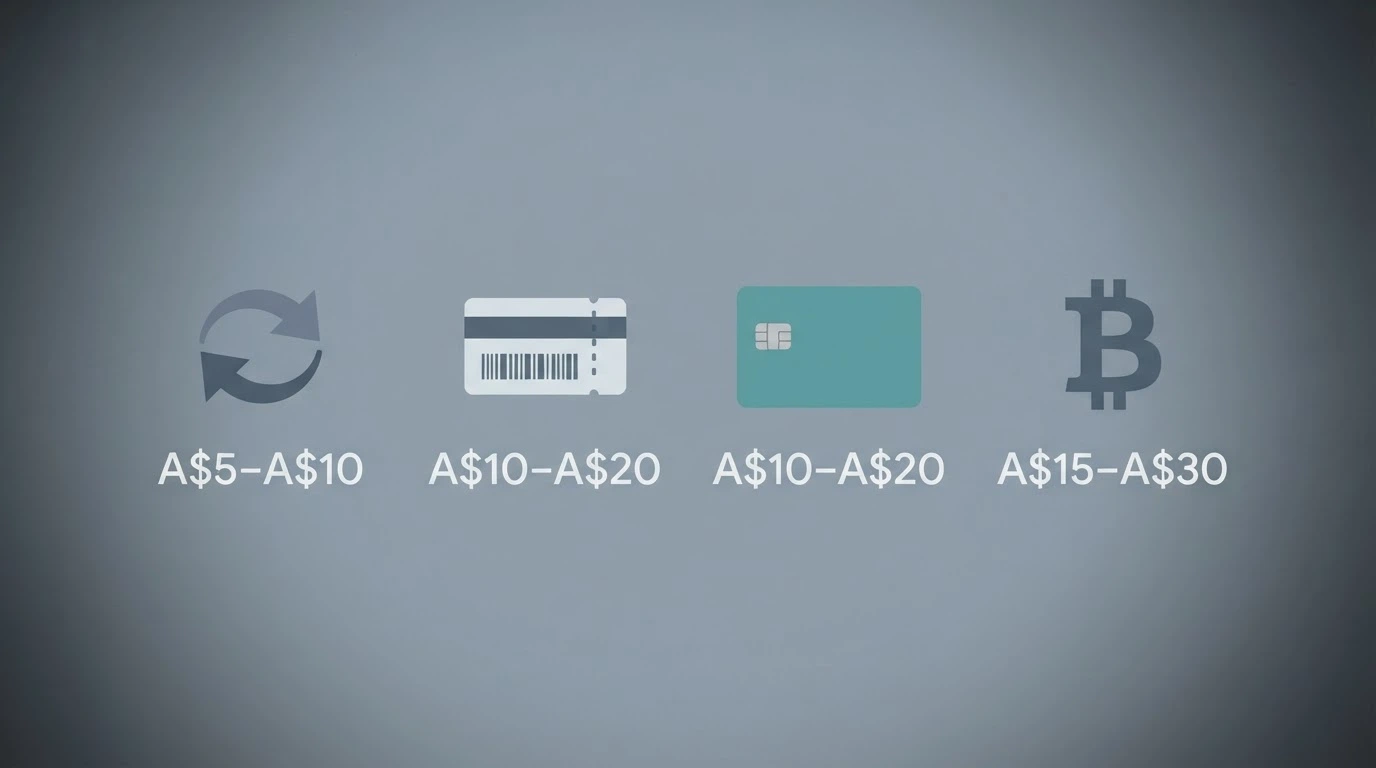
| Payment Method | Typical Minimum Deposit (AUD) | Notes |
|---|---|---|
| PayID / Osko | A$5–A$10 | Cheapest rail for AU players; most AU-facing operators support it |
| Neosurf | A$10–A$20+ | Prepaid voucher; floor varies by operator |
| Debit card | A$10–A$20+ | Standard floor across the market |
| Bitcoin / crypto | ~A$15–A$30 | Higher floor after network fees; banned under AU law from 11 June 2024 |
The PayID floor of A$5–A$10 is the working entry price for most Australian players at most operators. The same operator running crypto rails will start higher, sometimes double. For anyone planning to deposit A$10 in Bitcoin, the cashier asking for A$20 or A$30 is a common reality, as network fees quickly erode the value of small transfers.
PayID Deposits and Payouts: The Australian Low-Deposit Advantage
PayID, and the underlying Osko settlement layer, is the cheapest route into an offshore casino for an Australian player. The floor sits at A$5–A$10 across the bulk of AU-facing operators, and minimum PayID deposits at AU-facing casinos range from A$10 to A$30 depending on the brand. Goldenbet, which sits outside the featured ten, requires A$20. Most PayID-friendly sites set minimums around A$10–A$30.
The deposit is the easy half. Even with PayID, KYC verification can delay the first withdrawal by 24–72 hours. The first PayID payout triggers identity verification — ID, address, sometimes source-of-funds documentation — and the operator typically holds the withdrawal until that check is complete. Subsequent payouts are faster. The first payout is the one a player planning around a small balance should plan for: it is the slowest leg of the cashout journey, and it is where the smallest balances are most likely to be stranded.
PayPal and Other Funding Methods: What Works and What Does Not
PayPal surfaces in Australian search for low-deposit casino play. The reality at offshore operators is patchier than the search results suggest. PayPal availability at AU-facing offshore casinos is not confirmed on a per-operator basis in available data, and most of the brands on this list do not publish PayPal as a deposit rail in their cashier.
The bigger story is what is banned. Credit cards and crypto are banned as payment for online wagering from 11 June 2024. The ban applies to licensed Australian wagering, but it also describes the floor of what is treated as legitimate. A deposit made by credit card or crypto at any Australian-facing gambling site is a tell that the operator sits outside Australian rules — because no licensed Australian wagering operator accepts those payment methods in the first place. Debit card, BPAY, Neosurf and PayID are the legal deposit routes for Australian players. Anything else is a signal worth reading.
The Withdrawal Trap: Why Cashing Out a Small Balance Costs More Than the Deposit
The minimum withdrawal at most offshore casinos is A$25–A$50, sometimes A$50–A$100, and almost always higher than the minimum deposit. A A$10 deposit can leave winnings stranded behind a A$50 cashout floor. The deposit-to-withdrawal gap is the trap that catches small-balance players: the cashier lets money in at A$10 and demands A$50 or more before letting any of it back out.

The honest version of this page’s advice is that a player should never deposit money they cannot extract. If the minimum withdrawal is A$100 and the bankroll is A$10, the deposit is one-way until the player has run the balance up to the cashout floor. The math of getting from A$10 to A$100 on a 96% RTP pokie at A$0.10 per spin is 1,000 spins of break-even play before any withdrawal becomes possible. The trap is not that the cashier minimum is high; the trap is that it is higher than the deposit minimum, and a player who plans around the deposit alone is planning for one-way money.
Crypto Low Deposits: Privacy at the Price of Protection
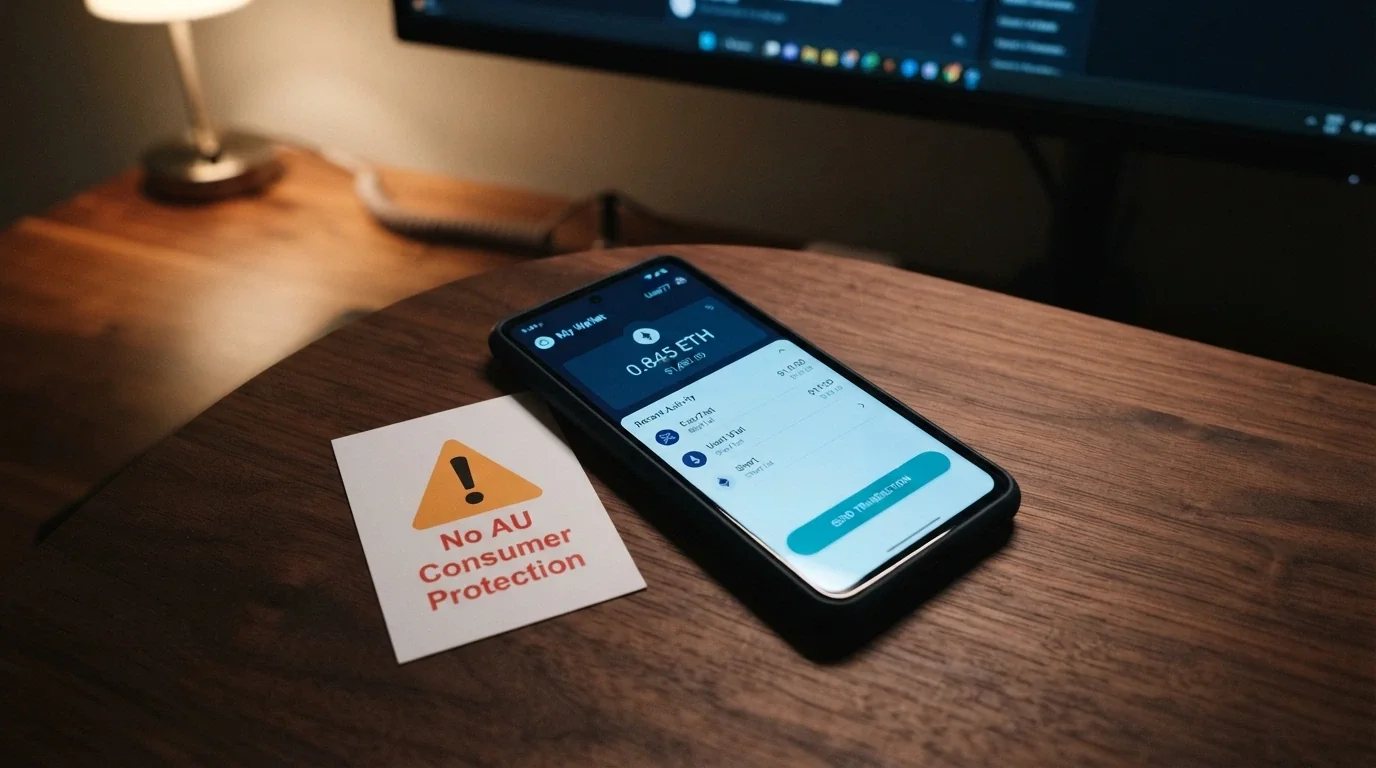
Bitcoin deposits promise two things the fiat rails do not: anonymity from the Australian banking system, and a low headline minimum. The network fee and the AU payment ban cut both ways. Crypto deposits land at ~A$15–A$30 after network fees, higher than PayID, not lower. And crypto is banned as a gambling payment under Australian law from 11 June 2024. The penalty for accepting banned payment methods is up to A$247,500 — a figure aimed at operators, not players, but a figure that tells a player what kind of operation they are funding.
Bitcoin Banking at Offshore Casinos
Bitcoin is the dominant crypto rail at offshore casinos. The deposit flow is wallet-to-wallet, the confirmation time is longer than PayID — typically 10–60 minutes depending on network congestion — and the network fee eats a slice of every transaction. At small deposit sizes, the fee is a meaningful percentage. A A$10 bitcoin deposit carries a network fee that can reach 10–20% of the principal; a A$100 deposit pays the same fee in absolute terms but a much smaller share.
The privacy gain is real: no Australian bank record of the transaction, no entry on a player’s statement. The cost is the floor, the fee, and the legal posture — funding an offshore casino in bitcoin is funding a product Australian law treats as prohibited, using a payment method Australian law bans outright. The half-second the deposit confirms in the player’s wallet is real; the legal frame around it is not in the player’s favour.
Anonymous Play: What You Gain and What You Give Up
Crypto deposits leave no Australian bank trail. The operator still holds the player’s identity after KYC. At the first withdrawal, the same identity check applies — ID, address, source of funds — regardless of how the deposit was funded. “Anonymous” casino play is a half-truth: the deposit is private from the player’s bank; the account is not private from the operator.
The bigger loss is on the protection side. An offshore casino accepting crypto has zero Australian consumer protection. There is no BetStop coverage, no Australian recourse if the operator refuses a withdrawal, and the site can be blocked at any time with a balance on it. The Interactive Gambling Act 2001 targets the provider, not the individual player — the player is not prosecuted — but the player also has no body to complain to when the offshore operator voids a win or stalls a payout. The privacy of crypto is the price of admission to a market with no safety net underneath.
Your Low-Deposit Casino Is Illegal in Australia — Here Is What That Means
Online casino games and online pokies are prohibited in Australia. The Interactive Gambling Act 2001 makes it an offence to provide an online casino to a person in Australia. There is no Australian casino licence for online casino games and there has never been one — not federally, not in any state or territory. The prohibition targets the provider, not the individual player. Players are not prosecuted. They are also not protected.
The distinction between licensed and prohibited products is the operating frame for this whole page. Australian-licensed wagering on sport and racing exists and is legal. Online casino games, online pokies and in-play sports betting are prohibited. Every operator on this list sits in the prohibited category. A player funding any of them is operating outside the Australian regulatory frame, with the consequences that flow from that.
ACMA and the Regulators Policing the Offshore Market
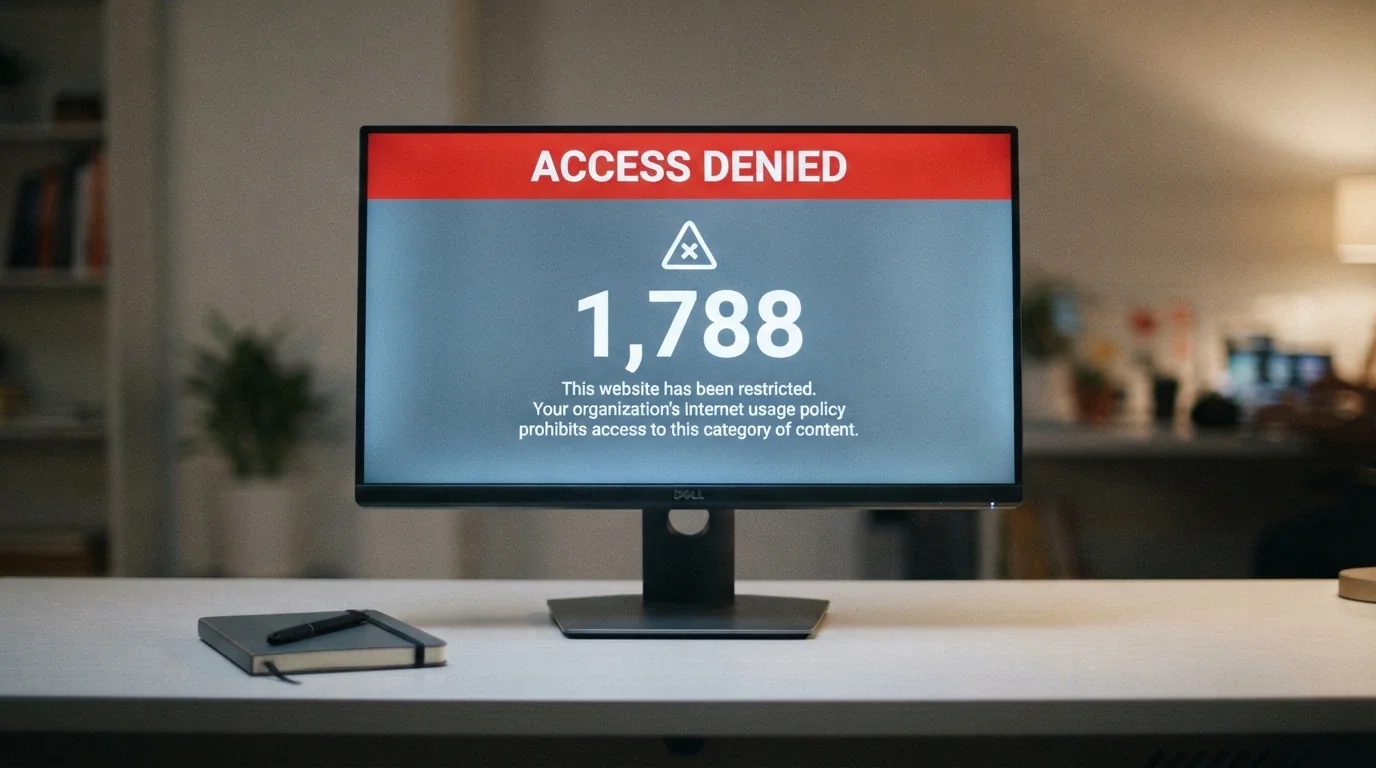
The Australian Communications and Media Authority (ACMA) enforces the online prohibition. The enforcement record is large and accelerating. Since November 2019, 1,788 illegal gambling and affiliate websites have been blocked by ACMA. Over 230 illegal services have withdrawn from the Australian market since 2017. ACMA blocked 133 websites in Q4 2025 alone. The machine is real and it runs at a pace that means any offshore brand on this list could be DNS-blocked in any quarter.
The ACMA’s Q4 2025 report puts the shape of the enforcement work in numbers: 38 investigations for providing prohibited interactive gambling services to Australian customers, 26 for unlicensed regulated services, 5 for advertising offences. The mix shows where the regulator’s attention is going — most of it on the operators supplying prohibited products to Australian customers, a meaningful slice on unlicensed activity in the regulated space, and a smaller but persistent focus on the advertising layer that funnels Australian players offshore in the first place.
The penalty regime backs the enforcement up. Penalties for accepting banned payment methods reach A$247,500 per breach. The credit card and crypto ban that took effect on 11 June 2024 is enforced against operators, not players, but it sets the floor of what is treated as legitimate in this market. From 1 January 2027, banks and payment providers gain express authority to block transactions to illegal gambling operators, which moves the enforcement model from blocking websites to blocking payments. The 2027 change makes the offshore model harder to fund, not just harder to reach.
How the 2027 Reform Changes the Game for Low-Deposit Bonuses
The Interactive Gambling Amendment (Gambling Reform) Bill 2026 passed Parliament on 19 August 2026. Its measures commence 1 January 2027. Three changes affect low-deposit players directly.
First, inducement marketing is restricted. From 1 January 2027, direct marketing of inducements is prohibited for 14 days after sign-up, three months after BetStop deregistration, and indefinitely for at-risk customers. The “no minimum deposit” pitch — the banner, the email, the SMS — sits squarely in the inducement category. Australian-licensed wagering operators will face new limits on how and when they can market low-deposit offers. Offshore operators, who are not bound by the reform, will not. The marketing pressure on Australian players continues to come from outside the regulatory frame.
Second, banks gain transaction-blocking authority. From 1 January 2027, banks and payment providers gain express authority to block transactions to illegal gambling operators. A PayID deposit from an Australian bank to an offshore casino is a transaction the bank can refuse to process. The mechanism turns the ACMA’s website-blocking work into payment-rail work, and the result is fewer successful deposits at offshore operators even where the website itself remains reachable.
Third, online keno and foreign-matched lotteries are prohibited from 1 January 2027. The keno ban is the smallest of the three changes for low-deposit casino players, but it closes one more product category inside the broader AU-facing gambling market. The reform does not legalise online casino; it tightens the prohibition and adds the payment-rail machinery to enforce it.
How to Verify a Casino Before You Deposit a Cent
A five-minute licence check beats a six-month dispute. The verification workflow every Australian player should run before funding an offshore account:
- Check whether any Australian casino licence exists for the operator. None does, because no Australian casino licence exists for online casino games. Any claim of an “Australian casino licence” for an online casino is false.
- Search the ACMA’s blocklist for the operator’s domain. A current block entry is a clear signal. An absent entry is not a clean bill of health — it is the absence of a block as of the check date.
- Read the withdrawal terms before depositing. Confirm the minimum withdrawal, the processing time and the KYC trigger. A high withdrawal minimum relative to the deposit minimum is a warning sign.
- Read the bonus terms before claiming. Confirm the wagering multiple, the max-bet cap, the validity window and the bonus-qualifying deposit.
- Check the payment methods offered. Credit card and crypto are banned for Australian wagering; their presence at a casino is a signal the operator sits outside Australian rules.
The verification step is the difference between an informed deposit and an irreversible one. The cost of running it is five minutes. The cost of skipping it is whatever a player deposits and cannot recover.
Keeping a Low-Deposit Habit From Becoming a Problem
A A$5 deposit feels harmless. The low barrier is precisely what makes repeated small deposits dangerous. The psychology of the entry tier is well understood — each deposit feels too small to matter, and the cumulative effect of “too small to matter” deposits is the path from low-stakes play to harm. About 2.1% of Australian adults — roughly 430,000 people — experience problem gambling. The number is large enough that any reader of this page is statistically near someone it describes.
BetStop, the National Self-Exclusion Register, has 67,480 registrations since launch, with 41,290 exclusions still active. 78% of registrants are under 40. 38% chose lifetime exclusion. The register is real, the take-up is real, and the protection it offers is real — but only at Australian-licensed wagering services. BetStop binds Australian-licensed wagering only; offshore casinos are not connected. A player self-excluded through BetStop is still able to fund an offshore account, because the offshore operator is not part of the system.
Deposit Limits, Time Limits and Self-Exclusion: The Tools That Work
The responsible-gaming toolkit at Australian-licensed operators includes deposit limits, session time limits, reality checks and take-a-break tools. Each of them works inside the licensed system. None of them reach the offshore casinos on this page.
BetStop is the most consequential of the tools because it is the only one that operates across multiple licensed operators at once. A player self-excluded through BetStop cannot open a new account at any Australian-licensed wagering service for the duration of the exclusion. The 38% who chose lifetime exclusion are betting that they will not want to come back; the rest are betting on the duration of the exclusion holding them. The system works for what it covers. It does not cover offshore casinos, and that gap is the operative limit of the Australian protection model.
Where to Get Help: The Australian Gambling Support Infrastructure
The help network exists regardless of where a player played. The National Gambling Helpline is 1800 858 858 — free, confidential, available 24 hours a day, nationwide. Gambling Help Online, at gamblinghelponline.org.au, runs a free 24/7 live chat and email counselling service. Financial counsellors are available for gambling-related debt through the same network. The services are free, they are confidential, and they are not tied to any operator. A player reading this page who has realised the offshore market is not the market they thought they were entering has somewhere to go.
How We Picked and Ranked These Casinos
The methodology behind this page is straightforward and the limits are visible. The operators were drawn from the Australian operators shortlist, filtered for confirmed real-money, AU-audience active status. Every brand on this list was confirmed active and AU-facing at the time of review. The data-rich entries — Rocket Play, SkyCrown and Royal Reels — were checked against operator terms pages and the casino comparison sources that publish AU-facing welcome data. The data-thin entries were checked for active AU-facing presence, and their unconfirmed status on welcome terms, wagering, validity and providers is recorded as such rather than backfilled with speculation.
The ranking weights deposit accessibility and bonus terms together, with regulatory status as a baseline filter that every operator failed by definition. The “regulatory status check” produced the same answer for every brand — offshore, no Australian licence, no Australian consumer protection — which is why the table column on protection reads identically down every row. A ranking that weighted that column would not produce a useful order; the column is a floor, not a differentiator.
The limits of the review are real. Terms change. A welcome offer published in one quarter may be different in the next. A wagering multiple in one set of snippets may differ from the figure on the operator’s own terms page. The advice that follows from this is the advice built into the verification workflow above: always check the operator’s own site before depositing. This page is a working snapshot, not a live feed.
What a Low-Deposit Punter Should Actually Do
Three things this page proved. Every “no minimum deposit” casino accepting Australian players is offshore and operating outside the Australian regulatory frame. The real deposit floor is A$5–A$10 via PayID, never zero, and the cashier screen at every brand on this list confirms it. The wagering commitment behind the bonus turns a small deposit into a turnover obligation of 30–40× the bonus amount before any withdrawal is possible, and the cap on free-spin winnings caps the upside well below the headline match figure.
The decision framework that follows from those three facts is short. If a player chooses to play at an offshore low-deposit casino in 2026, they should verify the licence — and accept that no Australian licence exists. They should read the withdrawal terms before funding, because the withdrawal minimum is almost always higher than the deposit minimum and small balances get stranded. They should never deposit more than they can afford to lose to a site that can be DNS-blocked in the next quarter. They should know that BetStop cannot protect them here, because the offshore operators are not part of the system. The licensed Australian wagering market on sport and racing exists and carries the protections this market does not; for players who want Australian consumer protection, that is the only market in which it is available.
The page closes where it opened. “No minimum deposit” is a marketing head, not a contract. The real floor is A$5–A$10. The bonus behind the floor carries a turnover commitment of dozens of hours of play. The casino behind the bonus is offshore, illegal under Australian law and unprotected by any Australian consumer-protection regime. Understanding these limits is what transforms an impulsive deposit into a managed one.
Frequently Asked Questions
Are there really casinos with no minimum deposit in Australia?
No. There is no Australian online casino licence, and every offshore casino accepting Australian players sets a method-by-method floor. PayID deposits typically start at A$5–A$10; Neosurf and debit cards start higher; crypto starts around A$15–A$30 after network fees. The phrase “no minimum deposit” is marketing for the lowest tier of an existing market, not a literal zero.
Can I deposit A$1 and still get a welcome bonus?
An A$1 deposit is a narrow edge case at certain crypto or specific e-wallet segments. It is not achievable through PayID or Neosurf at the operators covered here, and welcome bonuses typically require A$10–A$30 to activate. An A$5 deposit at most AU-facing offshore casinos triggers no welcome offer at all.
What is the difference between the cashier minimum deposit and the bonus-qualifying deposit?
The cashier minimum is the smallest amount the deposit screen will accept. The bonus-qualifying minimum is the smallest deposit that activates the welcome offer. A casino may accept deposits from A$10 but require A$30 to unlock the welcome bonus. The gap between the two figures is where most bonus confusion on low-deposit offers comes from.
Does PayID support no-minimum deposits at Australian online casinos?
PayID deposits at AU-facing casinos typically start at A$5–A$10, with minimum PayID deposits ranging from A$10 to A$30 depending on the operator. PayID is the cheapest rail for Australian players, but the floor is never zero. PayID payouts can be delayed 24–72 hours on the first withdrawal while KYC verification runs.
Is it legal to play at an online casino with no minimum deposit in Australia?
Online casino games and online pokies are prohibited under the Interactive Gambling Act 2001. No Australian casino licence exists for online casino games. The IGA targets the provider, not the individual player — Australian players are not prosecuted for playing — but they have no Australian consumer protection, no BetStop coverage, and no recourse if an offshore operator refuses a withdrawal or voids a win.
What protections do I lose by playing at an offshore no-minimum-deposit casino?
Every Australian consumer protection. No Australian consumer law applies to offshore operators. BetStop self-exclusion does not cover offshore casinos. The ACMA can DNS-block the operator’s website at any time, including with player balances still on the platform. There is no Australian regulator to complain to if a withdrawal is refused or a bonus voided. The site can disappear overnight.
What is the fastest payment method for a low deposit?
PayID is the fastest rail for Australian players. Deposits settle through Osko in seconds. Crypto deposits confirm on the blockchain within minutes but carry network fees that eat into small deposit sizes and are banned as a gambling payment under Australian law from 11 June 2024. Debit card deposits are fast but start at a higher floor than PayID.
Can I withdraw a small balance from a no-minimum-deposit casino?
Often no. The minimum withdrawal at most offshore casinos is A$25–A$50, sometimes A$50–A$100, and almost always higher than the minimum deposit. A A$10 deposit can leave winnings stranded behind a A$50 cashout floor. A player should never deposit money they cannot extract — the deposit-to-withdrawal gap is the trap that catches small-balance players.
How does the 2027 reform affect bonuses and inducements?
From 1 January 2027, inducement marketing is restricted: direct marketing is prohibited for 14 days after sign-up, three months after BetStop deregistration, and indefinitely for at-risk customers. Banks gain authority to block transactions to illegal gambling operators. Online keno and foreign-matched lotteries are prohibited. The offshore low-deposit market faces a tougher funding and marketing environment from 2027 onwards, but the underlying prohibition on online casino in Australia does not change.
Where can I get help if gambling becomes a problem?
The National Gambling Helpline is 1800 858 858 — free, confidential, 24/7. Gambling Help Online at gamblinghelponline.org.au runs free 24/7 live chat and email counselling. Financial counselling for gambling-related debt is available through the same network. The services are free, confidential and not tied to any operator.